 Save
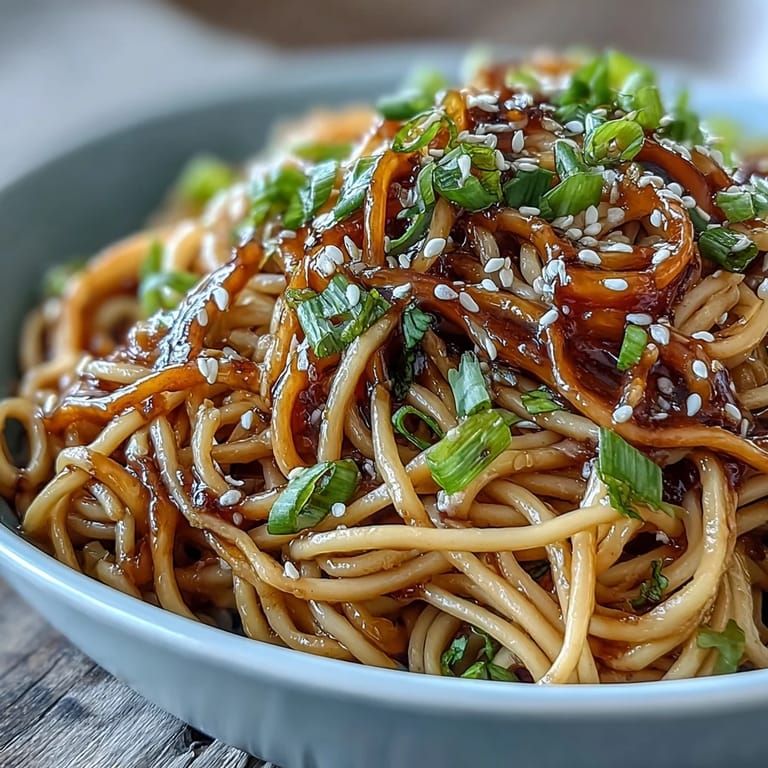
Save My neighbor knocked on my door one evening with a steaming bowl of noodles that smelled like ginger, soy, and something I couldn't quite name. She'd made this for her family that night and wanted me to taste it. One slurp and I was asking for the recipe, though she laughed and said it was barely a recipe at all—just pantry instinct. That bowl changed how I think about weeknight dinners.
I made this for my partner on a Tuesday when we were both exhausted, standing in the kitchen in that quiet way people do when words feel unnecessary. By the time those noodles hit the wok, the smell alone seemed to lift something heavy. We sat down and ate straight from the skillet without talking much, but that's when I knew this would become regular rotation.
Ingredients
- Wheat noodles (350 g): Lo mein, ramen, or even spaghetti work beautifully here—the key is cooking them just until al dente so they hold up to tossing without turning mushy.
- Neutral oil (4 tbsp): Canola or grapeseed won't compete with the other flavors, and you need enough to coat everything silkily.
- Scallions (4, plus 1 for garnish): Split the whites from the greens and use them at different times—the whites cook down into sweetness, the greens stay bright and fresh.
- Fresh ginger (2 tbsp minced): Don't skimp here or use powdered; fresh ginger is what makes this dish actually sing.
- Garlic cloves (2, minced): They'll toast slightly in the oil and turn nutty, building the umami foundation.
- Red chili (1 small, optional): This is your secret weapon if you want heat without overpowering the delicate aromatics.
- Soy sauce (4 tbsp): The backbone of your glaze, bringing saltiness and depth.
- Dark soy sauce (1 tbsp, optional): If you have it, this adds color and a slightly thicker body to the glaze.
- Oyster sauce (1 tbsp): Use vegan oyster sauce easily if you're keeping this plant-based—it rounds out the savory notes.
- Brown sugar (1 tbsp): Just enough to balance the salty-savory with a whisper of sweetness.
- Rice vinegar (1 tbsp): Brightness and lift, so nothing tastes heavy or one-dimensional.
- Toasted sesame oil (1 tsp): A little goes far; this is about fragrance and finishing warmth.
- Water (2 tbsp): Keeps the glaze from reducing too fast and lets it coat evenly.
- Toasted sesame seeds (1 tsp garnish): Toast them yourself if you can—they taste completely different from raw, with this nutty depth.
- Fresh cilantro (optional garnish): A personal choice, but it adds a cool note that plays nicely against the warmth of the ginger.
Tired of Takeout? 🥡
Get 10 meals you can make faster than delivery arrives. Seriously.
One email. No spam. Unsubscribe anytime.
Instructions
- Boil your noodles:
- Get a large pot of water going and cook the noodles according to package timing, but check them a minute early—al dente is the goal, not soft. Drain in a strainer and rinse briefly under cold water just to stop the cooking, then set them aside in a bowl.
- Whisk the glaze together:
- In a small bowl, combine your soy sauce, dark soy if using, oyster sauce, brown sugar, rice vinegar, sesame oil, and water. Give it a good stir until the sugar dissolves, and taste it—it should be balanced between salty, sweet, and tangy.
- Heat your oil and build flavor:
- Pour the neutral oil into a large skillet or wok over medium heat and let it warm for about a minute. Add the white parts of your scallions, the minced ginger, garlic, and chili if using, and stir constantly for 1 to 2 minutes until the kitchen fills with that intoxicating aroma but nothing is browning.
- Toss the noodles with aromatics:
- Add your cooked noodles to the skillet and toss everything together for a minute, making sure the noodles break apart gently and get coated in the fragrant oil. You're not trying to fry them, just warm them through and distribute all that ginger and garlic evenly.
- Pour in the glaze and coat everything:
- Add the soy glaze all at once and toss continuously for 2 to 3 minutes, watching as the noodles absorb the liquid and glisten. The pan will smell extraordinary at this point, and you'll see a light sheen develop.
- Finish with the green scallions:
- Remove the skillet from heat and stir in the green parts of your scallions, tossing gently so they stay bright and fresh rather than wilting into the heat.
- Serve with garnish:
- Transfer to a serving bowl or straight onto plates, then shower with toasted sesame seeds, extra scallion greens, and cilantro if you're using it. Serve immediately while the warmth is still there.
 Save
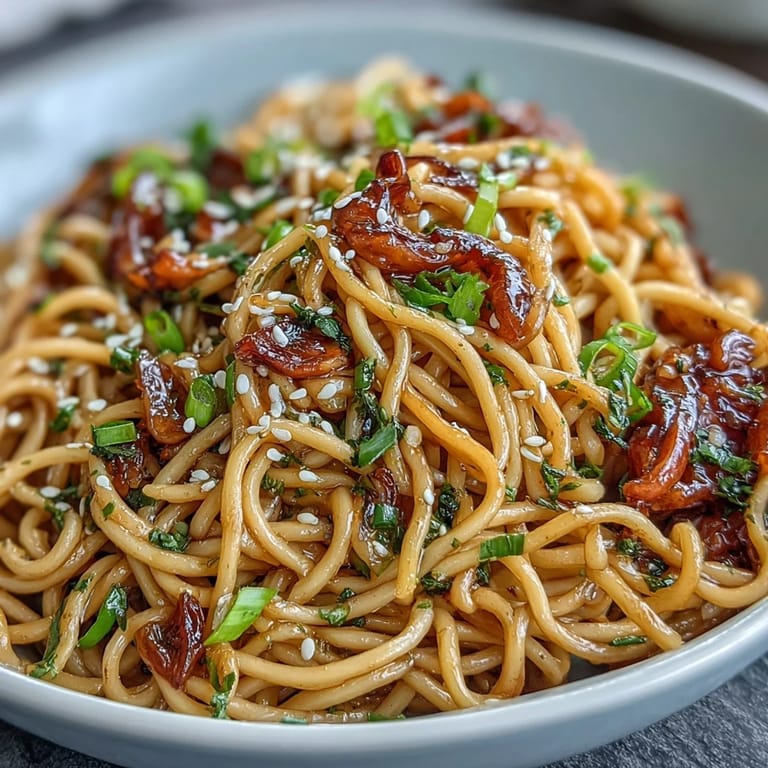
Save There was a moment when I made this for my sister's family, and her young daughter, who usually picks at everything, asked for seconds. My sister caught my eye and smiled like I'd done something impossibly difficult. It wasn't about cooking skill; it was about how food can quietly bring people together without ceremony.
The Science of the Glaze
The balance in this glaze isn't accidental. Soy sauce brings umami and saltiness, but it would feel one-note without the vinegar's brightness and the sugar's roundness. The sesame oil arrives at the end as an aromatic whisper, not a heavy layer. I learned this by making it wrong first—too much vinegar made it sharp, and forgetting the sesame oil entirely left it tasting flat and corporate, like something from a bottle.
Variations and Add-Ins
This dish is genuinely flexible without losing its identity. I've added sautéed mushrooms because I had them, roasted bok choy because it was in season, and snap peas because I wanted something crunchy. Once I even stirred in some cooked shrimp at the end and it became dinner party food. The ginger and scallion base is strong enough to carry company gracefully.
Making It Vegan or with Allergies
If oyster sauce isn't an option for you, vegan oyster sauce swaps in without complaint, or you can simply use extra soy sauce and call it done. The dish never tastes like it's missing something—it just tastes like itself, which is the mark of a well-made recipe. Check your noodle package too; many standard wheat noodles are fine, but some have hidden animal products in the ingredient list.
- Look for vegan oyster sauce in the international aisle or online; brands like King Boy work beautifully.
- If you're avoiding sesame, substitute the sesame oil with a touch of chili oil for warmth instead.
- Always read labels on soy sauce, as some contain wheat beyond what you'd expect.
 Save
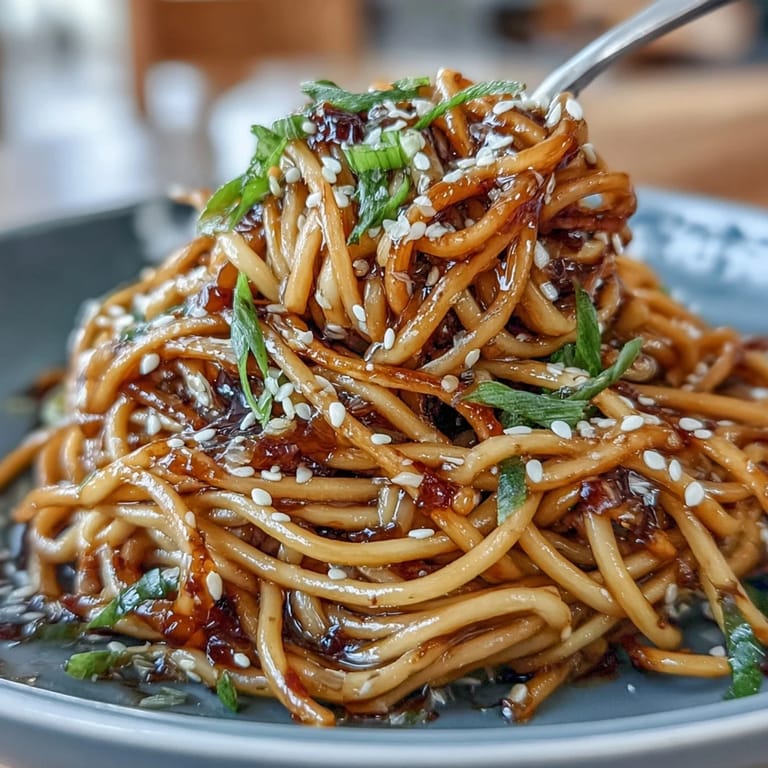
Save This recipe sits in that rare place where it feels casual enough for a Wednesday night alone but elevated enough for people you want to impress. That's why it keeps happening in my kitchen.
Recipe Questions
- → What type of noodles work best?
Wheat noodles such as lo mein or ramen provide the ideal texture and absorb the flavors well, but spaghetti can also be used as a substitute.
- → Can I make this dish vegan?
Yes, by replacing oyster sauce with a vegan alternative or extra soy sauce, the dish can be made fully vegan without sacrificing flavor.
- → How should I store leftovers?
Store any leftovers in an airtight container in the refrigerator for up to two days. Reheat gently to maintain the texture and flavors.
- → Can additional vegetables be added?
Absolutely, sautéed mushrooms, shredded carrots, bok choy, or snap peas are great additions for extra color and nutrition.
- → What is the purpose of separating scallion parts?
The white parts are cooked first to release flavor, while the green parts are added at the end for freshness and crunch.
- → How do I adjust spice level?
Adding or omitting the small red chili allows you to control the heat; you can also add chili oil for extra spice.