 Save
Save There's something about the smell of sesame oil hitting a warm bowl that instantly transports me back to a humid summer afternoon when my neighbor brought over a container of something impossibly fragrant and told me it changed how she ate lunch. I'd never thought much about cold noodles before that day, but watching her toss everything together with such casual confidence made me realize how simple it could be to feel like you're eating something both vibrant and nourishing. That first bite was a revelation—creamy dressing, cool vegetables, a kind of effortless elegance that didn't require fuss.
I made this for a picnic once where I wasn't sure what everyone would eat, and I watched it disappear faster than the desserts—even from people who'd never tried soba noodles before. There's something about a chilled, colorful bowl that makes people relax and actually enjoy sitting outside together, and somehow this dish does exactly that without demanding anything complicated from you.
Ingredients
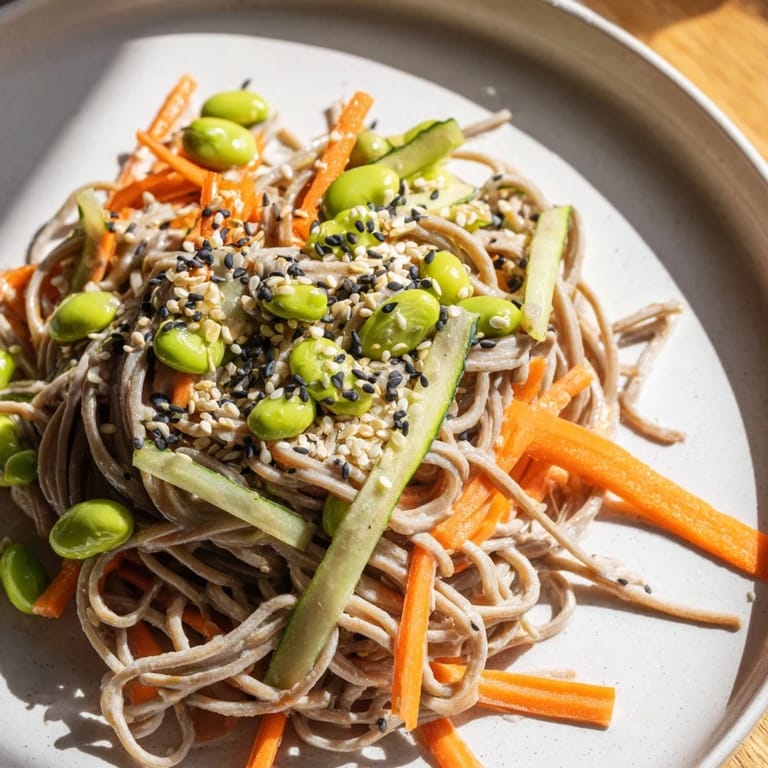
- Soba noodles or thin spaghetti: Soba has a slightly nutty, delicate flavor that pairs beautifully with sesame, but regular spaghetti works just as well if that's what you have—the dressing carries the whole dish anyway.
- Cucumber: Julienne it thin so it stays crisp and bright; thicker cuts can turn a bit watery as it sits.
- Carrots: The raw crunch is essential here, so don't skimp on the julienne or you'll lose that textural contrast.
- Edamame: Make sure they're completely cooled before tossing, or they'll wilt everything around them.
- Spring onions: Add these just before serving to keep their sharp bite; they soften as the dish sits.
- Toasted sesame seeds: If you can only find raw sesame seeds, give them a quick toast in a dry pan—the difference is remarkable.
- Tahini or toasted sesame paste: Find the roasted or toasted version if possible; raw tahini tastes thin and lacks that deep, warm nuttiness.
- Soy sauce: Use tamari if anyone needs gluten-free, and honestly, it tastes slightly better anyway.
- Rice vinegar: This is gentler than distilled vinegar and won't make the dressing taste sharp or acidic.
- Toasted sesame oil: This is non-negotiable—it's why the dressing tastes like something, not just a vehicle for soy sauce.
- Honey or maple syrup: A touch of sweetness rounds out the savory and brings all the flavors into balance; don't skip it thinking it's unnecessary.
- Fresh ginger and garlic: Freshly grated or minced makes a real difference; they add brightness that jarred versions can't quite match.
Tired of Takeout? 🥡
Get 10 meals you can make faster than delivery arrives. Seriously.
One email. No spam. Unsubscribe anytime.
Instructions
- Cook and cool the noodles:
- Bring a large pot of water to a boil and cook according to package directions, then drain and rinse under cold running water until they're completely cooled. Spread them out on a plate if you're in a hurry—they'll cool faster and won't clump together.
- Build the dressing:
- In a large mixing bowl, whisk together the tahini, soy sauce, rice vinegar, sesame oil, honey, ginger, and garlic until it starts to come together. Add water gradually while whisking, tasting as you go—you want it pourable but not thin, like heavy cream that pours easily.
- Bring it all together:
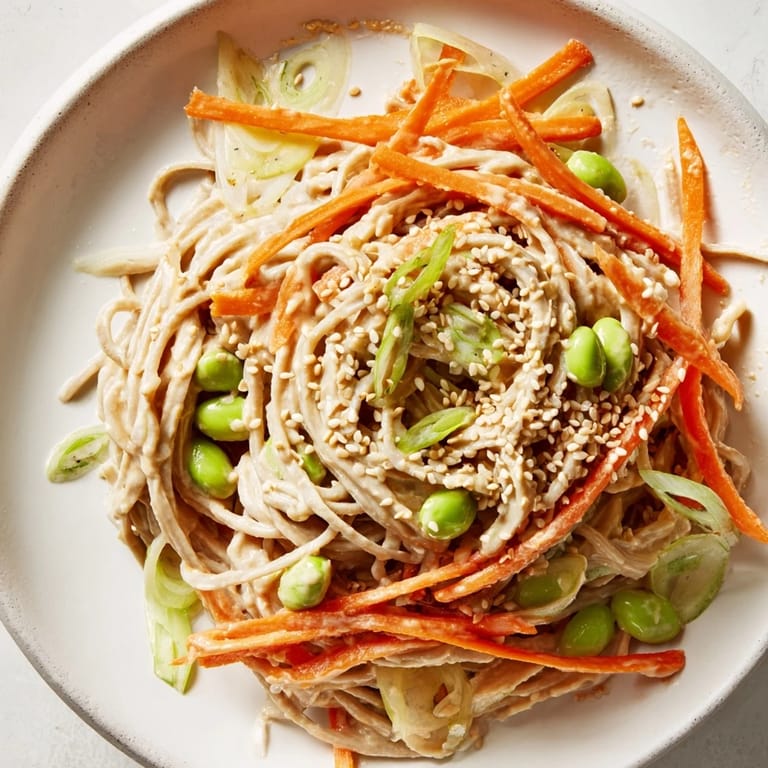
- Add the cooled noodles, julienned cucumber and carrots, and edamame to the bowl, then toss gently but thoroughly so every strand of noodle gets coated. This takes longer than you'd think, so don't rush it.
- Finish and chill:
- Sprinkle the spring onions and toasted sesame seeds over the top, scatter on any optional garnishes you're using, then pop it in the fridge for at least 10 minutes. The flavors deepen as it sits, and the vegetables release their own juices that mellow the dressing slightly.
 Save
Save A friend once told me she started making this weekly because it was the one dish that made her feel like she was taking care of herself without it feeling like a chore. There's real comfort in that—when eating well tastes this good and comes together this easily, something shifts in how you approach feeding yourself.
Building Flavor Without Fuss
The magic of this salad lives in understanding that tahini-based dressings are naturally forgiving. Unlike oil and vinegar, which can separate or taste unbalanced, tahini creates an emulsion that holds everything together and makes every bite taste rich even though there's no cream in sight. I've added too much water, too little soy sauce, forgot the ginger entirely, and it somehow still turned out more than acceptable because the base is just that stable and forgiving.
Making It Your Own
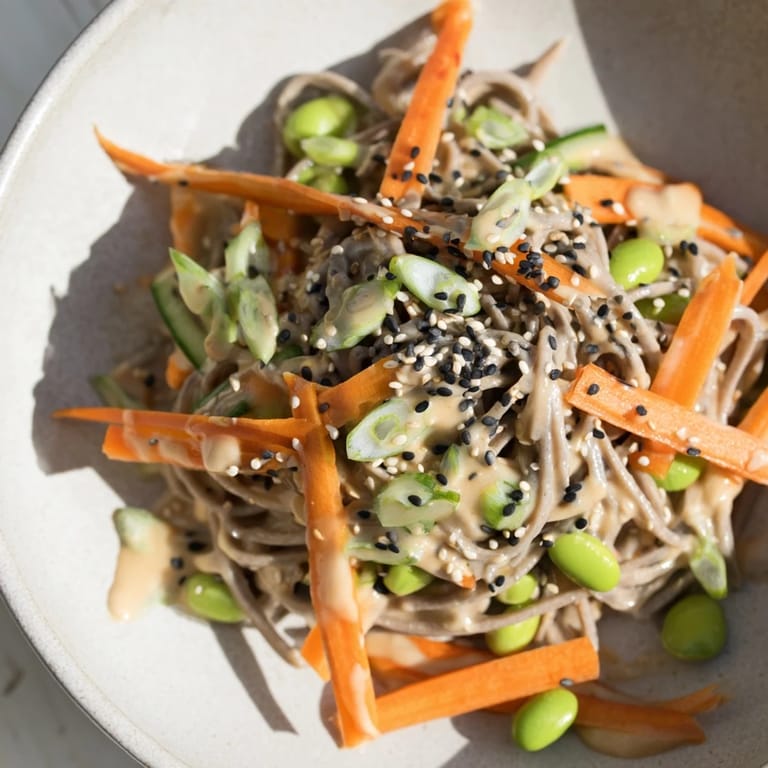
The vegetables aren't written in stone—use whatever is in season and in your crisper drawer. Shredded cabbage, thinly sliced radishes, bell peppers, even chopped avocado work beautifully. I once added roasted beets and it was unexpectedly wonderful, staining everything pink and adding this earthy sweetness that paired perfectly with the sesame. The dressing is the constant; everything else is just you playing with what sounds good.
Timing and Storage
This salad actually improves if you make it a few hours ahead, as the noodles absorb the dressing and everything gets more flavorful. The vegetables might soften slightly, but honestly that's not a bad thing—they become almost tender. It keeps in the fridge for two days, though the noodles will continue to soften and absorb more dressing, so you might need to add a splash more water when you serve it again.
- For a packed lunch, keep the dressing separate and toss right before eating if texture is important to you.
- Toast your sesame seeds fresh if you can, or buy them already toasted from the bulk section—they make a real difference in the final bite.
- If you're feeding a crowd, this doubles easily and actually tastes better made in larger batches where everything gets more evenly coated.
 Save
Save This is the kind of recipe that becomes a quiet favorite because it asks so little and gives so much back. Make it once, and it'll probably find its way back to your table again and again.
Recipe Questions
- → What kind of noodles work best for this salad?
Soba noodles or thin spaghetti are ideal, offering a nice texture and ability to absorb the sesame dressing.
- → Can I make the dressing gluten-free?
Yes, use tamari instead of regular soy sauce to keep the dressing gluten-free.
- → How can I add protein to this dish?
Adding shredded cooked chicken or tofu enhances the protein content without altering the fresh flavors.
- → What is the best way to prepare the vegetables?
Julienne cucumber and carrots for crispness and even mixing, and thinly slice spring onions for a delicate bite.
- → How long should I chill the salad before serving?
Chill for at least 10 minutes to allow the flavors to meld and the dressing to set nicely on the noodles and veggies.