 Save
Save The best dips seem to arrive at parties almost by accident—the ones nobody plans to make but everyone suddenly expects. Years ago, I brought a hastily assembled onion dip to a potluck that turned out so different from the usual packet-mix versions that someone actually asked for the recipe. What made it work wasn't complexity; it was patience with the onions and the courage to use real ingredients. Now whenever I caramelize onions, that kitchen fills with a smell so sweet and savory that people start appearing before I've even finished cooking.
I once made this for a dinner where I was nervous about the menu, so I over-focused on getting the dip right. My friend arrived early and caught me stirring onions for what felt like forever, and she laughed and said most people would've given up by minute fifteen. When everyone arrived and that bowl emptied faster than any of the fancier dishes, we both knew something simple done right beats complicated any day.
Ingredients
- Yellow onions (2 large, finely diced): These are your foundation—they caramelize into pure sweetness when given time and gentle heat, so don't rush them or use red onions here.
- Unsalted butter and olive oil (2 tbsp and 1 tbsp): The combination prevents butter from burning while keeping the flavor rich and authentic.
- Kosher salt and black pepper (½ tsp and ¼ tsp): Season the onions as they cook so flavors deepen throughout, not just at the end.
- Sugar (½ tsp, optional): A tiny pinch helps jump-start caramelization without making anything sweet—use it if your onions aren't browning evenly.
- Sour cream (1½ cups, full-fat): Full-fat is non-negotiable here; the tanginess and texture depend on it, so skip the light version.
- Mayonnaise (½ cup): This adds richness and helps bind everything smoothly—don't substitute with anything else.
- Worcestershire sauce (1 tsp): Just enough umami depth to make people wonder what that savory note is.
- Garlic and onion powder (1 tsp and ½ tsp): These reinforce the onion flavor and add a subtle background warmth without overpowering.
- Fresh chives (¼ cup, finely chopped): The brightness here cuts through the richness—add these last so they stay vibrant green.
- Fresh parsley (1 tbsp, optional): A mild herbal note that makes the dip look more intentional without stealing the show from the onions.
Tired of Takeout? 🥡
Get 10 meals you can make faster than delivery arrives. Seriously.
One email. No spam. Unsubscribe anytime.
Instructions
- Melt your butter and oil together:
- In a large skillet over medium-low heat, combine butter and olive oil, letting them warm until they smell nutty and the butter is fully melted. Medium-low is crucial here—rushing the heat now means burnt onions later.
- Add onions and seasonings:
- Stir in your diced onions along with salt, pepper, and sugar if using. The salt helps draw out the onion's natural moisture so they cook evenly instead of catching and browning unevenly.
- Cook low and slow:
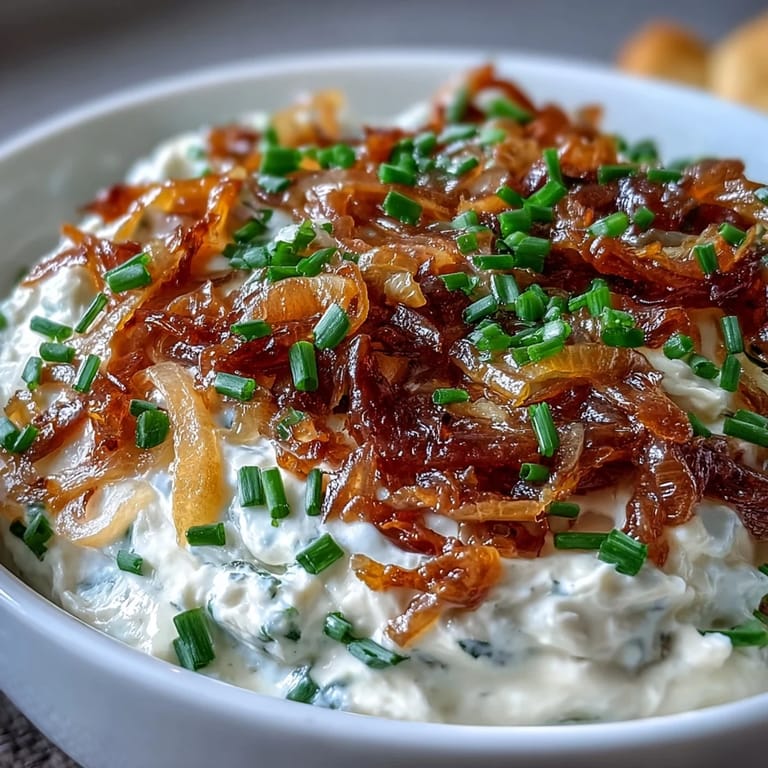
- This is where patience becomes your secret ingredient—stir occasionally (not constantly) for 30 to 35 minutes until the onions transform from crisp and pale to deep golden brown and silky. You'll notice the color shift from yellow to light tan around the 15-minute mark, then gradually deepen; this is exactly right. If they start browning too fast, lower the heat and keep going.
- Cool completely:
- Spread the caramelized onions on a plate to cool to room temperature while you prepare the base. Folding hot onions into sour cream can make the dip too thin.
- Whisk your base:
- In a medium bowl, whisk together sour cream, mayonnaise, Worcestershire sauce, garlic powder, and onion powder until completely smooth and no streaks remain. This takes about a minute of steady whisking.
- Fold everything together:
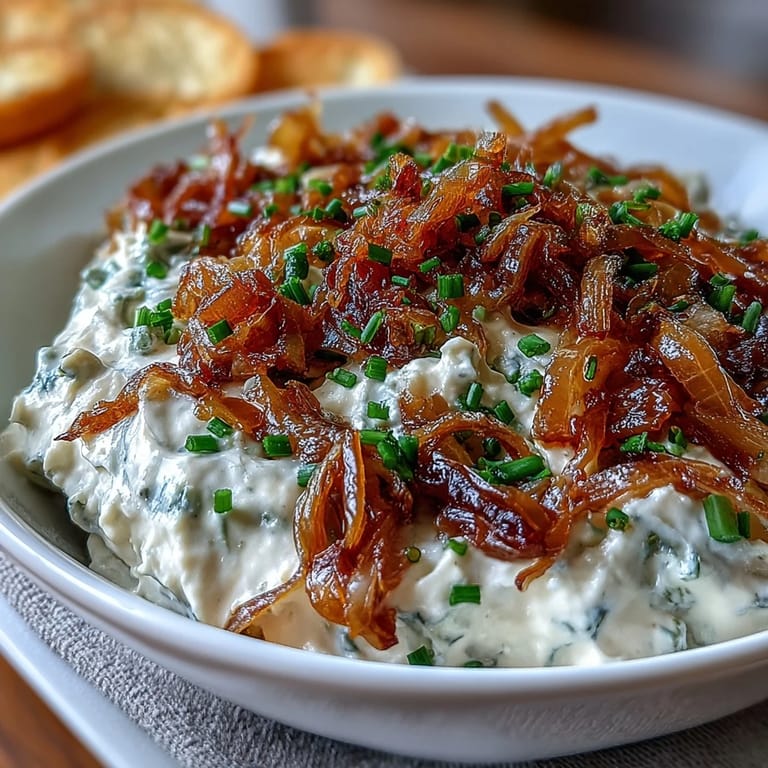
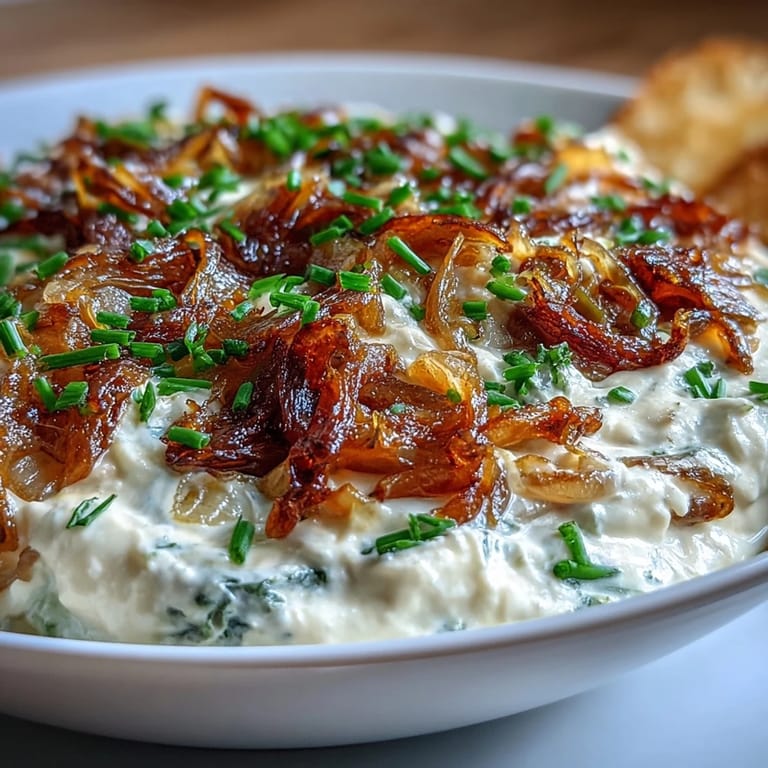
- Once onions are cool, gently fold them into the cream base along with chives and parsley, stirring until evenly combined without overmixing. The goal is a swirl of caramelized onion throughout, not a completely uniform color.
- Taste and adjust:
- Take a spoon and taste; add a pinch more salt, pepper, or Worcestershire if needed. Remember it'll taste slightly less seasoned when cold, so season slightly forward of where you think it should be.
- Chill before serving:
- Cover and refrigerate for at least 1 hour so the flavors meld and marry together. If you can make it the day before, even better—the dip actually improves as it sits.
- Serve with style:
- Transfer to a serving bowl, top with a sprinkle of extra chives, and surround with chips, crackers, or fresh vegetables. Watch how quickly it disappears.
 Save
Save There's a moment when you realize a simple bowl of dip can become the conversation piece at a table—not because it's trendy or complicated, but because people taste something genuine and made with actual care. This one earned that for me the moment someone asked if it was homemade, as if it could possibly be anything else.
The Magic of Low and Slow Caramelization
Caramelization isn't just browning—it's a chemical transformation where the onions' natural sugars slowly break down and reform into hundreds of new flavor compounds, creating that deep, complex sweetness. The first time I actually watched this happen instead of just following instructions, I understood why recipes insist on patience. Your onions should smell almost jammy by the end, and when you taste a spoonful, it should remind you more of something sweet than something savory.
Why Full-Fat Matters Here
I learned this the hard way when someone asked me to make this healthier by using low-fat sour cream, and the result was something thin and a little watery instead of creamy and rich. Fat carries flavor and creates texture—it's not the enemy in small portions, and in a dip like this, it's the whole point. Use the full-fat version and enjoy it without apology.
Variations and Flavor Builds
Once you understand the base, you can play with it—a pinch of cayenne for quiet heat, smoked paprika for a barbecue angle, or even crispy bacon crumbled on top for someone who loves savory depth. I've also swapped half the sour cream for Greek yogurt on occasion, which makes it slightly lighter without sacrificing creaminess. The onions are the star, so anything else you add should whisper, not shout.
- Add a small pinch of cayenne pepper if you want heat without making it obvious.
- Try smoked paprika or a touch of roasted garlic powder for completely different flavor directions.
- Make it a day ahead for deeper, melded flavors that taste even better than when fresh.
 Save
Save This dip became proof that you don't need restaurant secrets or fancy techniques to make something people genuinely love—just real ingredients, time, and the willingness to let things cook at their own pace. It's the kind of thing that makes people feel welcome the moment they taste it.
Recipe Questions
- → How do you caramelize onions properly?
Cook diced onions slowly over medium-low heat with butter and olive oil, stirring occasionally until they turn a deep golden brown, which takes about 30–35 minutes.
- → Can I substitute ingredients for dietary preferences?
Yes, you can replace half the sour cream with Greek yogurt for a lighter version or adjust seasonings to suit personal taste.
- → What herbs complement the dip best?
Fresh chives provide a mild onion flavor, while optional parsley adds a fresh, green note balancing the richness of the dip.
- → How should the dip be served?
Serve chilled with chips, crackers, fresh vegetables, or as a spread on sandwiches for best flavor and texture.
- → Can the dip be prepared in advance?
Yes, preparing the dip a day ahead allows flavors to meld and intensify, improving the overall taste.