 Save
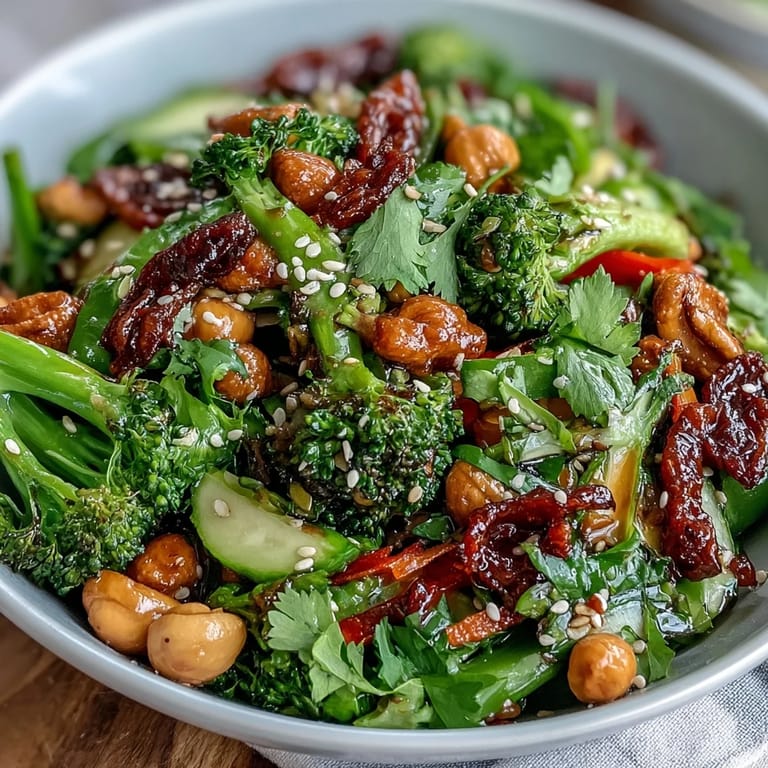
Save There's something about a bowl of celery that makes me slow down. One Tuesday afternoon, I was organizing my refrigerator when I noticed the celery was about to go soft, and instead of tossing it, I grabbed a knife and started slicing it on the diagonal—almost meditative. That's when this salad was born, really: a simple act of not wanting to waste something crisp, then realizing how alive it tasted when paired with a ginger-soy dressing that woke up every single bite.
I made this for my neighbor Sarah when she mentioned feeling stuck in a cooking rut, and watching her face light up when she tasted it reminded me why I love sharing food. She came back the next day asking for the recipe, and now she texts me photos of her variations—sometimes with cashews, once with shredded rotisserie chicken stirred through. That's when I knew it wasn't just a salad; it was a conversation starter.
Ingredients
- Celery stalks: The hero of this salad—buy the brightest, crispest stalks you can find, and slice them on the diagonal so they look intentional and catch the dressing better.
- Red bell pepper: Sweet and juicy, it balances the sharp ginger and salty soy without overpowering the delicate celery.
- Scallions: Don't skip these; they add an onion-forward brightness that grounds the whole bowl.
- Carrot, julienned: Optional, but it's your insurance policy for extra sweetness and texture if your celery was harvested earlier in the season.
- Roasted unsalted peanuts: Rough chop them so some pieces are chunky enough to bite into—uniformly ground peanuts disappear into the salad.
- Sesame seeds: Toast them yourself if you have time; they release a nuttiness that pre-toasted seeds just can't match.
- Fresh cilantro: This isn't negotiable if you want the salad to taste bright and alive rather than just crunchy.
- Soy sauce: Use tamari if gluten bothers you, but taste as you go—different brands vary in saltiness, and you can always add lime juice to balance.
- Rice vinegar: It's milder than distilled vinegar and lets the ginger sing without sharpness.
- Toasted sesame oil: A small amount goes far; it's the ingredient that makes people ask what you did differently.
- Honey or maple syrup: Just enough to round out the heat and acid without making it a sweet salad.
- Fresh ginger: Grate it finely so it disperses evenly; chunks are jarring when you're expecting smooth dressing.
- Garlic: One clove, minced fine, adds depth without being aggressive.
- Lime juice: Freshly squeezed, never bottled—it's the last thing you taste and sets the tone for the whole bowl.
- Chili flakes: Optional, but a gentle heat makes the brightness feel more complex.
Tired of Takeout? 🥡
Get 10 meals you can make faster than delivery arrives. Seriously.
One email. No spam. Unsubscribe anytime.
Instructions
- Gather your vegetables and get them ready:
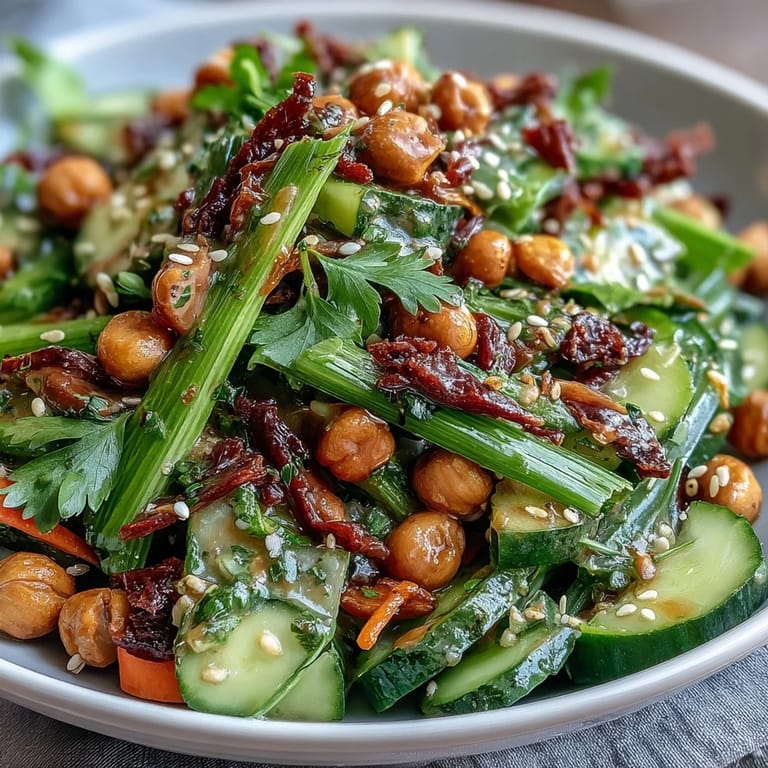
- Slice your celery on the diagonal so each piece catches more surface area for the dressing. Slice the bell pepper thin, julienne the carrot if using, and slice the scallions—you're building a salad that's meant to be seen and enjoyed, not hidden under thick pieces.
- Build the salad bowl:
- Toss the celery, pepper, scallions, carrot, and cilantro together in a large bowl, making sure everything is loosely combined so the dressing can reach every bit. At this point, it should smell fresh and almost alive.
- Make the dressing with intention:
- In a small bowl or jar, whisk together the soy sauce, rice vinegar, sesame oil, honey, ginger, garlic, and lime juice until the honey dissolves completely. Taste it—it should make you pause, a little salty, a little sharp, a little sweet, all at once.
- Bring them together:
- Pour the dressing over the vegetables and toss gently but thoroughly, making sure every piece gets coated. The salad will start to glisten and soften just slightly around the edges.
- Add texture and finish:
- Scatter the chopped peanuts and sesame seeds over the top and toss one more time, keeping some of them on the surface for visual appeal and that satisfying crunch when you bite into it. Serve immediately if you want maximum crispness, or let it sit for 10 minutes if you prefer the vegetables slightly more tender and the flavors more unified.
 Save
Save There's a moment every time I make this when my hands are wet from washing vegetables and the whole kitchen smells like fresh ginger and lime, and I remember why I cook at all. It's not about impressing anyone or following a recipe perfectly—it's about that moment when something simple and honest sits in a bowl, ready to be shared.
Why This Salad Works Year-Round
In summer, it's refreshing served ice-cold straight from the refrigerator, almost like a palate cleanser between heavier dishes. In winter, when fresh produce feels scarce, it's a reminder that celery and carrots are always there, waiting to taste bright and alive when dressed with confidence. Spring brings new, tender celery to the farmers' market that's almost sweet, and fall is when you'll find the crunchiest stalks of the year.
Making It a Complete Meal
While it's perfect as a side dish, I've learned this salad becomes something more substantial when you add protein. Shredded cooked chicken stirred through makes it a lunch that doesn't need anything else; crispy tofu cubes add a chewy contrast to all that snap; even a poached egg on top turns it into something elegant enough for a light dinner.
Playing with Variations
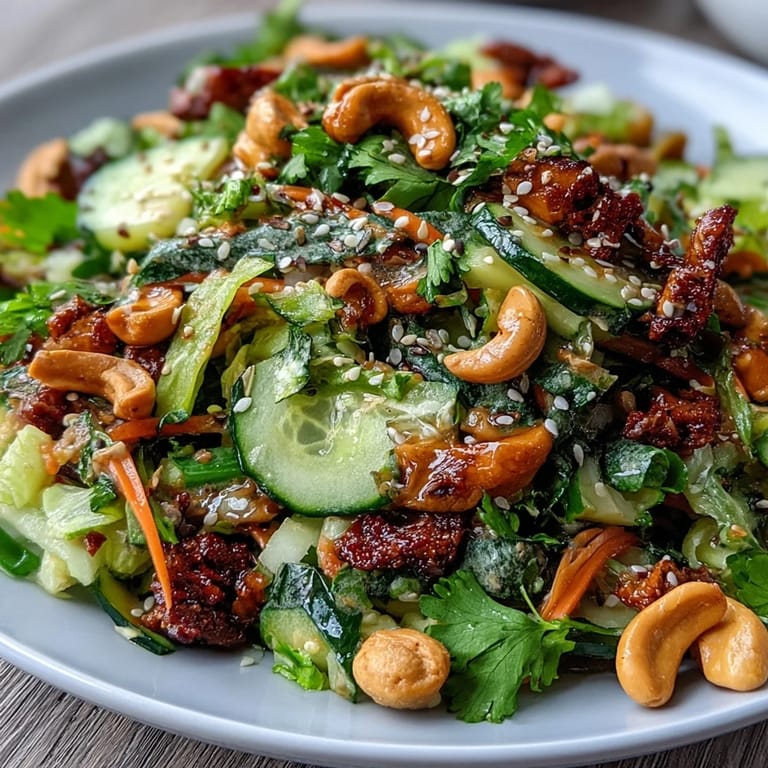
The beauty of this salad is how forgiving it is to customization—I've made it with cashews when peanuts weren't on hand, and honestly, they're just as good, bringing a slightly buttery quality the peanuts don't have. The dressing itself is a template; I've added a teaspoon of fish sauce for deeper umami, swapped the sesame oil for peanut oil when I was out, and once even stirred in a tablespoon of white miso when I wanted it richer. The core stays the same—celery, crunch, and that perfect balance of salty, sour, sweet, and hot—but you're free to play.
- Try it with crispy shallots scattered on top for a restaurant-quality garnish that costs almost nothing.
- Serve it over lettuce or cooked grains if you want something more filling than a bowl of vegetables.
- Make a double batch of dressing and keep it in a jar in the refrigerator for up to five days—it works on noodles, roasted vegetables, and even rice bowls.
 Save
Save This salad has a way of turning an ordinary Tuesday lunch into something you actually look forward to, and that's what makes it worth keeping close. It's proof that sometimes the simplest things, treated with a little attention and respect, are exactly what you need.
Recipe Questions
- → How can I make the salad gluten-free?
Use tamari instead of regular soy sauce to keep the salad gluten-free while maintaining its savory flavor.
- → Can I add protein to this dish?
Yes, shredded cooked chicken or tofu can be added for extra protein and heartiness.
- → What nuts can substitute peanuts?
Cashews or almonds make great alternatives to peanuts, offering different textures and flavors.
- → How soon should the salad be served?
Serve immediately for maximum crunch or chill for about 10 minutes to allow flavors to meld.
- → Is the dressing spicy?
The dressing can be mildly spicy if you include chili flakes or finely chopped red chili; otherwise, it remains mild and tangy.
- → Can I prepare this salad in advance?
It’s best prepared fresh for crispness, but you can prep ingredients separately and toss just before serving.