 Save
Save The first time I made biryani at home, I was intimidated by the complexity—all those whole spices, the layering, the timing. But then a friend mentioned her quick weeknight version, and everything clicked. She showed me how to skip the fancy steps and just let one pot do all the work, and suddenly this restaurant-worthy dish became something I could actually pull off on a Tuesday. That's when I realized biryani doesn't need to be precious or complicated to taste absolutely magical.
I made this for my partner on a night when we were both exhausted, and I remember standing at the stove listening to the cardamom and cinnamon snap and pop in the heat. The whole kitchen smelled like a spice market had somehow relocated to our apartment, and by the time I poured in that water and covered the pot, we were both hovering in the doorway waiting for it to finish.
Ingredients
- Boneless, skinless chicken thighs (500 g): They're more forgiving than breast meat and stay tender even if your timing isn't perfect, plus they have way more flavor.
- Plain yogurt (2 tbsp): This is your tenderizer and flavor base—it keeps the chicken juicy while the spices do their work.
- Ground turmeric, cumin, and coriander (1 tsp each): These three are the holy trinity of biryani; together they create that warm, earthy base that makes everything taste right.
- Basmati rice (300 g): The long grains stay separate and fluffy, which is non-negotiable for proper biryani texture.
- Whole spices—bay leaf, cloves, cardamom, cinnamon (1 of each): These release their oils as they cook and perfume the entire pot; don't skip them even though they seem optional.
- Oil or ghee (2 tbsp): Ghee tastes better, but vegetable oil works fine if that's what you have on hand.
- Onion, garlic, ginger, tomato: This aromatic base is where half the depth of flavor comes from, so don't rush through caramelizing that onion.
Tired of Takeout? 🥡
Get 10 meals you can make faster than delivery arrives. Seriously.
One email. No spam. Unsubscribe anytime.
Instructions
- Coat your chicken in spiced yogurt:
- Combine the chicken with yogurt, turmeric, cumin, coriander, chili powder, and salt, mixing everything together so each piece gets coated evenly. Even 10 minutes of sitting here makes a difference in how tender the chicken becomes.
- Build your flavor base with golden onions:
- Heat oil or ghee in a large pot over medium heat and add the sliced onions, stirring them occasionally until they turn deep golden brown—this takes about 6 to 8 minutes and is absolutely worth the wait. This is where your biryani gets its sweetness and depth.
- Wake up the spices:
- Stir in your minced garlic and ginger, cooking for just a minute until the raw edge softens and the aroma hits you in the face. This is the smell that makes biryani unmistakable.
- Add the tomato and whole spices:
- Toss in the diced tomato and cook until it breaks down a bit, then add your bay leaf, cloves, cardamom, and cinnamon stick. Stir for a minute or so to release all that fragrant magic into the oil.
- Cook the chicken until it's lightly browned:
- Pour in your marinated chicken and let it cook for 5 to 7 minutes, stirring occasionally, until it's no longer pink on the outside. It doesn't need to be fully cooked yet—the rice will finish the job.
- Combine rice and chicken:
- Add your rinsed basmati rice and stir gently until the rice is coated in all those spices and aromatics. This gentle stirring distributes the flavors throughout without breaking the rice grains.
- Simmer until everything comes together:
- Pour in 600 ml of water, bring it to a gentle boil, then cover the pot tightly and turn the heat down to low. Cook for 18 to 20 minutes until the rice is tender and the water is completely absorbed, which happens quietly and feels a little bit like magic.
- Rest and fluff:
- Remove from heat, leave the lid on, and let it sit for 5 minutes while everything settles. Then fluff it gently with a fork, breaking up any clumps and loosening the rice so it's light and fluffy.
- Finish with bright garnish:
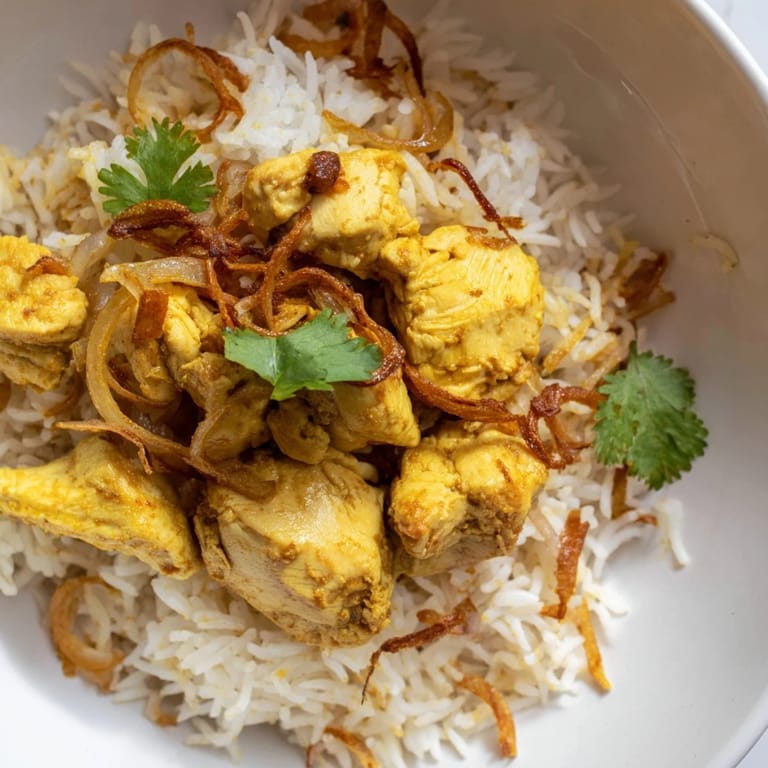
- Top with fresh cilantro, fried onions if you have them, and serve with lemon wedges so people can squeeze brightness over their plate.
 Save
Save What I love most about this dish is how it transforms from separate components into something whole and unified the moment it finishes cooking. My family gathers around the pot before I even fluff the rice, drawn by that smell alone, and somehow we always end up lingering at the table longer than we planned.
Choosing Your Chicken Wisely
Thighs are genuinely the move here because they have enough fat to stay moist through the cooking process, and they're forgiving if your heat is a little high or you lose track of time. I've made this with chicken breast before out of habit or what was on sale, and the difference is noticeable—the thighs give you a dish that feels luxurious and tender, while breast meat can turn stringy or dry. If you do go with breast, just keep a closer eye on it during that partial cooking stage and don't let it sit in the pot any longer than necessary.
The Spice Blend That Makes It All Work
Ground spices give you the deep, warm base, but the whole spices—those cardamom pods, cinnamon stick, and cloves—are what make your kitchen smell like a spice bazaar and give the dish that layered, almost floral complexity. The two work together, with the ground spices dissolving into the rice and chicken while the whole spices stay distinct little flavor bombs. I learned this by accident when I ran out of cardamom pods once and just used more ground cardamom instead, and the dish tasted flat and one-dimensional. It's one of those cooking lessons that stuck with me.
Timing, Texture, and the One-Pot Magic
The beauty of this version is that everything cooks in one pot, which means you can't actually mess it up too badly because all the liquid stays right there where the rice needs it. The key is getting your heat right—medium for building the base, then low for the simmer—and trusting that 18 to 20 minutes is long enough. Once you cover it and turn it down, you're done; there's no stirring or checking or fussing, just patience and the smell getting better with each passing minute.
- Let the rice rest those 5 minutes after cooking stops, because it's still absorbing residual heat and moisture even though the stove is off.
- Fluff gently with a fork rather than stirring with a spoon, which breaks the grains and makes everything clumpy.
- If you want extra richness, try whisking a pinch of saffron into warm milk and drizzling it over the rice just before you cover the pot to cook.
 Save
Save This is the kind of dish that tastes like comfort and effort even though it's surprisingly simple, and it's the first recipe I make when someone says they want to learn to cook something that feels a little fancy. Serve it hot with a squeeze of lemon and maybe some cooling raita or cucumber salad on the side, and watch how quickly the pot empties.
Recipe Questions
- → What type of chicken works best?
Boneless, skinless chicken thighs are ideal for moist, tender results, but chicken breasts can also be used carefully to avoid dryness.
- → Can basmati rice be substituted?
While basmati rice provides a distinct aroma and texture, long-grain rice can be used as a substitute, though the flavor profile will differ slightly.
- → How long should the chicken be marinated?
Marinating for at least 10 minutes enhances flavor, but up to 30 minutes allows the spices to penetrate more deeply for richer taste.
- → Is it necessary to use whole spices?
Whole spices like bay leaf, cloves, cardamom, and cinnamon add authentic aroma and complexity, enriching the overall dish once infused during cooking.
- → Can this dish be made gluten-free?
Yes, this preparation is naturally gluten-free when using pure spices and uncontaminated ingredients.
- → What garnishes enhance flavor best?
Fresh cilantro, optional fried onions, and lemon wedges add brightness and contrast, rounding out the dish’s layers of taste and texture.