 Save
Save My tiny apartment kitchen smelled like fermented heaven the first time I attempted kimchi fried rice at 2 AM after a long shift. I had no idea what I was doing, just throwing leftover rice and a jar of kimchi into a hot pan with way too much enthusiasm. That chaotic midnight experiment turned into the most surprisingly delicious thing I had ever made. Now it is my go-to comfort food whenever life feels overwhelming or I just need something warm and fiercely flavorful.
I made this for my skeptical roommate who claimed to hate anything fermented and she literally licked her bowl clean. She stood there watching me cook the second batch taking mental notes on how to get that perfect rice caramelization. Now we have a standing agreement that I make kimchi fried rice whenever either of us has had a terrible day at work.
Ingredients
- 2 cups cooked short-grain rice: Day old rice is nonnegotiable here because fresh rice turns into mush and nobody wants sad mushy fried rice
- 1 cup napa cabbage kimchi: The older and more fermented your kimchi the better the flavor will be so do not be afraid of that jar sitting in the back of your fridge
- 2 tbsp kimchi juice: This liquid gold is what carries most of the seasoning so do not skip it even if it seems weird to pour brine into your rice
- ½ cup yellow onion: Finely chopped so they disappear into the rice rather than creating big onion chunks in every bite
- ½ cup carrot: Diced small enough that they cook through quickly and add little pockets of sweetness throughout the dish
- 2 green onions: Separate the white and green parts because the whites need time to soften while the greens just need a quick toss at the end
- 1 tbsp gochujang: This Korean chili paste brings the heat and depth but you can dial it up or down depending on your spice tolerance
- 1 tbsp soy sauce: Adds that essential savory base note and helps season the rice evenly
- 1 tsp toasted sesame oil: Use this as a finishing oil because heating it too long kills that beautiful nutty aroma
- ½ tsp sugar: Just enough to balance all the tangy and salty elements without making it taste sweet
- ⅛ tsp black pepper: Freshly ground makes a huge difference here adding one more layer of complexity
- 2 tbsp vegetable oil: A neutral oil with a high smoke point is crucial for getting those crispy rice edges without burning
- 1 tsp toasted sesame seeds: The final crunch that makes each bowl feel restaurant quality
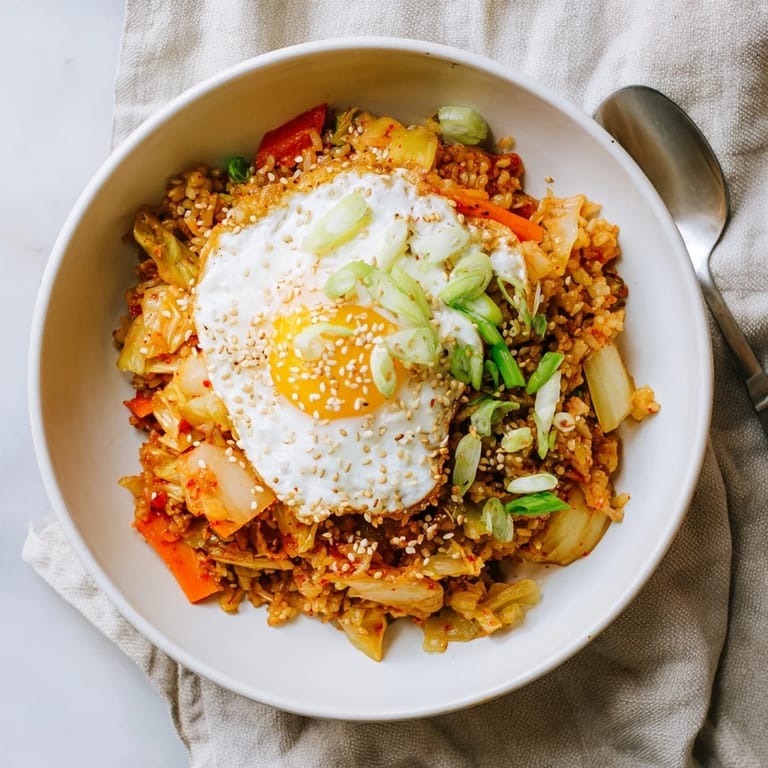
- 2 fried eggs: Completely optional but runny yolks mixing into spicy rice is basically food heaven
Tired of Takeout? 🥡
Get 10 meals you can make faster than delivery arrives. Seriously.
One email. No spam. Unsubscribe anytime.
Instructions
- Get your vegetables sizzling:
- Heat 1 tablespoon of vegetable oil in a large skillet or wok over medium high heat then toss in the chopped onion carrot and white parts of the green onion. Let them cook for 2 to 3 minutes until they start to soften and your kitchen begins to smell amazing.
- Build the flavor foundation:
- Add the chopped kimchi and cook for another 2 to 3 minutes until the edges start to caramelize and the fermented smell transforms into something rich and savory.
- Create the sauce coating:
- Stir in the gochujang soy sauce kimchi juice sugar and black pepper. Let everything cook for 1 minute while stirring constantly so the vegetables get evenly coated in that spicy red mixture.
- Bring in the rice:
- Add your rice and break up any clumps with your spatula. Toss everything together and stir fry for 3 to 4 minutes until the rice is evenly coated in the red sauce and heated through with some pieces getting crispy and golden.
- Add the finishing touches:
- Drizzle with sesame oil and scatter the green parts of the green onion over the rice. Stir well to combine and take a quick taste to see if you need any adjustments.
- Fry those eggs if you want:
- Heat the remaining oil in a separate pan and fry your eggs until the whites are set but the yolks are still jiggly and glorious.
- Serve it up:
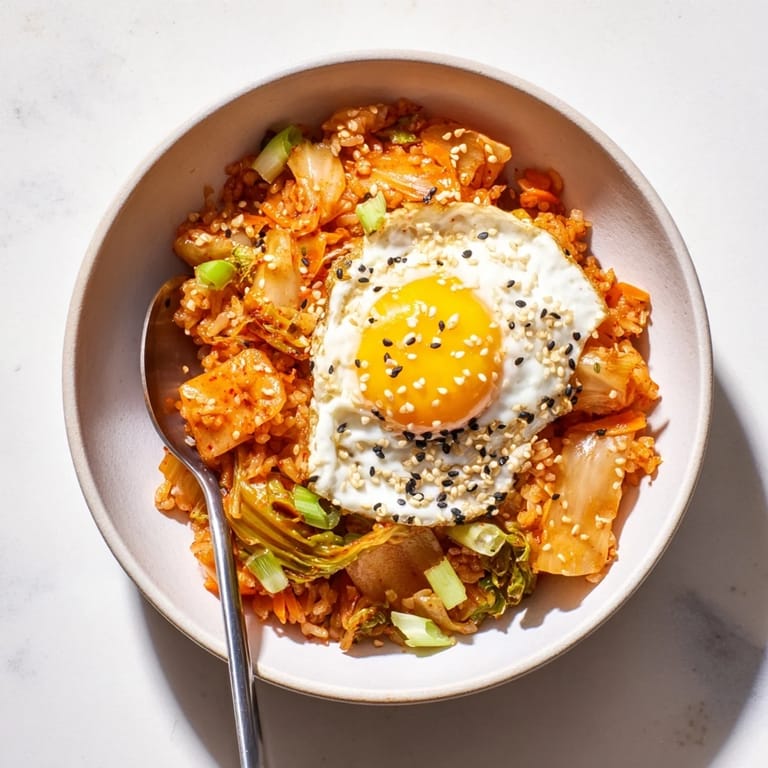
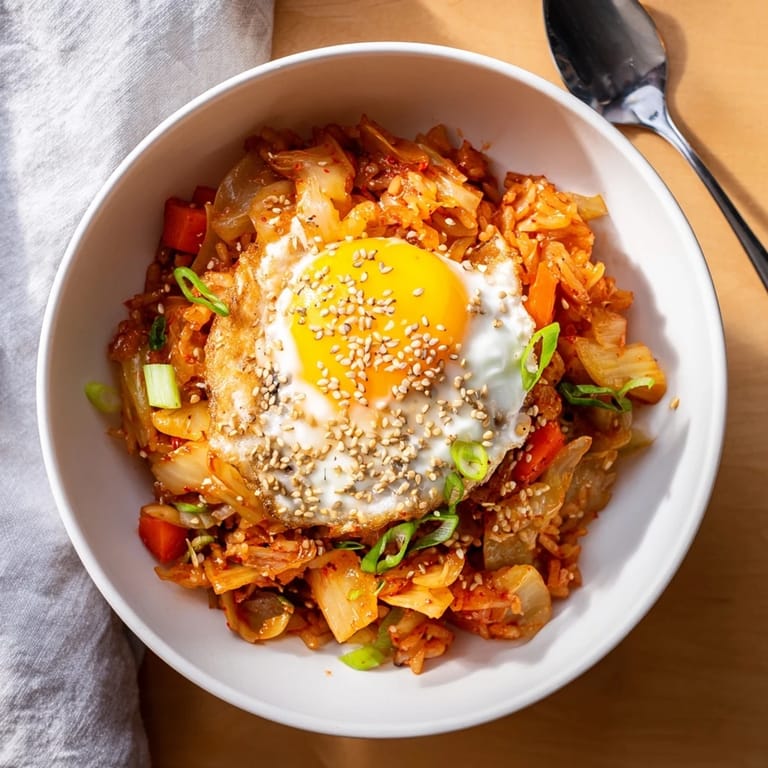
- Pile the kimchi fried rice into bowls top each with a fried egg if using and sprinkle with sesame seeds. Let that yolk break and mix into the rice before you start eating.
 Save
Save This recipe became my signature dish during grad school when cooking felt like the only thing I could control. I have served it to hungover friends heartbroken roommates and even once at a potluck where it disappeared before anyone could ask what was in it.
Making It Your Own
I love adding a handful of spinach or frozen peas during the last minute of cooking for some extra color and nutrition. Sometimes I throw in diced tofu or shredded chicken if I want to make it feel more like a complete meal.
The Perfect Rice Every Time
Spread your cooked rice on a baking sheet and let it cool completely before refrigerating it. This extra step helps each grain firm up individually so you get that restaurant style texture where every piece of rice is separate and slightly crispy.
Serving Ideas
A cold glass of lager or some chilled barley tea cuts through the spice perfectly. I also like to set out extra kimchi and some quick pickled cucumbers on the side.
- Squeeze some fresh lime juice over the top right before serving to brighten everything up
- Top with shredded nori or furikake for an extra savory punch
- Keep a bottle of sriracha on the table for the spice lovers in your life
 Save
Save There is something deeply satisfying about turning humble leftovers into something that feels special and comforting. I hope this recipe finds you on a night when you really need it.
Recipe Questions
- → Why use day-old rice?
Day-old rice has dried slightly, preventing mushiness during stir-frying. Freshly cooked rice contains too much moisture and clumps together. If you only have fresh rice, spread it on a baking sheet and refrigerate uncovered for 1–2 hours to dry.
- → Can I make this spicy?
Absolutely. Increase gochujang to 2 tablespoons or add sliced fresh chili peppers. You can also add more kimchi juice for extra heat. Remember that gochujang brings both heat and subtle sweetness, so taste as you adjust.
- → What protein options work well?
Beyond the classic fried egg topping, try diced tofu, shredded chicken, or shrimp. Add protein during step 3, cooking until heated through. For crispy tofu, pan-fry separately and add as a garnish.
- → Is this suitable for meal prep?
Yes. Store cooled portions in airtight containers for up to 4 days. Reheat in a skillet with a splash of water or sesame oil. The flavors actually improve overnight as the kimchi continues to ferment slightly.
- → What can I substitute for gochujang?
Mix Sriracha with a teaspoon of miso paste for similar heat and depth. Alternatively, use red pepper flakes with extra soy sauce and a touch of sugar. The flavor profile will differ slightly but remain delicious.
- → How do I achieve restaurant-style texture?
Use high heat and avoid overcrowding the pan. Let the rice rest undisturbed for 30 seconds between tosses to develop crispy edges. A well-seasoned wok or cast iron skillet works best for that characteristic wok hei flavor.