 Save
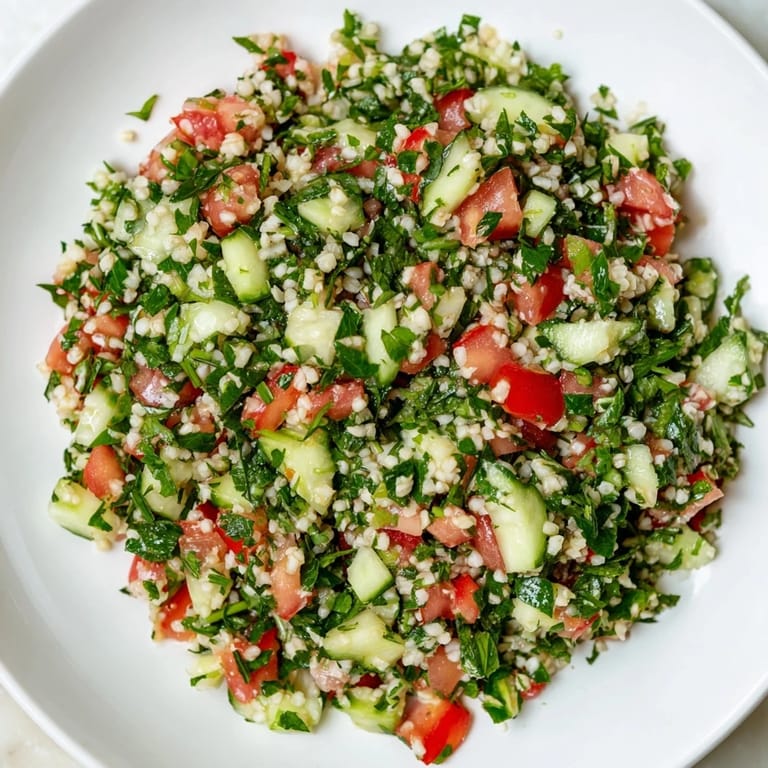
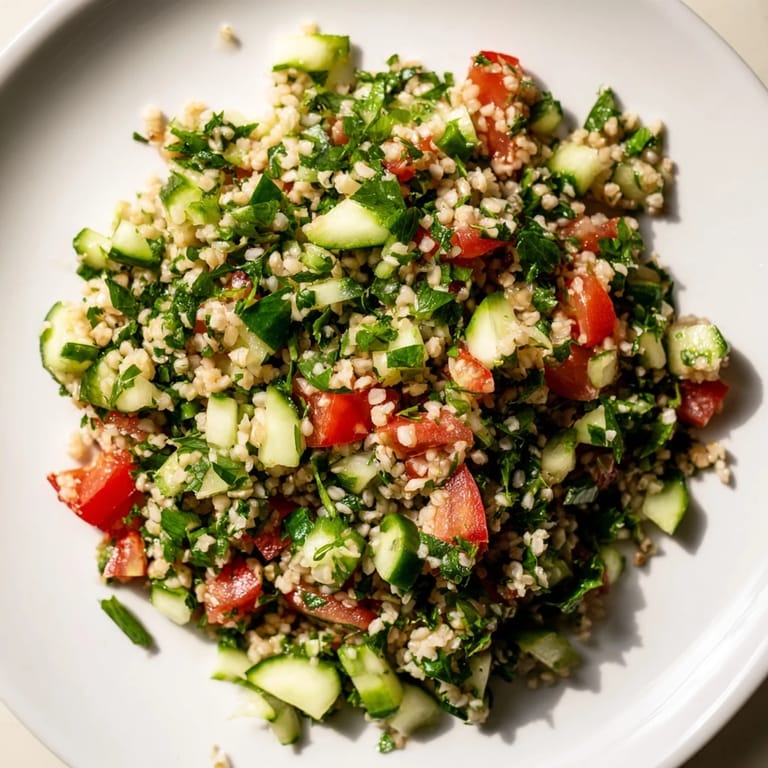
Save There's something about the bright green of fresh parsley that stops me mid-grocery-run every time. A friend once took me to a Lebanese restaurant on a humid summer evening, and the tabbouleh arrived like a little garden on a plate—so alive and crisp it made everything else on the table fade away. I went home determined to recreate it, and after a few experiments and one particularly soggy batch (too much dressing, too early), I finally understood the magic. It's not just a salad; it's the taste of freshness itself.
I made this for a dinner party where I was already running behind, and tabbouleh was my salvation—I could prep it while everyone settled into the living room with drinks. The parsley-chopping alone filled the kitchen with such a clean, sharp smell that it set the whole tone for the meal. My neighbor, who grew up eating this at family tables in Beirut, took one bite and nodded in a way that meant everything.
Ingredients
- Fine bulgur wheat: Half a cup soaks up the dressing perfectly—this is the foundation, and using fine rather than coarse makes all the difference in texture.
- Boiling water: Three-quarters cup to hydrate the bulgur gently; don't skip the precise temperature or it'll stay hard.
- Flat-leaf parsley: Two large bunches (about 2 cups packed) is the star—this isn't a garnish, it's the main event, so don't skimp or substitute curly parsley.
- Fresh mint: Half a cup chopped brings a cool brightness that lifts the whole salad.
- Spring onions: Two, thinly sliced, add a sharp bite that balances the lemon.
- Medium tomatoes: Three, seeded and diced, so they don't weep into the salad and make it soggy.
- Cucumber: Half a medium one, diced, stays crisp and adds refreshing crunch.
- Extra-virgin olive oil: A quarter cup of good quality—this matters, as it's tasted directly in the dressing.
- Freshly squeezed lemon juice: A quarter cup, because bottled misses the brightness that makes tabbouleh sing.
- Fine sea salt and freshly ground black pepper: Half teaspoon and a quarter teaspoon respectively; these amounts seem small but season the whole salad perfectly.
Tired of Takeout? 🥡
Get 10 meals you can make faster than delivery arrives. Seriously.
One email. No spam. Unsubscribe anytime.
Instructions
- Hydrate the bulgur:
- Place the fine bulgur in a small bowl and pour over boiling water, then cover and let it sit for 10 to 15 minutes until tender and fluffy. This is your moment to chop everything else while it softens.
- Build the herb and vegetable base:
- In a large bowl, combine the chopped parsley, mint, spring onions, seeded tomatoes, and diced cucumber—this is where the salad gets its character, so chop everything with care.
- Add the cooled bulgur:
- Once the bulgur has cooled and you've fluffed it with a fork to break up any clumps, fold it gently into the herb mixture so nothing gets crushed.
- Make the dressing:
- In a small bowl, whisk together the olive oil, fresh lemon juice, salt, and pepper until the salt dissolves completely and the mixture emulsifies slightly.
- Bring it together:
- Pour the dressing over the salad and toss gently but thoroughly so every bite has herbs, bulgur, and vegetables in balance. Taste and adjust salt or lemon to your preference.
- Chill or serve:
- Let it rest for a few minutes before serving chilled or at room temperature—the flavors deepen as it sits, but don't wait more than a couple of hours or it starts losing its crispness.
 Save
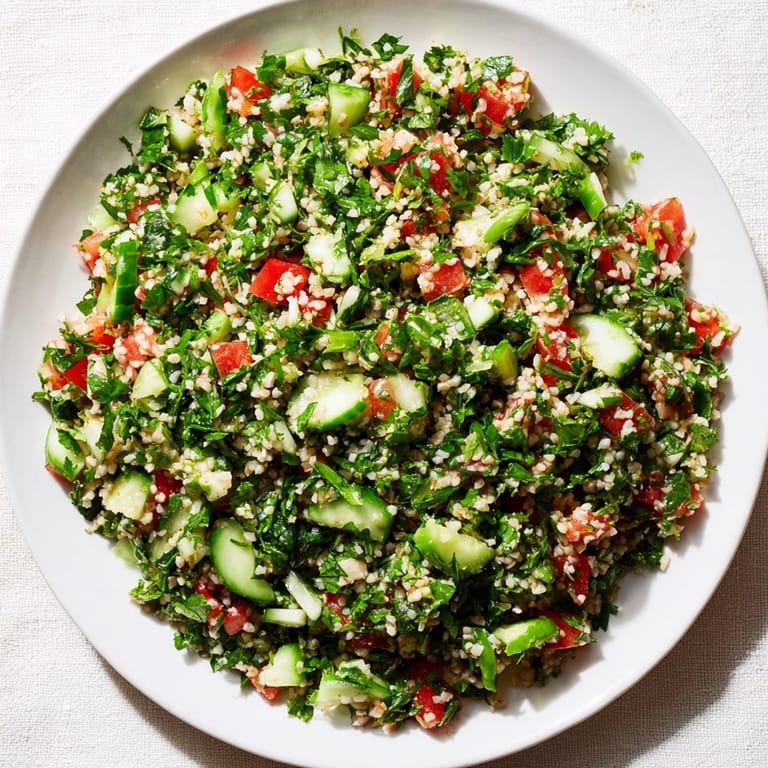
Save What struck me most was serving this at a potluck where someone said it tasted like summer in a bowl—and I realized that's exactly what happened in those 20 minutes of chopping and combining. A salad became a moment, a flavor memory someone will carry home.
Why Fresh Herbs Are Everything Here
Tabbouleh lives or dies by the freshness of its parsley and mint, and dried herbs will turn this into something sad and one-note. The parsley should smell bright and almost peppery when you first chop it—that's when you know you're starting right. I keep fresh herbs in a damp paper towel in the crisper drawer because they're too important to let wilt, and I chop them just before assembling so they stay perky.
The Bulgur Question: Timing and Texture
Getting the bulgur right took me a few tries because I was used to cooking grains on the stove, but soaking is its own simple skill. The water should be boiling when it hits the bulgur, and 10 to 15 minutes is the window where it goes from hard to tender without turning to mush. If you let it sit too long, it turns mushy; too short, it stays grainy in an unpleasant way. I set a timer now because my brain doesn't always register time correctly when I'm in the middle of chopping vegetables.
Making It Your Own
While this is the classic preparation, I've seen tabbouleh made with pomegranate seeds instead of some tomatoes, or with a pinch of cinnamon that whispers rather than shouts. The core of parsley, lemon, and olive oil stays the same, but the rest is flexible enough to match what's in season or what you're craving.
- For gluten-free, swap the bulgur for cooked quinoa in the same amount and proceed as written.
- A tiny pinch of sumac sprinkled on top adds a subtle tartness that some people swear by.
- If you're making this ahead, keep the dressing separate and toss just before serving to maintain maximum freshness and crunch.
 Save
Save This salad has become my answer to so many moments—when I need something fast and honest, when I want to taste fresh, when I'm cooking for people who matter. It's simple enough to make on a Tuesday and elegant enough to serve at a table full of guests.
Recipe Questions
- → What is the best grain to use for this salad?
Fine bulgur wheat is traditional for a slightly nutty texture, but cooked quinoa works well for a gluten-free version.
- → How should the herbs be prepared?
Use flat-leaf parsley and fresh mint, finely chopped to release their flavors and evenly distribute throughout the salad.
- → Can this salad be stored after preparation?
It’s best enjoyed fresh but can be refrigerated for up to two days. Flavor and texture may diminish slightly over time.
- → What dressing ingredients balance the flavors?
Freshly squeezed lemon juice and extra-virgin olive oil are key, providing bright acidity and richness, enhanced with salt and black pepper.
- → Is cooking required for this dish?
No cooking is needed aside from soaking bulgur in hot water until tender, making it a quick and easy preparation.