 Save
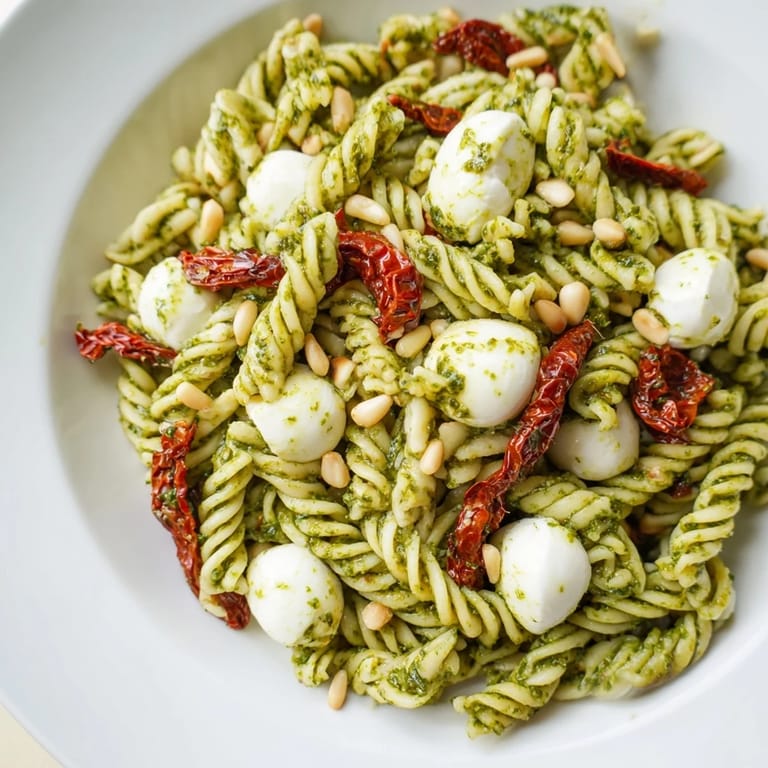
Save There's something about a pasta salad that transforms the moment you add pesto to it—suddenly you're not just tossing noodles together, you're capturing an entire garden in a bowl. I discovered this dish on an unexpectedly warm spring afternoon when I had leftover basil from trying to grow herbs on my kitchen windowsill, fresh mozzarella that needed using, and a sudden invitation to a backyard gathering I'd almost forgotten about. Twenty-five minutes later, I had something that tasted like I'd planned it for weeks.
I remember bringing this to a potluck where everyone else had made heavy casseroles and complicated salads, and somehow this bright green bowl disappeared first. A friend asked for the recipe while still chewing, which is always the best compliment, and I realized then that the simplest dishes are often the ones people want to replicate at home.
Ingredients
- Pasta (350 g): Use fusilli, penne, or farfalle—the shapes catch pesto in their curves and crevices instead of letting it slide off. Al dente is non-negotiable here; slightly firm pasta holds up better when tossed with cold ingredients.
- Basil pesto (100 g): Homemade tastes brighter if you have time, but good store-bought pesto saves you from blanching basil and is honestly just fine for a weeknight salad.
- Sun-dried tomatoes (100 g): The concentrated sweetness balances the pesto's intensity and adds texture that fresh tomatoes can't match in a cold salad.
- Fresh mozzarella (200 g): Use bocconcini if you want little pockets of creamy richness, or dice larger mozzarella if that's what you have; either way, don't use shredded cheese, which melts into the warmth of the pasta and disappears.
- Pine nuts (40 g): Toast them yourself if possible—you'll hear them start to smell nutty and fragrant, which is the exact moment they're perfect. Store-bought toasted ones work, but just make sure they haven't been sitting around.
- Fresh baby spinach (50 g, optional): It wilts slightly from the warm pasta and pesto, adding a subtle earthiness that doesn't compete with the other flavors.
- Extra virgin olive oil (2 tbsp): This is what helps the pesto coat everything evenly, so don't skip it even though there's pesto already in the mix.
- Lemon zest: Just one lemon's worth brightens the whole thing without making it taste obviously citrusy.
- Salt and freshly ground black pepper: Taste as you go—pesto and mozzarella are both salty, so you might need less than you'd think.
Tired of Takeout? 🥡
Get 10 meals you can make faster than delivery arrives. Seriously.
One email. No spam. Unsubscribe anytime.
Instructions
- Cook the pasta until it's just shy of tender:
- Boil salted water in a large pot, add pasta, and cook according to package directions but check it a minute early—you want it to have a slight resistance when you bite it. Drain it, rinse under cold water while stirring gently with your fingers so it cools quickly and doesn't clump, then let it sit in the colander for a minute.
- Create the pesto base:
- In your largest mixing bowl, combine the cooled pasta with the pesto and olive oil, then toss gently but thoroughly—you're coating each piece, not aggressively mixing. The oil helps the pesto distribute evenly instead of staying in clumps.
- Add the flavorful components:
- Scatter in the sun-dried tomatoes, mozzarella pieces, toasted pine nuts, and spinach if you're using it, then toss everything together with the same gentle hand. Be careful not to break up the mozzarella or crush the pine nuts—they're supposed to stay whole and distinct.
- Season and taste:
- Sprinkle with salt, pepper, and lemon zest, then actually taste it before deciding if it needs more seasoning. Pesto and mozzarella are already contributing saltiness, so you might surprise yourself at how little you need to add.
- Decide when to eat it:
- You can serve it right away while there's still a little warmth to it, or cover it and chill it for up to an hour—the flavors meld and soften slightly when cold, which honestly might be the better version.
 Save
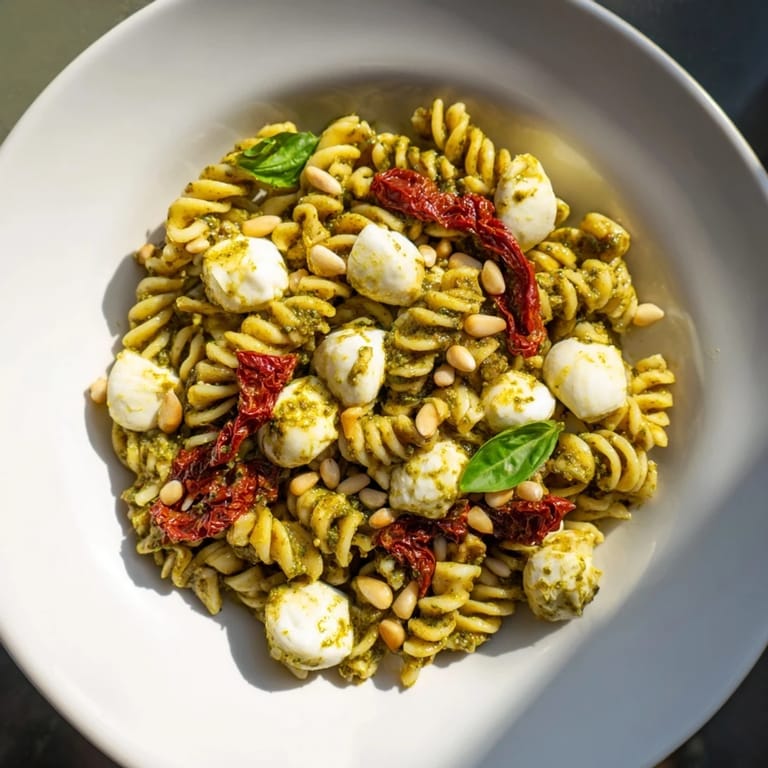
Save There's a moment when you first taste this salad where it all clicks—the creamy mozzarella, the herby pesto coating everything, the little bursts of sun-dried tomato sweetness, and those buttery pine nuts. It stopped being just a recipe I followed and became the dish I reach for whenever I want something that feels intentional without being complicated.
The Pine Nut Question
Pine nuts have a reputation for being expensive, which they are, and for disappearing from your mouth in a way that feels almost unfair for the price. But they add a richness that toasted walnuts or almonds, while perfectly good substitutes, can't quite replicate—they're almost buttery, almost sweet, and they melt on your tongue. If the cost makes you hesitate, walnuts are genuinely excellent and less than half the price, but if you've never splurged on pine nuts before, this is the recipe that might convince you to do it at least once.
Making It Your Own
The beauty of this salad is that it's a framework rather than a rigid blueprint, and once you've made it once, you'll start improvising. Some people add fresh basil on top at the last moment, which I do when I have it and want to feel like I've put in extra effort. Others toss in arugula for peppery contrast, or swap the mozzarella for feta if they want something tangier and more assertive in the background.
Storage and Serving Wisdom
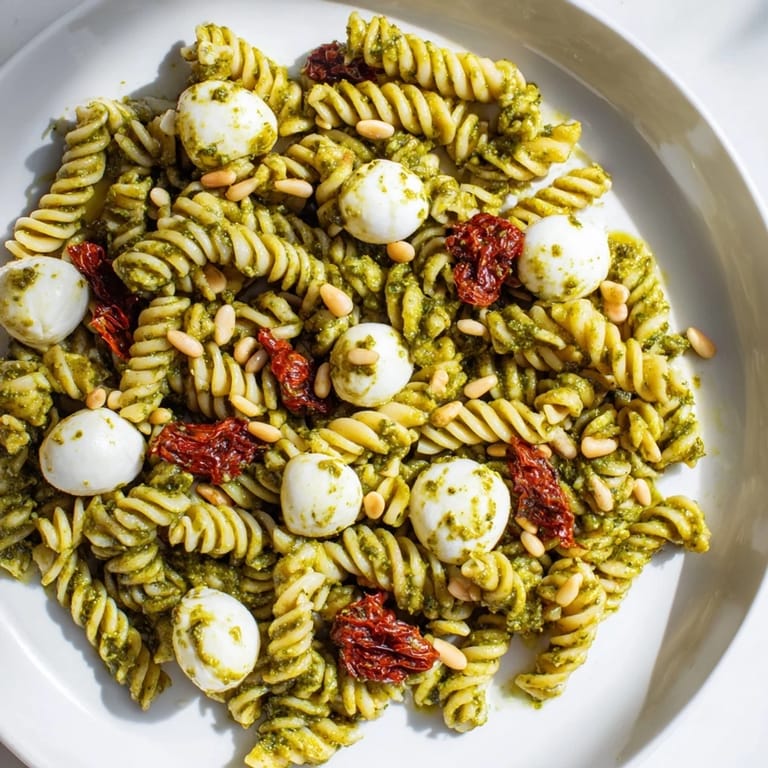
This salad actually improves when it sits in the refrigerator for an hour or even longer—the flavors soften and start to understand each other instead of being brand new neighbors. Make it in the morning for an evening gathering, or the night before if you're bringing it somewhere, and it will taste more intentional than if you'd rushed it. It's equally good straight from the fridge on a hot day, or left out for twenty minutes to come to room temperature if you prefer it less cold.
- Leftovers keep for two days in a covered container, though the mozzarella will firm up slightly and the spinach, if you used it, will become quite soft.
- If it seems a little dry the next day, drizzle a small spoonful of olive oil and toss before serving.
- Don't add extra basil or garnishes until just before eating, so they stay bright and fresh.
 Save
Save This pasta salad has become my answer to the question of what to bring to summer gatherings when I want something that tastes special but won't stress me out to make. It's the kind of dish that makes people want to cook again, which is maybe the greatest thing any recipe can do.
Recipe Questions
- → What type of pasta works best?
Short pasta shapes like fusilli, penne, or farfalle hold the pesto well and create a great texture contrast with the other ingredients.
- → Can I make this dish ahead of time?
Yes, chilling the salad for about an hour enhances the flavors and makes it a refreshing option for later meals.
- → Are there suitable alternatives to pine nuts?
Toasted walnuts or almonds can be used to add a similar crunch and nutty flavor if pine nuts are unavailable.
- → How can I add extra freshness to the dish?
Including fresh baby spinach or a handful of chopped basil or arugula brightens the flavor and adds a fresh green element.
- → What wine pairs well with this pasta dish?
A crisp Sauvignon Blanc or Pinot Grigio complements the bright, herbaceous notes and creamy mozzarella beautifully.