 Save
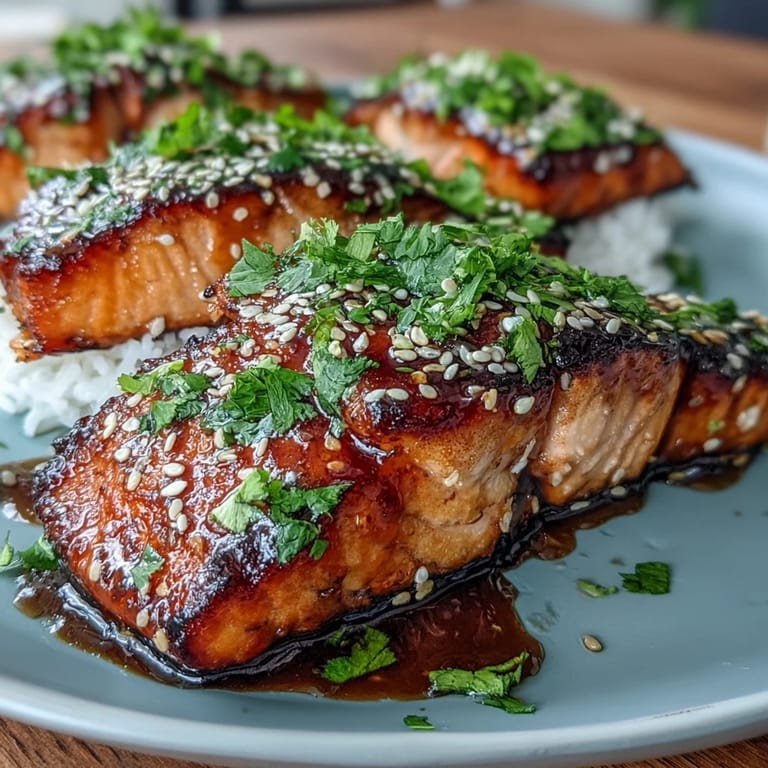
Save My kitchen smelled like caramelized honey and ginger the first time I attempted teriyaki salmon, and honestly, I was skeptical about whether I could pull off something that looked so polished without professional training. Watching the glaze transform from a thin soy mixture into something glossy and clingy was oddly satisfying, like witnessing a small kitchen miracle happen in real time. The salmon emerged from the oven blushed and glistening, and when my partner took that first bite, the quiet nod of approval told me everything. Now this dish appears on our table whenever I want to feel like I've got my life together without spending hours in the kitchen.
I made this for a dinner party once when I was running late, convinced I'd have to order takeout instead, and somehow the simplicity of it became its greatest strength. My guests were so impressed by the restaurant-quality presentation that nobody believed me when I said the whole thing took twenty-five minutes from start to finish. That night taught me that the best dishes aren't always the complicated ones; sometimes they're just the ones executed with intention and good ingredients.
Ingredients
- Salmon fillets: Look for fillets that smell like the ocean, not fishy, and choose ones about the same thickness so they cook evenly; skin-on keeps them moist, but skinless works beautifully too.
- Soy sauce: Low-sodium versions give you control over the salt level and let the other flavors shine without drowning everything out.
- Mirin: This sweet rice wine is what separates a good teriyaki from a mediocre one; don't skip it or substitute with regular sugar, as mirin brings a subtle depth that plain sweetness can't match.
- Honey or brown sugar: Either works, though honey creates a slightly silkier glaze that caramelizes beautifully under the broiler.
- Rice vinegar: Just a touch cuts through the richness and brightens the whole sauce so it doesn't feel cloying.
- Fresh ginger and garlic: Minced fine, these give the glaze its aromatic backbone and make people ask what your secret is.
- Sesame oil: Use the good stuff here; a teaspoon of authentic sesame oil adds more character than you'd expect.
- Cornstarch slurry: This is what transforms the sauce from thin to glossy; mix it with cold water first to avoid lumps.
- Toasted sesame seeds: Buy them pre-toasted if you can; they add nutty texture and look restaurant-worthy scattered on top.
- Spring onions: Slice them thin and use them as your finishing touch for a pop of color and mild onion bite.
Tired of Takeout? 🥡
Get 10 meals you can make faster than delivery arrives. Seriously.
One email. No spam. Unsubscribe anytime.
Instructions
- Set your oven and prep your stage:
- Preheat to 200°C (400°F) and line your baking tray with parchment or foil so cleanup becomes effortless. Having everything ready before you start means you can move smoothly through the cooking without scrambling.
- Build the glaze foundation:
- Combine soy sauce, mirin, honey, rice vinegar, ginger, garlic, and sesame oil in a small saucepan and let them warm together over medium heat. You'll know it's ready when you can smell all those aromatics mingling and the mixture begins to steam gently.
- Thicken into glossy perfection:
- Mix cornstarch with cold water until smooth, then stir it into the simmering sauce and keep stirring for two to three minutes until it transforms into something thick and shiny. This is the moment the glaze stops being just a sauce and becomes the magic that coats your salmon.
- Dry and position your salmon:
- Pat the salmon fillets dry with paper towels, which helps them cook evenly and allows the glaze to cling better. Lay them skin-side down on your prepared tray and brush each fillet generously with the warm glaze, keeping some back for drizzling later.
- Bake until just cooked through:
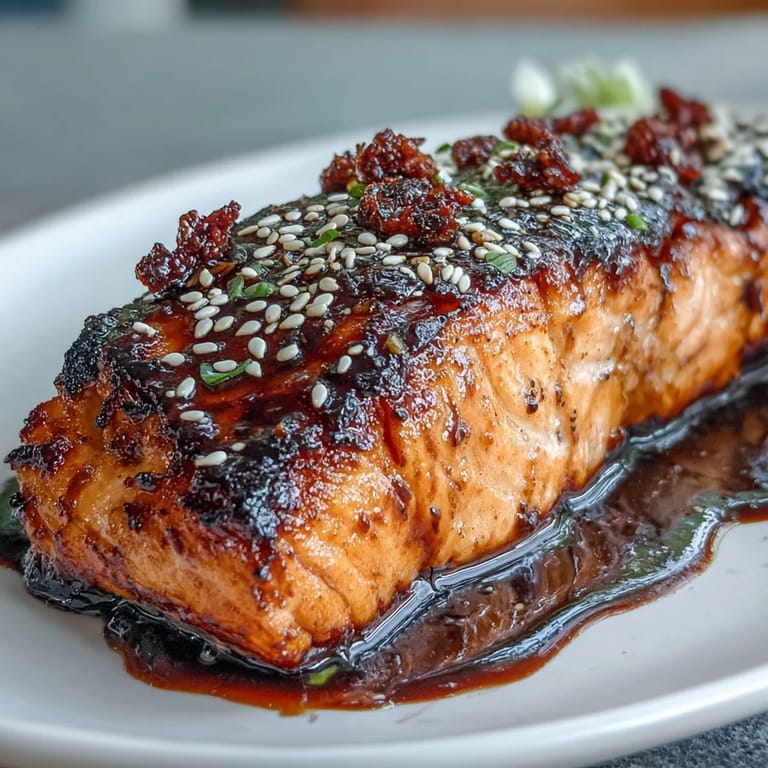
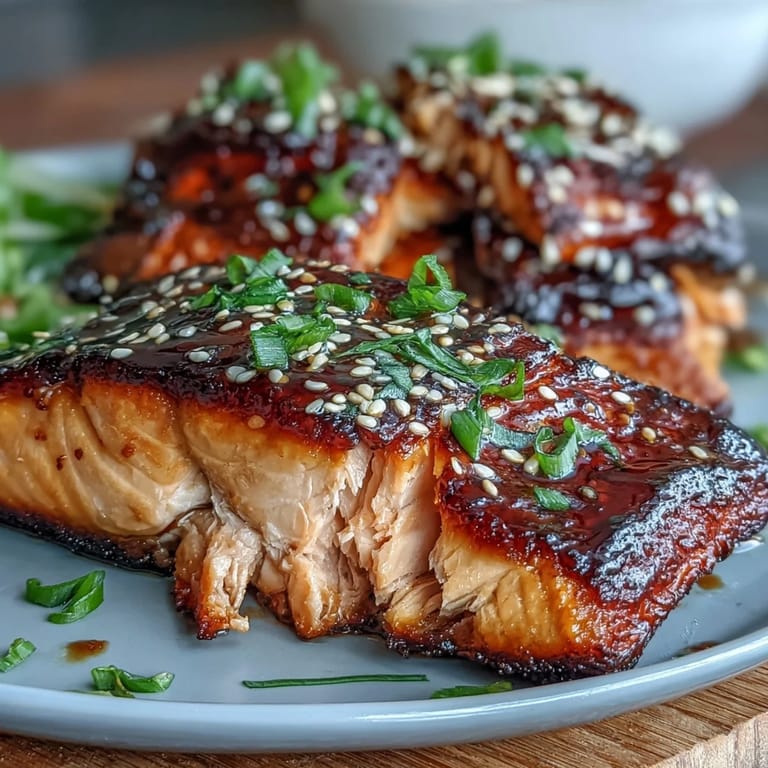
- Slide everything into the oven for ten to twelve minutes, watching for the moment when the flesh turns opaque and the thickest part flakes easily under a gentle fork pressure. If you want an extra caramelized finish, run it under the broiler for one to two minutes at the very end, but watch closely so the glaze catches color without burning.
- Plate and finish with flourish:
- Transfer your salmon to plates, drizzle with any remaining glaze, and top with sesame seeds and spring onions while everything is still warm. The residual heat will bring out all the aromatic oils in the garnish.
 Save
Save There's something about serving a dish that looks this polished and tastes this good that shifts the whole mood of a meal from ordinary to special. Even on nights when I'm exhausted and don't want to cook, I reach for this recipe because twenty-five minutes of focused effort pays off in a way that feels disproportionately rewarding.
The Science Behind the Glaze
That glossy coating isn't just for looks; the combination of soy sauce, mirin, and honey creates a glaze that's both sweet and savory in perfect balance, while the cornstarch thickens everything so it clings to the salmon instead of running off onto the plate. The ginger and garlic add aromatic complexity without overpowering the delicate fish, and sesame oil brings in a toasted depth that makes people pause mid-bite to figure out what just happened on their tongue. Understanding why each ingredient matters makes you more confident in the kitchen and better equipped to troubleshoot if something feels off.
Serving Suggestions That Work
I've served this with steamed jasmine rice and it disappears in minutes, or alongside sautéed bok choy for something fresher and lighter. A simple cucumber salad with rice vinegar cuts through the richness beautifully, and if you're feeling more elaborate, stir-fried vegetables with a touch of garlic turn the whole plate into something harmonious and complete. The versatility here is your friend; this salmon pairs with almost anything that won't compete for attention.
Variations and Personal Touches
Once you understand how this glaze works, you can start playing with it in ways that reflect your own tastes and what you have on hand. I've added a pinch of chili flakes for warmth, swapped in a splash of lime juice for brightness, and even experimented with orange zest for an unexpected citrus note that complemented the fish beautifully. The core technique stays solid no matter what you adjust, so don't be afraid to make it yours.
- For gluten-free cooking, use tamari instead of soy sauce and everything works exactly the same way.
- If sesame allergies are a concern, coconut aminos replace soy nicely, though the flavor profile shifts slightly toward sweetness.
- Cold leftovers, if you somehow have any, make an excellent addition to rice bowls the next day with fresh cucumber and a drizzle of the remaining glaze.
 Save
Save This recipe proves that restaurant-quality meals don't require restaurant-level complexity or time commitment. Make it once and it becomes part of your reliable repertoire, the kind of dish you return to when you want to impress without stress.
Recipe Questions
- → What type of salmon is best for this dish?
Fresh, skin-on or skinless salmon fillets around 170 g (6 oz) each work well, providing tender and juicy results when baked.
- → How can I thicken the teriyaki glaze properly?
Mix cornstarch with cold water to make a slurry, then stir it into the simmering glaze. Continue stirring until the sauce thickens and becomes glossy.
- → Can I make the glaze gluten-free?
Yes, substitute soy sauce with tamari to make the glaze gluten-free without compromising flavor.
- → What is the best cooking temperature for baking the salmon?
Preheat the oven to 200°C (400°F) for optimal baking, ensuring the salmon cooks evenly and flakes easily.
- → How do toasted sesame seeds enhance the dish?
Toasted sesame seeds add a nutty aroma and a subtle crunch, complementing the sweet-savory glaze and enriching the overall flavor.
- → Can I add a spicy twist to the glaze?
Yes, adding a pinch of chili flakes to the glaze imparts a gentle heat, balancing the sweetness with a mild kick.