 Save
Save The first time I encountered saltah was in a cramped kitchen in Sana'a, watching an older woman move with such practiced ease through the layering process that it seemed like meditation. She didn't measure anything—just knew by feel when the broth hit the right simmer, when the fenugreek foam had reached that perfect cloud-like texture. Years later, I realized what captivated me wasn't just the taste, but how this dish demanded patience and presence, how each element—the spiced meat, the soaked bread, the airy hulbah—played its own role before coming together into something greater than the sum of its parts.
I made this for my partner on a rainy evening when we both needed something deeply comforting, and watching their face as they tasted that first spoonful—the way the bread softened into the broth while the hulbah added this surprising lightness—reminded me why food matters so much. It wasn't fancy, but it felt like being cared for.
Ingredients
- Beef or lamb (500 g, cubed): The meat is your foundation—lamb gives a deeper, earthier flavor, while beef is leaner; cut the pieces evenly so they cook at the same rate.
- Vegetable oil (2 tbsp): Use something neutral that won't smoke; this is just enough to brown the meat properly without greasing the stew.
- Onion (1 large, chopped) and garlic (3 cloves, minced): These build the flavor base, and taking time to brown the onions first makes all the difference.
- Tomatoes (2 medium, chopped) and green chili (1, optional): They add acidity and a gentle heat that balances the spices; don't skip the chili if you like depth.
- Potato and carrot (1 medium each): Cut them to similar sizes so they finish cooking at the same time as the meat.
- Water or beef broth (4 cups): Broth adds richness, but water works fine—the spices do most of the flavor work anyway.
- Cumin, coriander, black pepper, turmeric, ground fenugreek (1/2 tsp, 1/2 tsp, 1/2 tsp, 1 tsp, 1/2 tsp): These spices are the soul of saltah; toast them in your head as you add them to understand their individual warmth.
- Ground fenugreek seeds (2 tbsp, for hulbah): This is the signature element—slightly sweet and herbaceous, it becomes light and mousy when whipped.
- Flatbread (2 large): Malawah or lahoh is traditional, but pita works in a pinch.
Tired of Takeout? 🥡
Get 10 meals you can make faster than delivery arrives. Seriously.
One email. No spam. Unsubscribe anytime.
Instructions
- Brown your aromatics and meat:
- Heat oil in your pot until it shimmers, then add onions and let them turn golden at the edges—this takes about 5 minutes and smells incredible. Add garlic and chili, stirring constantly for 30 seconds, then introduce the meat cubes and let them sit undisturbed for 2 minutes before stirring so they develop a proper sear.
- Build the spice layer:
- Once the meat is browned on most sides, add your tomatoes and all the spices, stirring gently so the spices coat everything and their volatile oils wake up. Let this cook for about 5 minutes—you'll smell the cumin and turmeric opening up—before adding the potato and carrot.
- Simmer with patience:
- Pour in your broth, bring it to a boil (you'll see the first urgent bubbles), then lower the heat so it's barely simmering—just the occasional bubble breaking the surface. Cover and leave it alone for 1 to 1.5 hours; the meat should be so tender it falls apart with a spoon.
- Create the hulbah magic:
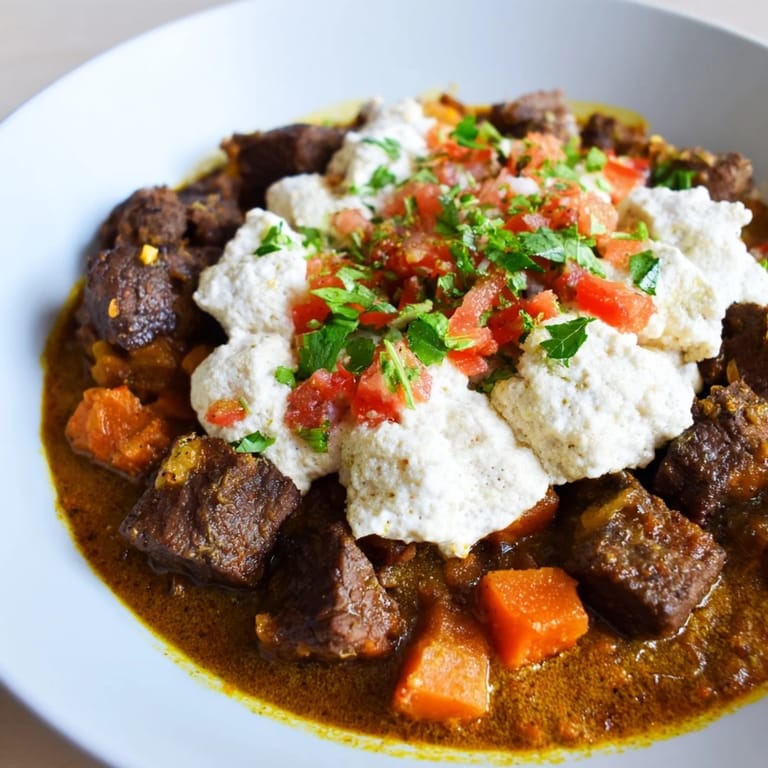
- While the stew cooks, soak your ground fenugreek seeds in cold water for a full hour to soften them. Drain well, then whisk or beat them for several minutes—the texture transforms from grainy to light and foamy, almost mousse-like, which is when you know it's ready. Fold in your tomato, cilantro, chili, and lemon juice just before serving so everything stays bright.
- Layer your bowl:
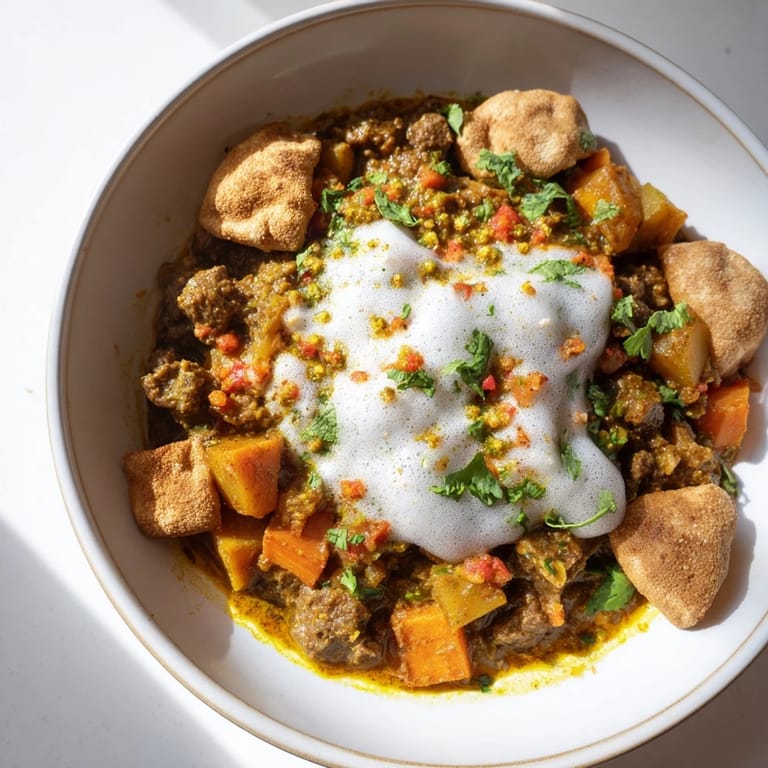
- Tear your flatbread into pieces and spread them across the bottom of a serving bowl—they should be loose enough to absorb the broth without turning to mush. Ladle the piping hot stew over the bread, making sure every piece gets soaked in that spiced broth, then crown it with a generous spoonful of hulbah that will sit like a cloud on top.
 Save
Save There's something sacred about the moment someone tastes saltah for the first time—the way their spoon breaks through that foamy hulbah, how the warmth and spices hit them all at once. It stops being just dinner and becomes a small ritual of slowing down together.
The Ritual of Layering
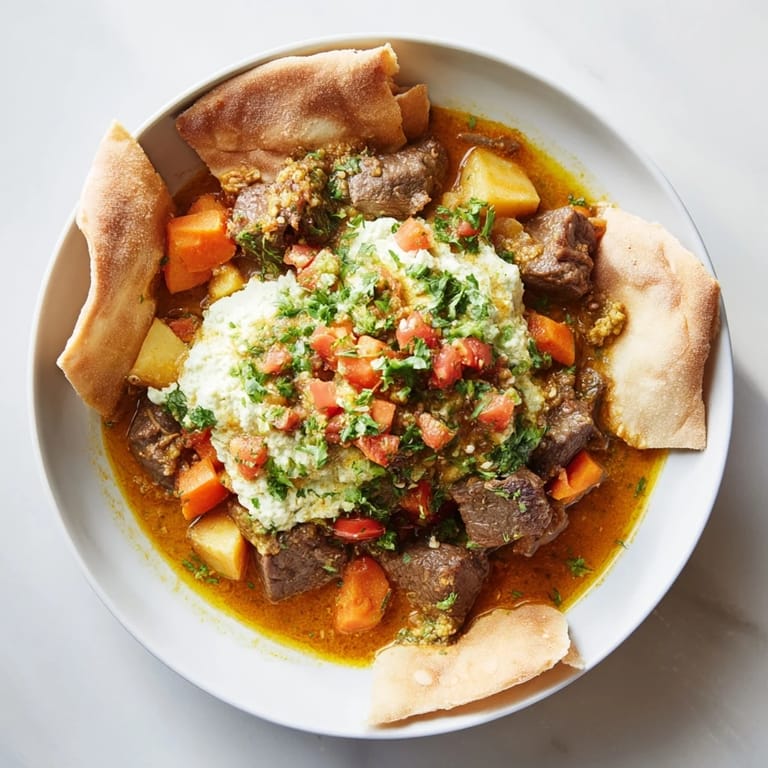
Saltah is structured differently than most stews because every element stays distinct until you eat it—the bread doesn't fall apart into the broth, the hulbah sits proud on top, the spiced meat stays below in its own fragrant liquid. This isn't accidental; it's deliberate, forcing you to taste each component while knowing how they work together. When you break through that first spoonful, all three elements combine in your mouth, and that's when you understand the genius of it.
Playing with Spice and Heat
The green chili in saltah is optional but shouldn't be skipped if you like any heat at all—it's not about fire, but about a gentle warming that makes the other spices sing. I learned this by making it both ways and realizing the version without chili tasted flat, even though the spice list looked complete. If you're chili-averse, the cumin and turmeric are warm enough on their own, but adding a little fresh chili transforms the whole dish into something more alive.
Bread, Broth, and Timing
The flatbread in saltah is crucial to get right—it should soak up broth without dissolving into paste, which means timing matters. If you assemble too early, the bread becomes soggy and loses its structure; too late, and it stays stiff and doesn't absorb enough flavor. The sweet spot is assembling right when you're ready to eat, which is why this isn't a make-ahead dish.
- Warm your serving bowls before ladling so the temperature stays stable and the bread continues to absorb gently.
- If using store-bought pita instead of traditional malawah, tear it a bit thicker so it doesn't disintegrate.
- The hulbah is best added at the last second—it will begin to sink and lose its airy quality if it sits on top of the hot stew too long.
 Save
Save Saltah taught me that a truly great dish doesn't need to be complicated—it just needs every element to know its job and do it well. This is the kind of meal that gets better the more you make it, because you learn to listen to what it wants instead of forcing it into a schedule.
Recipe Questions
- → What meat is best for this stew?
Beef or lamb cubes work best, as they become tender and absorb the rich spices during slow cooking.
- → How is the fenugreek topping prepared?
Ground fenugreek seeds are soaked in water, then vigorously beaten to create a light, airy foam mixed with tomato, cilantro, chili, and lemon juice.
- → Can I substitute the flatbread layer?
Yes, while traditional Yemeni malawah or lahoh are preferred, pita or naan can be used as alternatives.
- → Is the stew spicy?
The spiciness is mild by default but can be enhanced by adding chili or zhug, a traditional hot sauce served alongside.
- → How long should the stew simmer?
Simmer the stew covered on low heat for 1 to 1.5 hours until the meat is tender and vegetables are soft.