 Save
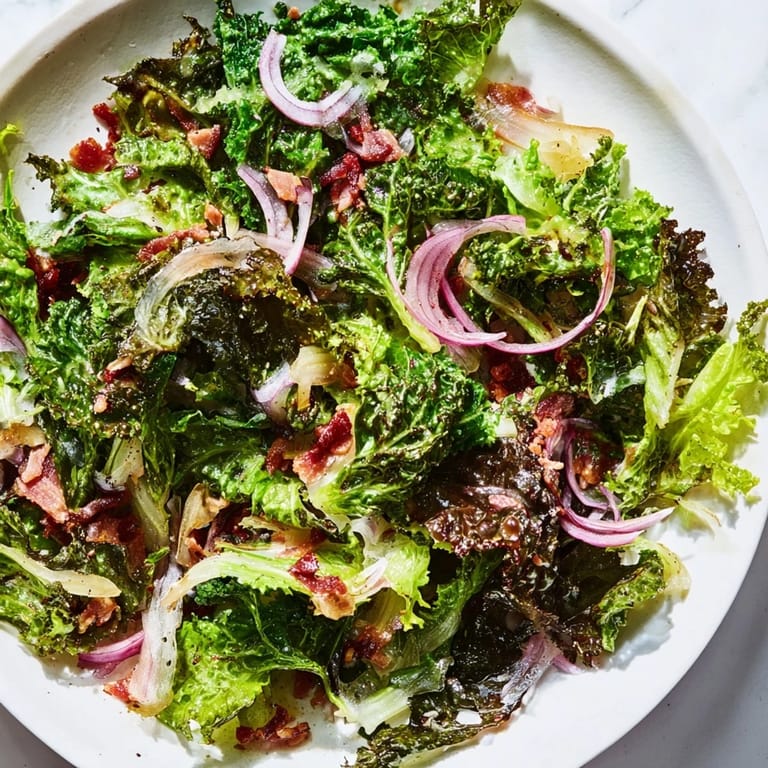
Save There's something about the sharp snap of bitter greens against warm bacon fat that takes me back to Sunday dinners at my aunt's kitchen, where she'd make this salad without measuring anything, just knowing exactly when the vinegar needed to hit the pan. I watched her practice that pour-and-toss movement a hundred times before I understood it wasn't reckless—it was confidence built from repetition. Now when I make it, I catch myself doing the same thing, that tiny pause before the dressing meets the greens, waiting for the exact right moment.
I made this for a dinner party once where everything else went wrong—the main course was late, someone spilled wine—but people kept talking about this salad for weeks. It was the warm, tangy, a little bit smoky taste that made everyone slow down and actually pay attention to what they were eating. That's when I realized simple food with real ingredients doesn't need to be complicated to feel special.
Ingredients
- Mixed bitter greens (4 cups): Escarole, frisée, dandelion, radicchio, and chicory all work beautifully—the bitterness is what makes this work, so don't skip it for milder lettuces. If one variety isn't available, just grab whatever looks fresh and assertive.
- Red onion (1 small): Thinly slice it so the heat softens the sharpness just a touch, making it less harsh against the greens.
- Thick-cut bacon (6 slices): This is worth buying from a butcher counter if you can; the render differently and give you more fat for the dressing.
- Red wine vinegar (2 tablespoons): The acidity needs to balance the richness of the bacon, so don't get tempted to use less.
- Dijon mustard (1 tablespoon): This emulsifies the dressing and adds a subtle sharpness that ties everything together.
- Honey (1 teaspoon): Just a touch to round out the rough edges—it's not there to make it sweet, just to make it complete.
- Freshly ground black pepper and salt: Ground fresh pepper tastes so much brighter than the pre-ground stuff; it really matters here.
- Extra-virgin olive oil (2 tablespoons): Use good oil, the kind you'd drizzle on bread, because you're tasting it directly in the dressing.
- Hard-boiled eggs and toasted nuts (optional garnish): The eggs add protein and creaminess; the nuts bring a textural contrast that makes each bite interesting.
Tired of Takeout? 🥡
Get 10 meals you can make faster than delivery arrives. Seriously.
One email. No spam. Unsubscribe anytime.
Instructions
- Prep your greens like you mean it:
- Rinse them thoroughly and dry them completely—any water left behind will dilute your dressing and make the whole thing taste thin. I pat mine with a clean kitchen towel and sometimes even let them sit in a salad spinner for a minute. Place them in a large bowl with the red onion slices, and just let them sit there waiting.
- Render the bacon until it's the color of burnished wood:
- Medium heat, diced bacon in a large skillet, and patience—you want it crisp and crackling, about seven to nine minutes depending on your stove. The rendered fat is doing the heavy lifting here, so don't rush it. Move the cooked bacon to a paper towel–lined plate and leave that precious fat behind in the pan.
- Build the dressing right in the warm pan:
- Turn the heat down to low, add the red wine vinegar, mustard, honey, pepper, and salt directly to the bacon fat. Whisk it all together, scraping up any browned bits stuck to the bottom—that's flavor you don't want to lose. Let it warm through for just a moment, until you can smell the vinegar starting to soften.
- Finish with the oil in a slow ribbon:
- Slowly drizzle in the olive oil while whisking, and you'll feel the dressing come together into something silky and emulsified. It should look glossy and warm, not separated or thin.
- Pour the warmth over the waiting greens:
- Do this immediately—the heat is what wilts the greens just slightly and brings out their sweetness. Toss everything together, add back the bacon pieces, and taste as you go. If it needs more salt or a touch more vinegar, this is your moment.
- Serve on warm plates with whatever garnish feels right:
- Quartered hard-boiled eggs and toasted nuts finish it off beautifully if you're going that direction, but it's also perfect plain. Warm is the way to eat this—it loses something once it cools down.
 Save
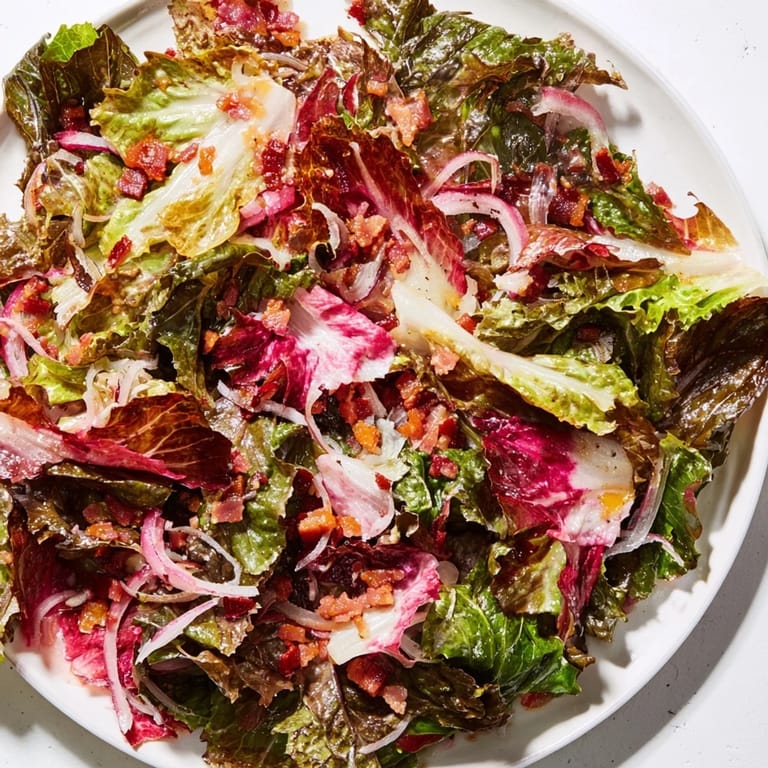
Save One evening I made this for someone who said they didn't really eat salad, and they came back for seconds without thinking about it. We talked for an extra hour because the food was good enough to linger over, and that's when I knew this salad had become more than just something to eat—it was an excuse to slow down.
Why Bitter Greens Are Underrated
Bitterness in food gets a bad reputation, but it's actually sophisticated—it wakes up your palate and makes other flavors sharper and more interesting. When you pair bitter greens with something rich and warm like bacon fat, they stop being difficult and become compelling. The sweetness in the honey and the punch of vinegar work together to balance that bitterness into something almost addictive, and that's the magic of this salad.
Playing with Temperature
The temperature contrast in this salad is part of what makes it special—the warm dressing meeting cool greens creates this moment of transformation that happens right in front of you. Some nights I'll make it exactly as written, but other times I'll let the greens get a little more wilted by pouring the dressing while it's hotter, or keep them more crisp by using the dressing just barely warm. It's your salad; the skeleton is solid enough to play with.
Variations That Actually Work
This salad is honestly forgiving enough that you can shift it around depending on what you have or what you're craving. Maple syrup instead of honey gives it a deeper, earthier sweetness that's lovely in fall. Thin slices of apple or pear add a fruity freshness that cuts through the richness beautifully. If you're cooking vegetarian, mushrooms sautéed in olive oil until they're golden can replace the bacon, and the salad becomes something different but just as satisfying.
- Try adding a splash of sherry vinegar mixed with the red wine vinegar for added complexity.
- Crispy shallots work just as well as bacon if you're looking for that savory crunch without the pork.
- Fresh herbs like tarragon or chervil scattered over the top bring a spring-like freshness that people don't expect.
 Save
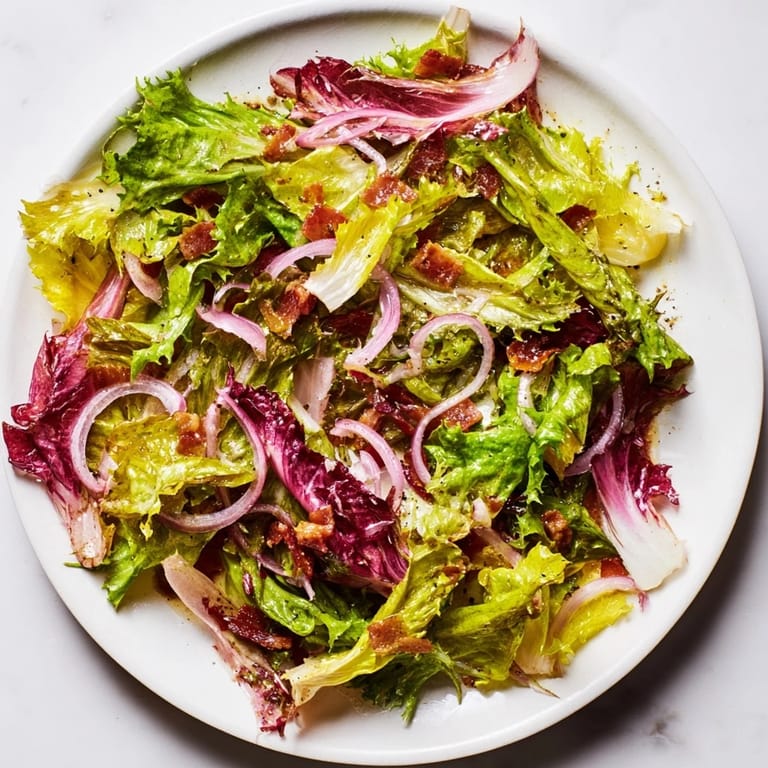
Save This is one of those salads that reminds you why people cook at all—it's simple enough to make on a tired weeknight, but good enough to serve when people matter. Once you make it a few times, you'll stop thinking about the recipe and start thinking about the feeling it gives you.
Recipe Questions
- → What types of greens work best in this salad?
Bitter greens such as escarole, frisée, dandelion, radicchio, or chicory provide the ideal robust flavor and texture.
- → How is the warm dressing made?
The dressing is created by whisking red wine vinegar, Dijon mustard, honey, black pepper, and salt into hot rendered bacon fat, then emulsifying with olive oil.
- → Can I substitute the bacon in the dressing?
For a vegetarian alternative, omit bacon and replace the bacon fat with extra olive oil, possibly sautéing mushrooms for added texture.
- → What garnishes complement this salad?
Hard-boiled eggs and toasted walnuts or pecans add rich flavor and crunch as optional garnishes.
- → Is this salad suitable for gluten-free diets?
Yes, but ensure all ingredients, especially mustard and vinegar, are gluten-free by checking labels.
- → Can I add fruit to this salad?
Thinly sliced apples or pears add a fresh, fruity twist that pairs well with the savory elements.