 Save
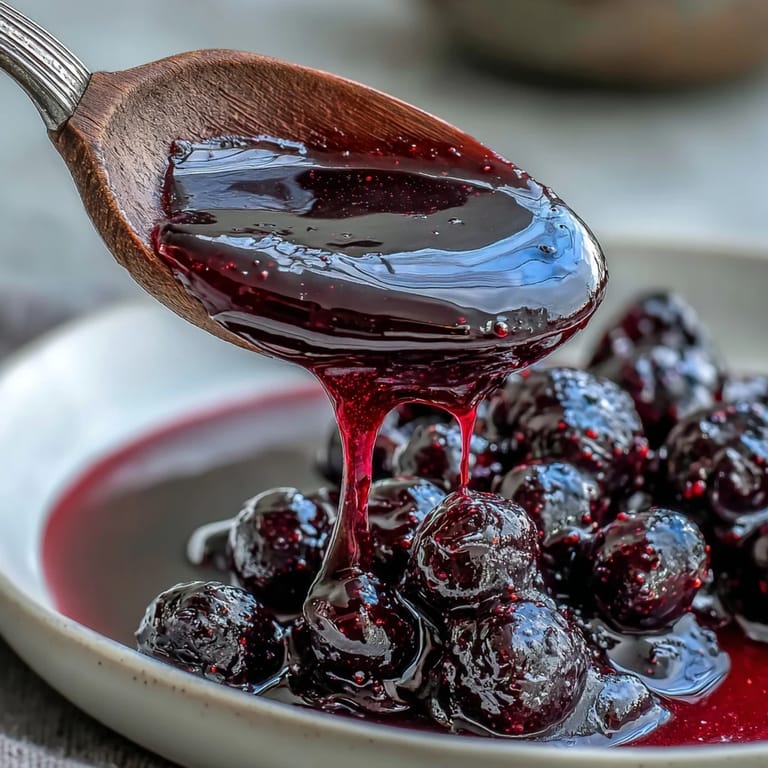
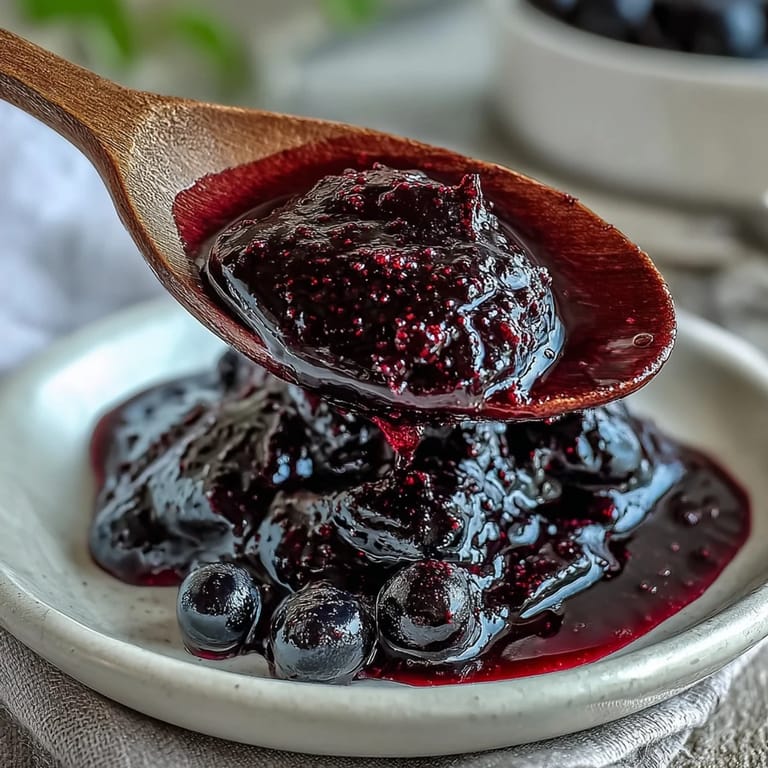
Save My grandmother kept jars of black currant jelly on a high shelf in her pantry, and I always wondered why she guarded them so carefully. Years later, when I finally made my first batch, I understood—that deep jewel-red color, the way it catches the light, the intense tartness that somehow tastes like summer concentrated into a spoon. There's something almost alchemical about turning soft fruit into something that lasts, something that refuses to fade.
I made this jelly one August afternoon when the kitchen was too warm and my hands were sticky, and halfway through I questioned why anyone does this voluntarily. But then my partner came home, caught the aroma—that dark, almost jammy-but-not-quite smell—and we both stood there watching the mixture boil, and suddenly it felt less like work and more like we were creating something worth the heat.
Ingredients
- Fresh black currants (1 kg): The foundation of everything, and their tartness is what makes this jelly sing rather than just being sweet; make sure they're ripe but not mushy, and don't skip removing the stems because they add unwanted bitterness.
- Water (250 ml): Just enough to help the fruit release its juice without drowning the flavor—too much water and you'll spend extra time reducing later.
- Granulated sugar (800 g): The preservative and the thing that brings out the currant's deep, complex flavor, though the ratio adjusts based on how much juice you actually end up with.
- Lemon juice (2 tbsp): This cuts through the richness and adds brightness, plus it helps activate the natural pectin for a better set.
Tired of Takeout? 🥡
Get 10 meals you can make faster than delivery arrives. Seriously.
One email. No spam. Unsubscribe anytime.
Instructions
- Prepare your currants:
- Rinse them thoroughly under cool water and remove every single stem and leaf—this step feels tedious but makes an enormous difference in the final clarity and taste of your jelly. I usually do this while listening to something on my phone, turning it into a meditative task rather than a chore.
- Soften the fruit:
- Combine the currants and water in your largest, heaviest-bottomed saucepan and bring to a gentle simmer over medium heat. Stir and mash occasionally as they cook for 15 to 20 minutes, watching as the berries release their deep purple juice and collapse into soft fruit.
- Strain without pressing:
- This is where patience wins and clarity happens—pour everything through a fine-mesh sieve or jelly bag suspended over a bowl and let time do the work. Don't press or squeeze the fruit or your beautiful clear jelly will turn cloudy; I usually leave mine overnight in the refrigerator because good things are worth waiting for.
- Measure and balance:
- Once the juice has finished dripping, measure it carefully—you're aiming for about 700 to 750 ml—and use this number to calculate your sugar. The traditional ratio is one part sugar to one part juice by weight, which sounds simple until you realize how the math changes everything about the outcome.
- Dissolve and boil:
- Return the juice to a clean saucepan with the sugar and lemon juice, stirring slowly over low heat until every granule of sugar disappears completely. Once you turn up the heat and reach a rolling boil, you're racing toward the magic number—105 degrees Celsius on a thermometer, or that moment on a cold plate when the jelly wrinkles slightly when you push it with your finger.
- Skim and jar:
- Remove from heat and carefully skim away any foam floating on top with a clean spoon—this takes only a minute but keeps your finished jelly pristine. Ladle into sterilized jars, leaving a quarter-inch headspace, and seal immediately while everything is still hot enough to create that satisfying pop as it cools.
- Cool completely:
- Leave the jars at room temperature and resist the urge to touch them or move them around—they need stillness to set properly. Once cooled, store in a cool dark place and admire your work every time you open the cupboard.
 Save
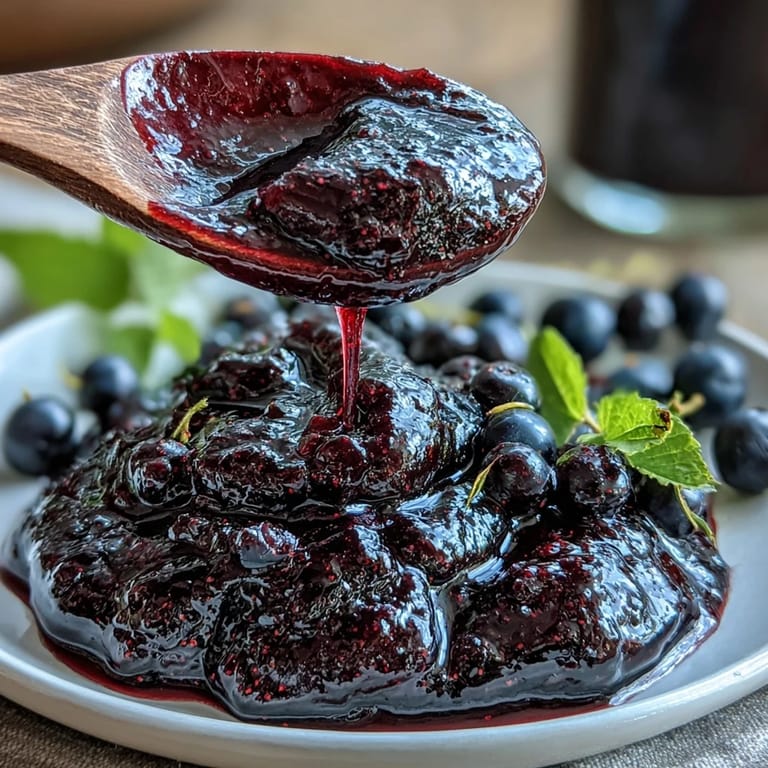
Save The first time I opened a jar of my own black currant jelly to serve with a cheese board, watching someone taste it and pause—actually pause—to appreciate what they were eating, something shifted in my kitchen confidence. It wasn't fancy or complicated, but it was undeniably mine, and that matters more than any recipe ever suggested.
Understanding the Science Behind Setting
Black currants are naturally higher in pectin than many fruits, which is one reason they jell so reliably, but this varies depending on ripeness and variety. The boiling process breaks down the fruit's cell structure and causes pectin, sugar, and acid to interact in a way that creates that firm, gel-like texture we're after. Understanding this meant I stopped panicking when my first batch set slightly softer than expected—I simply knew it would still taste incredible, just with a slightly looser spread.
The Art of Straining Without Pressing
One of the hardest lessons in jelly-making is learning to trust the process enough to not squeeze the fruit bag, even when you're watching precious juice drip unbearably slowly. I learned this the hard way by pressing too hard on my second attempt and ending up with cloudy jelly that tasted perfect but looked murky—the clarity matters as much as the flavor for something this beautiful. Now I see it as a meditation: the slower it drips, the more transparent the final result, and there's something satisfying about playing the long game.
Storage and Uses That Last Year-Round
Unopened jars will keep for at least a year in a cool dark cupboard, which means you can make a big batch in summer and ration it through winter like you're protecting liquid gold. I've layered it into cakes, swirled it into vanilla ice cream, used it as a glaze on duck, and even stirred a spoonful into sparkling water for an improvised cordial—it's one of those preserves that becomes more versatile the longer you live with it in your kitchen.
- Once a jar is opened, refrigerate it and use it within three weeks for best quality and safety.
- The jelly pairs beautifully with soft cheeses like brie or mascarpone, or drizzled over thick Greek yogurt for an elegant breakfast.
- Always ensure your jars are properly sterilized before filling to prevent any contamination and ensure your jelly lasts.
 Save
Save Making black currant jelly taught me that good preserving isn't about shortcuts or perfection—it's about patience, attention, and respecting the fruit enough to let it become something better than itself. Every jar that sets properly is a small victory worth celebrating.
Recipe Questions
- → How long does black currant jelly take to set?
After boiling for 10-12 minutes, the jelly should set within 24 hours. Use the wrinkle test by placing a spoonful on a cold plate - if it wrinkles when pushed, it's ready. Complete setting may take up to 48 hours depending on ambient temperature and natural pectin levels.
- → Can I use frozen black currants?
Yes, frozen currants work perfectly for this preserve. Thaw them completely before starting, as they'll release their juice more readily. You may need slightly less water since freezing breaks down cell walls and releases additional liquid during the thawing process.
- → Why shouldn't I press the fruit through the sieve?
Pressing or squeezing the fruit pulp releases cloudiness and particles into the juice, resulting in hazy jelly. For the clearest, jewel-like appearance, let gravity do the work. Though it takes longer, the stunning transparency and professional appearance make this patience worthwhile.
- → How should I store the finished jars?
Properly sealed jars keep in a cool, dark pantry for 12-18 months. Once opened, refrigerate and consume within three weeks. Always check for sealed lids before storing - the center should not flex when pressed. Discard any jars with signs of mold or off odors.
- → What can I do if my jelly doesn't set properly?
If your jelly remains too soft after 48 hours, don't worry. You can reboil the mixture: pour it back into the saucepan, add 1 tablespoon of lemon juice per cup of jelly, and boil again for 5 minutes. Alternatively, add commercial pectin following package instructions for a guaranteed set.