 Save
Save There's something about discovering that comfort food doesn't have to come with guilt attached. I was standing in my kitchen one Tuesday evening, staring at a head of cauliflower and thinking about how much I missed the creamy, cheesy satisfaction of mac and cheese, when it hit me that I didn't have to choose. The first time I mixed that silky cheese sauce with roasted cauliflower florets, I realized I'd stumbled onto something that tasted indulgent while actually treating my body right. My partner came home to the smell of melting cheddar and baked cauliflower and asked if I was secretly trying to prove something—turns out, I was just trying to prove that low-carb cooking could be this delicious.
I made this for a potluck where half the people were on low-carb diets and the other half just loved food, period. Watching someone pile it onto their plate, take one bite, and then look up with genuine surprise—like they couldn't believe it was possible to make something taste this good while being good for you—that moment justified every minute I spent perfecting the recipe. It disappeared faster than anything else on the table, and three people asked me for the ingredients before they even finished eating.
Ingredients
- Cauliflower florets, 1 large head (about 1.5 lbs): Cut them roughly the same size so they cook evenly, and don't overcrowd your pot when blanching—they need space to become tender.
- Unsalted butter, 2 tbsp: This is your roux base, so use good butter if you can; it makes a noticeable difference in flavor.
- Almond flour, 2 tbsp: This thickens the sauce without adding carbs, but make sure it's finely ground to avoid grittiness.
- Whole milk, 1 cup: Full-fat milk creates that luxurious texture; almond milk works if you're watching carbs, but the sauce won't be quite as rich.
- Sharp cheddar cheese, 1 cup shredded: Sharp has more punch than mild, which matters when you're leaving out pasta's subtle flavor contribution.
- Mozzarella cheese, 1/2 cup shredded: This keeps the sauce creamy and prevents it from becoming grainy as it cools.
- Parmesan cheese, 1/4 cup grated (plus 1/4 cup for topping): The umami boost that makes people ask what your secret ingredient is.
- Garlic powder and onion powder, 1/2 tsp each: These do the heavy lifting on flavor when you're not using traditional pasta.
- Ground mustard, 1/4 tsp (optional): A tiny amount adds depth without tasting like mustard—trust it.
Tired of Takeout? 🥡
Get 10 meals you can make faster than delivery arrives. Seriously.
One email. No spam. Unsubscribe anytime.
Instructions
- Set your stage:
- Preheat your oven to 400°F and get your 9x13-inch baking dish lightly greased. This takes two minutes but saves you from scrambling later.
- Blanch the cauliflower:
- Bring a big pot of salted water to a rolling boil and drop in your florets for 4 to 5 minutes—you want them barely tender, not soft. Drain them well and pat them completely dry with paper towels; any excess moisture will water down your sauce.
- Arrange and prepare:
- Spread the dried florets evenly across your prepared baking dish and set aside.
- Build your roux:
- Melt butter over medium heat in a medium saucepan, then whisk in your almond flour and let it cook for exactly one minute, stirring constantly. This removes any raw flour taste and helps it blend smoothly with the milk.
- Create the sauce base:
- Gradually whisk in your milk, moving slowly at first to avoid lumps, then increase speed as it comes together. You're looking for a smooth, slightly thickened consistency, which usually takes 2 to 3 minutes of whisking.
- Add the cheese magic:
- Drop the heat to low and add your cheddar, mozzarella, and Parmesan one type at a time, stirring until each is melted before adding the next. Then season with garlic powder, onion powder, mustard, salt, and pepper—taste as you go because salt levels depend on your cheese choices.
- Bring it together:
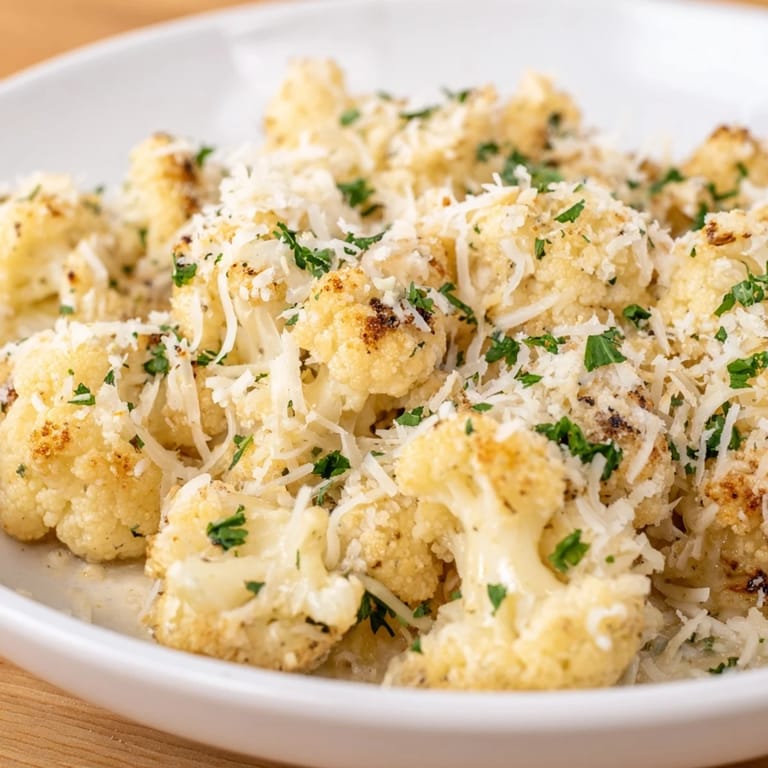
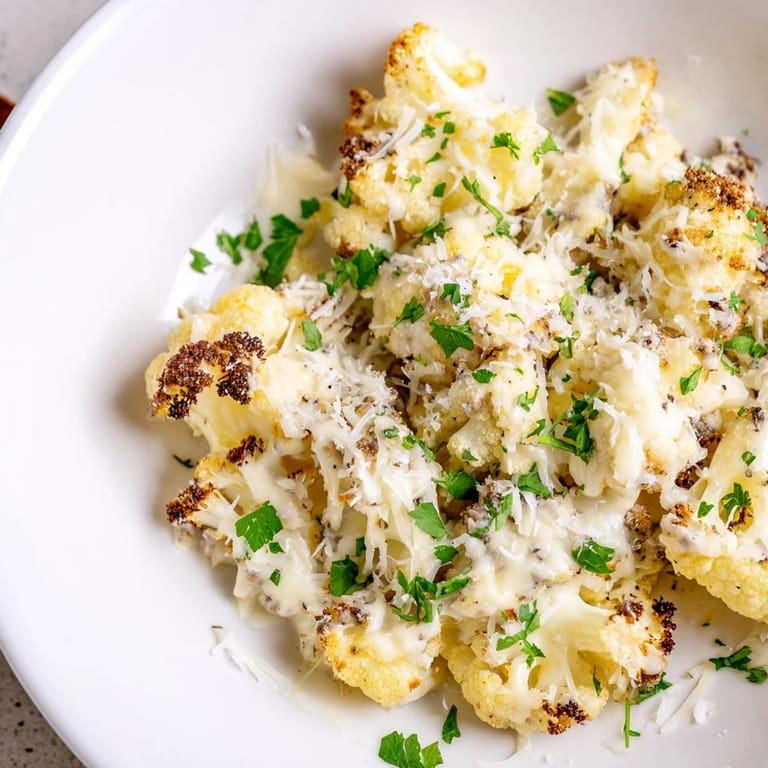
- Pour the sauce over your cauliflower and gently stir everything until every piece is coated with that golden, cheesy goodness.
- Top and bake:
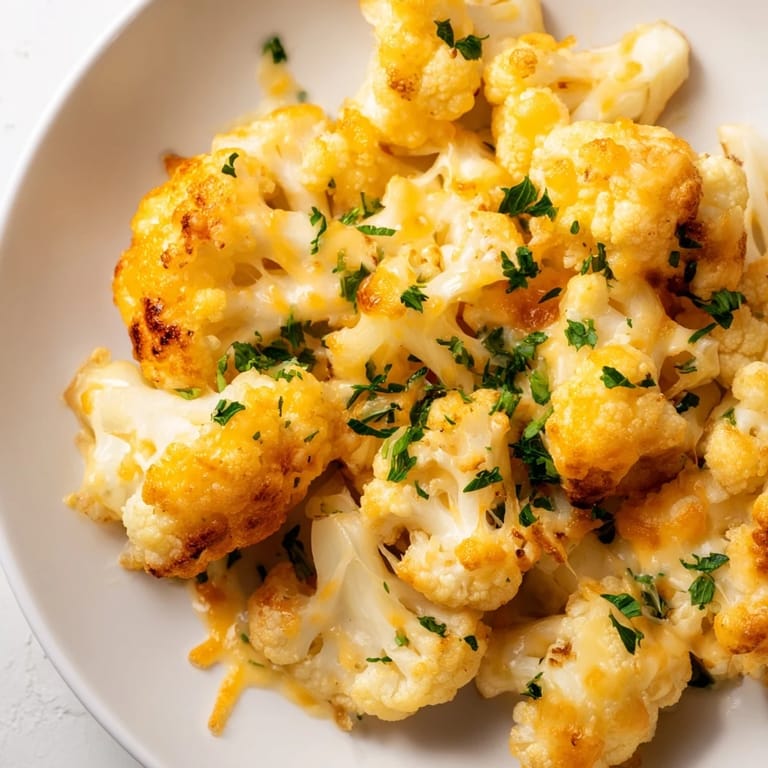
- Sprinkle your extra Parmesan and cheddar over the top, then slide it into the oven for 15 to 20 minutes. You're waiting for the edges to bubble and the top to turn golden—that's your signal that it's done.
- Finish and serve:
- Pull it out, scatter fresh parsley on top if you have it, and serve while it's still piping hot.
 Save
Save My sister made this last month during a family dinner, and watching my niece—who's usually skeptical about anything vegetable-heavy—go back for seconds without being asked felt like witnessing a small miracle. That's when I realized this dish isn't just about fitting carbs; it's about proving that eating well doesn't mean eating boring things.
Making the Sauce Silky
The secret to a sauce that feels indulgent instead of separated and thin is patience with your roux. I've watched people rush this part, whisking milk in all at once and ending up with lumps, then overcooking it trying to fix the problem. A steady, gradual whisking—especially in those first few moments—creates an emulsion that's genuinely silky. The almond flour also deserves a minute to cook before meeting the milk; it opens up and blooms, which helps it thicken everything more effectively than just dumping it in cold.
Cheese Selection Matters More Than You'd Think
Using sharp cheddar instead of mild makes a real difference because you've lost pasta's subtle starchy flavor, so you need the cheese to speak louder. Mozzarella is your unsung hero here—it prevents the sauce from becoming grainy as it cools, which can happen with all hard cheeses. I once tried making this with just cheddar and Parmesan, thinking it would be more flavorful, but the sauce separated as it sat. Adding mozzarella back in fixed that immediately, and now I never skip it.
Variations and Final Touches
The beauty of this dish is that it's flexible without being fragile. Smoked paprika adds a subtle depth that surprises people—just a pinch mixed into the sauce or sprinkled on top before baking. If you swap in Gruyère or Monterey Jack, you're trading the sharpness for something a bit more mellow and creamy, which shifts the whole feeling of the dish without breaking it. A quick broil for 2 to 3 minutes at the end creates a crispier, more indulgent top layer if you want that textural contrast.
- Add a pinch of smoked paprika to either the sauce or the topping for unexpected depth.
- Gruyère or Monterey Jack can replace some of the cheddar for a different flavor direction.
- A quick broil at the end creates a crispier, golden top that feels fancy without extra effort.
 Save
Save This dish quietly became a regular in my rotation because it makes everyone at the table happy, regardless of what diet they're following. It's proof that comfort food and smart eating aren't enemies—they're actually better together.
Recipe Questions
- → Can I use a different cheese blend?
Yes, swapping with cheeses like Gruyère or Monterey Jack adds a unique flavor while maintaining a creamy texture.
- → How do I make the topping crispier?
After baking, broil the dish for 2-3 minutes until the top turns golden and crispy.
- → Is almond flour necessary in the sauce?
Almond flour helps thicken the sauce, but coconut flour can substitute for nut-free needs.
- → Can I prepare this ahead of time?
Yes, assemble and refrigerate the dish, then bake just before serving for best results.
- → What sides pair well with this dish?
Grilled chicken or a crisp salad complement this creamy cauliflower mac nicely.