 Save
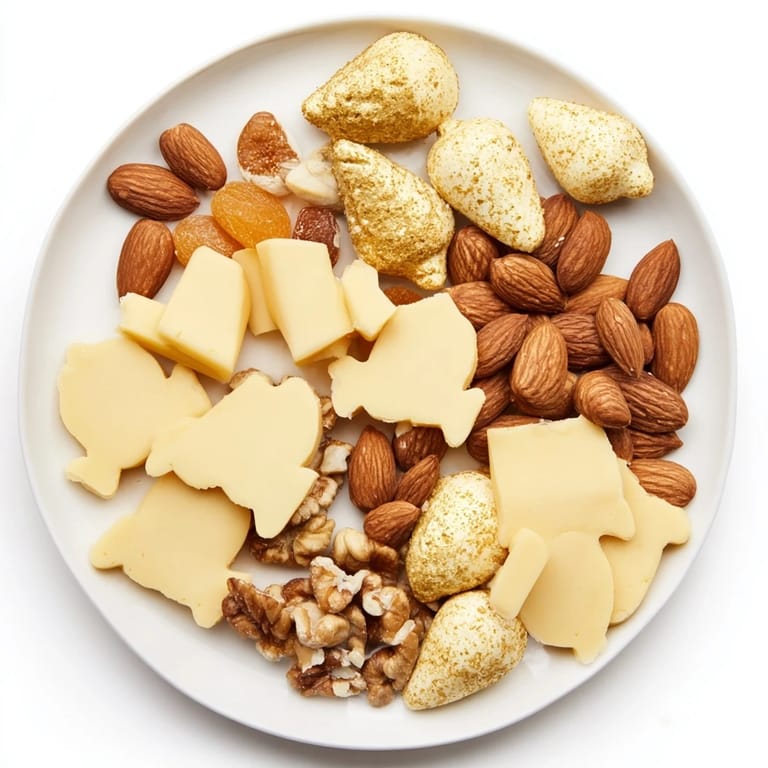
Save The first time I arranged a charcuterie board with intention was for a dinner party I almost cancelled. I'd been stressed about impressing guests, overthinking every detail, until I realized the magic isn't in perfection—it's in offering people a reason to linger, to taste, to talk. That's when I started playing with the idea of edible gold, of cutting cheese into shapes, of making something beautiful enough that people would pause before reaching for it. The Gilded Acorn board became my answer to turning a simple spread into an experience that felt ceremonial without being pretentious.
I remember my neighbor Sarah walking in, kicking off her shoes, and immediately stopping in her tracks. She didn't grab a cracker first—she stood there studying the board like it was art, running her finger along the acorn shapes, asking how I managed to make cheese look so intentional. That moment taught me that presentation isn't superficial; it changes how people experience food, how they slow down and notice the care.
Ingredients
- Whole almonds (1 cup, plus 1/2 cup for gilding): The foundation—buy raw or roasted based on your preference, though raw takes the gold better and has a cleaner taste.
- Pecans, walnuts, and hazelnuts (1/2 cup each): These three create textural variety and depth; mix raw and roasted for visual interest and flavor contrast.
- Edible gold dust or flakes (1/2 tsp): Buy food-grade only from specialty shops or reputable online sources; it's the star, so don't skip it.
- Sharp cheddar and gouda cheese blocks (8 oz each): Choose firm cheeses that hold their shape when cut; avoid pre-sliced unless you're in a rush.
- Brie or camembert (8 oz, optional): Adds softness and elegance; the creaminess balances the sharper cheeses beautifully.
- Dried apricots, figs, red grapes, and fresh apple slices (1/2 cup each, 1/4 cup as needed): These bring sweetness and color; slice apples just before serving so they don't brown.
- Honey or fig jam (1/4 cup): The sweet anchor that ties savory and sweet together.
- Assorted crackers and baguette slices (1 cup plus 1 small baguette): These are the vehicle, so choose ones with enough texture to stand up to toppings.
Tired of Takeout? 🥡
Get 10 meals you can make faster than delivery arrives. Seriously.
One email. No spam. Unsubscribe anytime.
Instructions
- Gold the almonds:
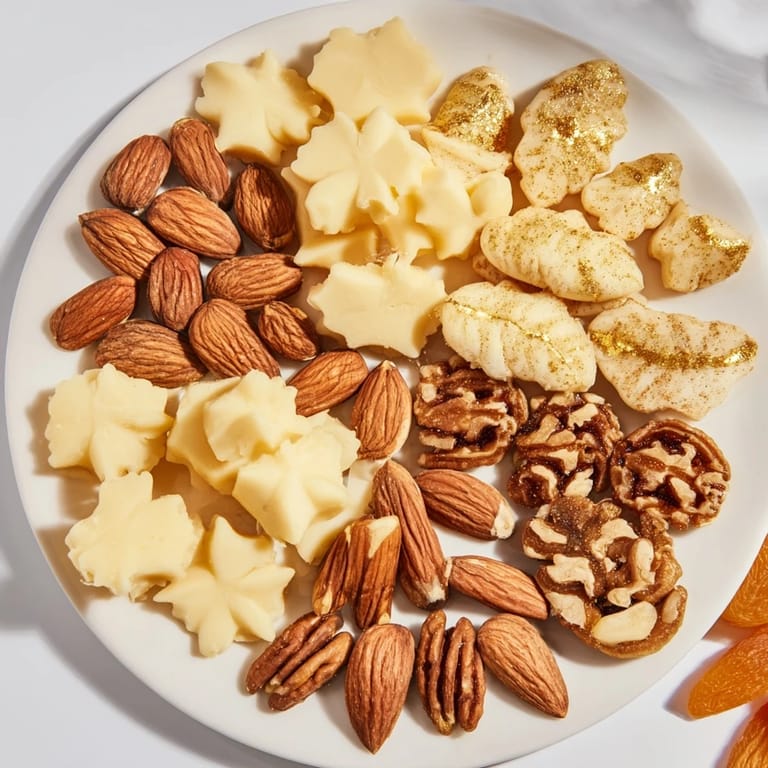
- Place 1/2 cup almonds in a small bowl and lightly mist with water using a spray bottle or brush—you want just enough moisture for the gold to grip, not a puddle. Sprinkle the edible gold dust over them, tossing gently as you go, until they shimmer all over. Let them dry for a few minutes on parchment paper so the gold sets; they'll catch the light like little jewels on the board.
- Cut your cheese into acorns:
- Slice your cheddar and gouda into 1/4-inch slabs, cold and firm straight from the fridge. Use your acorn cookie cutter to press clean shapes—if it sticks, dip it in warm water between cuts. If you're feeling extra, layer two different cheeses before cutting so each acorn has a two-tone swirl.
- Build the nut foundation:
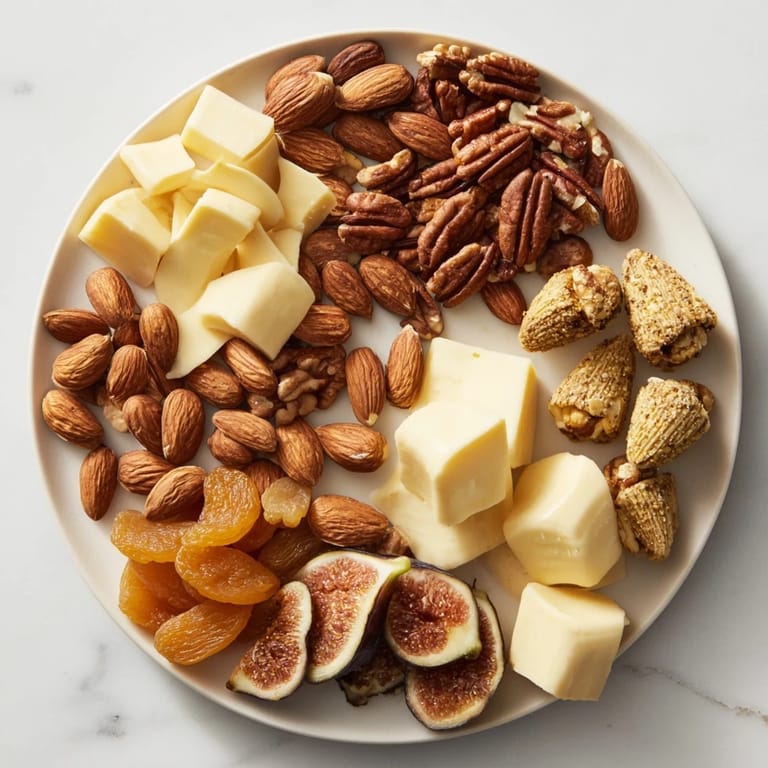
- Scatter your almonds, pecans, walnuts, and hazelnuts in small clusters across the board, leaving space between them so colors show. Think of them as anchors; they'll frame everything else and fill visual gaps naturally.
- Place the cheese treasures:
- Arrange your acorn cutouts in a scattered, organic pattern—not in lines, but as if you've stumbled upon them. Tuck soft cheese cubes or wedges between them for textural contrast and warmth against the cold, firm cheeses.
- Add the sweet and bright notes:
- Create small piles or fan arrangements of dried apricots, figs, grapes, and apple slices, clustering them by type so colors stand out. Odd numbers of piles look more natural than even arrangements.
- Crown it with honey:
- Pour your honey or jam into a small dish and nestle it somewhere central or off to one side, with a small spoon beside it so people know it's for drizzling.
- Fill the gaps:
- Scatter your crackers and baguette slices across any remaining empty spaces, angling them so they look casual and inviting rather than gridded.
- Chill and serve:
- If you're making this ahead, cover it loosely with plastic wrap and refrigerate for up to an hour so everything stays at its best temperature. Otherwise, serve immediately while the cheese is still cool and the gold gleams.
 Save
Save The thing I've learned about charcuterie boards is that they're less about the food and more about permission—permission for people to stand around, graze, talk longer, and feel like they're part of something special. There's something about a well-made board that makes gathering feel intentional, like you've said without words that these people are worth the effort.
The Acorn Cutout Secret
The acorn shapes are the difference between a board and a statement. I learned this the hard way after my first attempt, when I cut random shapes and guests barely noticed. But when I switched to acorns—those perfect little autumn silhouettes—suddenly people pointed, asked questions, and took extra care composing their bites. The shape transforms cheese from just another ingredient into something with intention and personality. If acorns feel too themed, you can use hearts, stars, or any small cutter that makes sense for your occasion; the point is that cutting a shape by hand signals that you care.
Gold That Lasts
Edible gold feels indulgent and a little magical, but only if it actually stays on your almonds. The trick is understanding that gold dust is powder and needs something sticky to grip; water is the simplest, most elegant solution. I've tried oils before and they made the almonds greasy; I've tried honey and it was too heavy. A light mist of water followed by immediate tossing creates a light, shimmery coat that catches light without looking overdone. Let them dry for just a few minutes before plating, and they'll hold that gleam through the whole evening.
Composing Your Board Like an Artist
The layout matters more than the ingredients. Arrange by color and texture rather than ingredient type—cluster golds next to reds, softs next to firms, so your eye travels naturally around the board. Odd numbers read as more intentional than even ones; three piles of apricots look curated, four look accidental. Leave some breathing room so each ingredient can be appreciated on its own, but not so much that the board looks sparse. Think of it as a conversation between flavors and colors, not a checklist of items to fit.
- Use different heights by layering crackers at angles and stacking fruits in small piles, giving the board dimension and visual interest.
- Place the honey or jam off to one side rather than dead center; it looks more natural and gives guests a clear landing spot.
- Step back before guests arrive and adjust anything that feels chaotic or imbalanced—trust your eye.
 Save
Save This board is proof that simple ingredients, arranged with care, become something memorable. Serve it with good wine, good people, and the understanding that you've done something generous.
Recipe Questions
- → How do I prepare the gold-sprinkled almonds?
Lightly mist or brush almonds with water, then toss them in edible gold dust until evenly coated. Set aside to dry before arranging.
- → What cheeses work best for the acorn-shaped cutouts?
Firm cheeses like cheddar and gouda hold their shape well. Brie or camembert can be added in cubes for variety.
- → Can I substitute nuts or cheeses?
Yes, swapping in favorites like manchego, blue cheese, pistachios, or macadamia nuts works great to suit your taste.
- → How should I arrange the board for best presentation?
Arrange nuts in clusters, alternate cheese cutouts around the board, and distribute dried fruits in small piles for color and texture contrast.
- → What accompaniments pair well with this board?
Honey or fig jam adds sweetness, and fresh herb sprigs like rosemary or thyme enhance aroma and appearance.
- → Is this suitable for gluten-free diets?
Use gluten-free crackers and bread options to keep the board gluten-free and inclusive.