 Save
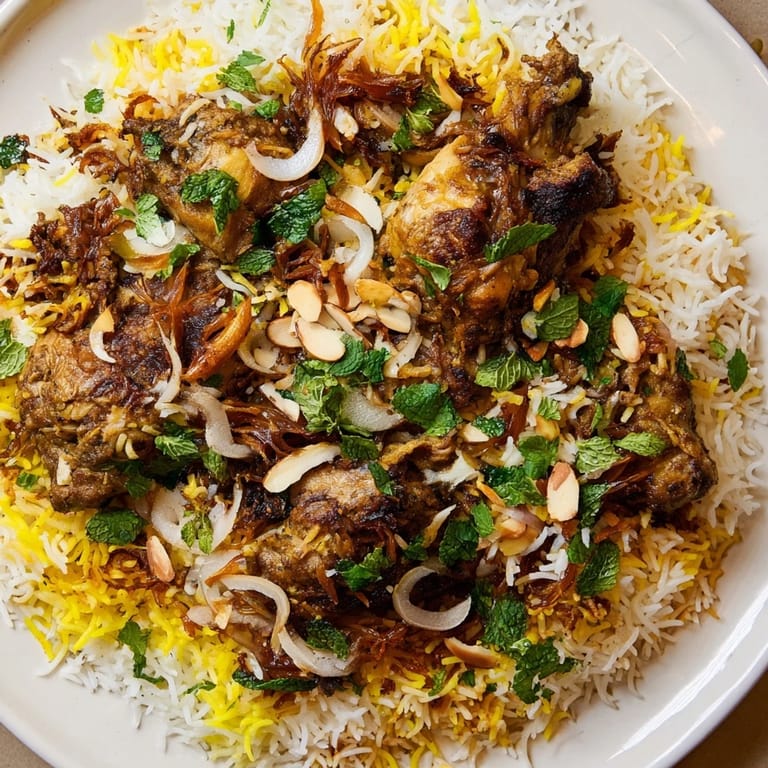
Save The first time I truly understood biryani wasn't from a recipe—it was watching my neighbor in Kuwait layer rice with such care, each handful deliberate, each sprinkle of saffron milk a small ritual. She told me the dish wasn't just about technique but about patience, about letting heat and time do what rushing never could. Years later, when I made my first pot, I realized she'd been teaching me something bigger than cooking. That golden steam rising from the pot when we lifted the lid felt like opening a door to something sacred and warm.
I learned to make this properly for a dinner party where everything felt like it could go wrong—late guests, borrowed dishes, a kitchen I'd never used before. But the biryani came together, and when I served it, the room went quiet for a moment. Not from politeness, but from that sound people make when they taste something that tastes like home, even if it isn't theirs. That's what this dish does. It connects.
Ingredients
- Bone-in chicken or lamb (900g): This cut matters more than you'd think—the bone adds flavor and keeps the meat from drying out during the long bake, something I learned after trying boneless cuts and missing that richness.
- Plain yogurt (1 cup): The acid tenderizes the meat while the dairy coats each piece, creating that silky texture that makes biryani different from regular rice with meat.
- Lemon juice (2 tbsp): Brightens the marinade and cuts through richness—don't skip it thinking lime will do the same.
- Ginger-garlic paste (1 tbsp): Fresh is non-negotiable here; jarred versions taste tinny and the flavor gets lost in the layers.
- Ground spices (turmeric, cumin, coriander, chili, garam masala): Toast them lightly in a dry pan before measuring if you have time—they bloom and deepen in flavor, a trick that changed everything for me.
- Basmati rice (3 cups): Long-grain and fragrant, it's the only rice that stays separate during the bake instead of turning into porridge.
- Ghee (5 tbsp total): It's the difference between good biryani and memorable biryani—the flavor it imparts is incomparable to oil.
- Whole spices for rice (cloves, cardamom, cinnamon, bay leaf): These infuse the rice at a gentle level, creating depth without overpowering.
- Onions (2 large): The caramelization is crucial—rushing this step means missing out on sweetness and color that anchor the whole dish.
- Fresh herbs (coriander and mint): Added at two points so you get fresh brightness even after baking; if you only add them at the end, the heat mutes them.
- Saffron threads (pinch soaked in 3 tbsp warm milk): This is where biryani gets its signature golden hue and subtle floral note—don't think you can skip it.
- Nuts and raisins: They add texture and sweetness that balances the spice and savory notes.
- Fried onions (1/4 cup): The garnish is the last surprise—crispy, salty, and essential for that final bite.
Tired of Takeout? 🥡
Get 10 meals you can make faster than delivery arrives. Seriously.
One email. No spam. Unsubscribe anytime.
Instructions
- Marinate the meat:
- Mix yogurt, lemon juice, ginger-garlic paste, and all the spices in a large bowl until it smells like the kitchen of someone who knows what they're doing. Add your meat and coat it thoroughly—every piece should be glossy and dark with the marinade. Cover and let it rest in the fridge for at least an hour; overnight is even better because the flavors have time to seep in and the meat becomes more tender.
- Prepare the rice:
- Rinse your basmati rice in cold water about five times—yes, five—until the water runs almost clear. This removes the starch that would make the rice clump. Soak it in cold water for 30 minutes while you work on everything else, then drain it completely.
- Parboil the rice:
- Bring a large pot of salted water to a rolling boil and add your whole spices—cloves, cardamom pods, cinnamon, and bay leaf. Slide in the drained rice and let it cook for 6 to 7 minutes until it's about 70% cooked, still with a slight firmness when you bite it. You want it tender but not soft because it will finish cooking in the oven. Drain it immediately in a fine mesh sieve and set aside.
- Caramelize the onions:
- Heat ghee in your ovenproof pot over medium heat and add thinly sliced onions. Stir them occasionally for 12 to 15 minutes—they should turn golden, then deeper gold, releasing their sugars and becoming almost jammy. This is not a step to rush; good caramelization gives you depth and sweetness. Remove half for garnish and leave the rest in the pot.
- Cook the marinated meat:
- Add your meat to the pot with the remaining onions and let it sear for about 5 to 7 minutes without stirring much, getting color on one side. Then cover and drop the heat to low, cooking for 20 to 25 minutes if using chicken or 35 to 40 minutes for lamb, until the meat is just tender. If the pot looks dry, add a small splash of water—you want moisture but not a stew.
- Layer the biryani:
- Preheat your oven to 180°C (350°F). Over the cooked meat, sprinkle half of your fresh herbs, raisins, and toasted nuts. Distribute half the parboiled rice over this mixture in an even layer. Then add the remaining herbs, raisins, and nuts, and top with the last of the rice, smoothing it gently with the back of a spoon.
- Add the saffron milk:
- Drizzle your saffron milk evenly across the top layer of rice—watch as the golden color spreads and stains the white rice golden. Dot the surface with a few knobs of ghee or butter, then cover the pot tightly first with foil and then with a lid to trap all the steam.
- Bake and rest:
- Bake for 30 to 35 minutes in your preheated oven—you might hear a gentle sizzle from the edges, which is exactly what you want. Remove it from the oven and let it rest, covered, for 10 minutes before you open it. This resting time lets the flavors settle and makes it easier to fluff the rice without breaking the grains.
 Save
Save The moment biryani stops being just dinner and becomes a memory is when you gather around the pot with someone you care about and smell that first release of steam when you lift the lid. That fragrance—cardamom, saffron, the ghost of caramelized onion—it fills the whole room and suddenly everyone is hungry in a way that has nothing to do with appetite.
Why This Dish Matters
Biryani exists in that interesting space between everyday and celebration in Kuwaiti kitchens. It's not humble—it requires attention and care—but it's also the kind of food that appears at family tables, at dinner parties, at moments when someone wants to say something important without words. I've learned that the best recipes are the ones that can do both: impress people and feed your soul at the same time. This one does that effortlessly.
The Art of Layering
The layering in biryani isn't just technique; it's the difference between a bowl of rice with meat and an actual dish where every bite contains all the elements in harmony. When you layer intentionally—herbs and nuts touching meat, rice insulating everything from direct heat, aromatics positioned to perfume upward—you're creating pockets of flavor that reveal themselves as you eat. I used to think I was overthinking it until someone at a dinner described my biryani as tasting different with every spoonful, and I realized that's exactly the point.
Serving and Storage Wisdom
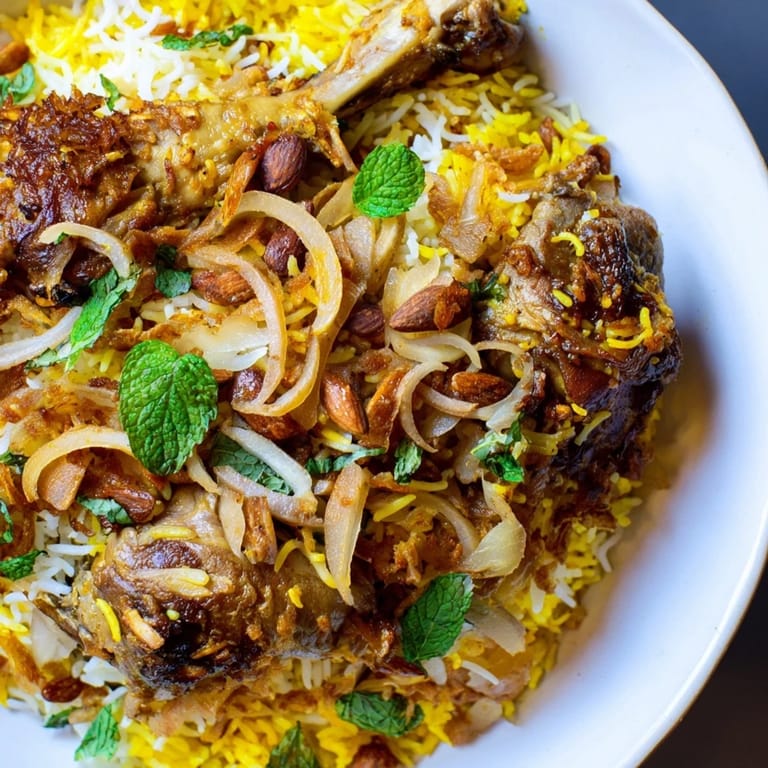
Biryani is best served immediately after that 10-minute rest, when the rice is still warm and the contrasts are sharpest—the soft meat, the fluffy rice, the crispy fried onions on top. If you're making this ahead, it actually improves after a day or two in the fridge as the flavors meld, and reheating it gently in the oven with a little water brings it right back to life. The beauty of a one-pot dish is that it's forgiving and actually gets better with time, though there's something irreplaceable about eating it fresh.
- Serve alongside cucumber-yogurt raita or a simple fresh salad to cut through the richness.
- Leftovers keep in an airtight container in the fridge for up to three days and reheat beautifully in a 160°C oven for 15 minutes, covered.
- Don't skip the fried onions as garnish—they're the final texture contrast that makes the dish complete.
 Save
Save This is food that takes you somewhere the moment you taste it, even if you're eating it at your own table. That's the gift of biryani—it's travel and memory and care all folded into rice.
Recipe Questions
- → What type of meat works best for this dish?
Bone-in chicken pieces or lamb are ideal, providing rich flavor and tenderness after marinating and slow cooking.
- → How is the saffron used in the dish?
Saffron threads are soaked in warm milk and then drizzled over the final rice layer to impart a delicate aroma and vibrant color.
- → Can I substitute nuts or omit them?
Yes, you can use almonds, cashews, or omit nuts entirely based on preference or dietary restrictions.
- → What is the purpose of caramelizing the onions?
Caramelized onions add a sweet, deep flavor and texture contrast when layered with the savory meat and rice.
- → How should the rice be prepared before assembling?
The basmati rice is par-cooked with aromatic spices until slightly firm, then drained and layered over the meat mixture for baking.