 Save
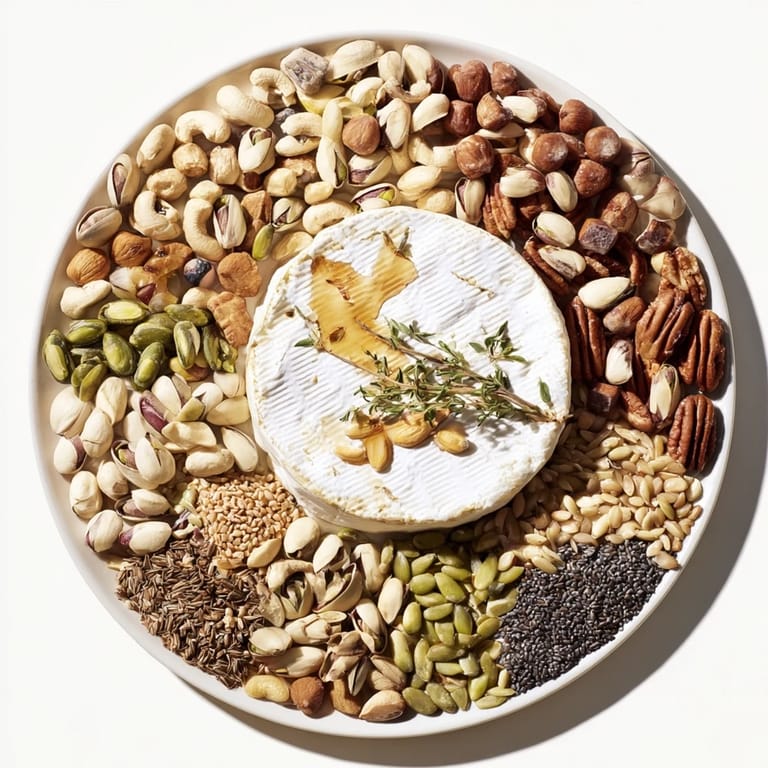
Save I stumbled onto this idea at a gallery opening where someone had arranged nuts and seeds in a spiral on a massive slate board, leading to a wedge of Brie at the center. Watching guests trace the path with their fingers, then picking up bits along the way, felt less like eating and more like discovering treasure. That night, I went home thinking: why not turn this into something intentional, something I could serve at my own table? The labyrinth was born from that moment—equal parts edible art and genuine deliciousness.
My friend Marco watched me build the first one and immediately asked if he could bring it to his dinner party instead of wine. Seeing people literally trace the path with their eyes before eating, hearing the crack of a pistachio shell followed by laughter—that's when I realized this wasn't just pretty. It was a conversation starter disguised as snacking.
Ingredients
- Raw almonds (40 g): Their mild, slightly sweet flavor anchors the whole board and they photograph beautifully with their pale, natural color.
- Roasted cashews (40 g): These are the buttery ones that people keep reaching for—they're almost creamy, which balances out the harder nuts.
- Pistachios, shelled (40 g): That natural pop of green is essential for visual drama; buy them already shelled to save your sanity.
- Pecan halves (40 g): They're slightly earthier and add a richer tone to the mix without overpowering anything.
- Hazelnuts (40 g): Small and round, they nestle together nicely and fill gaps that would otherwise look sparse.
- Pumpkin seeds (30 g): These are the workhorses of texture—crunchy, slightly mineral, and that deep green catches the light.
- Sunflower seeds (30 g): They're lighter in color and smaller, so they help create lines and definition between other elements.
- Black sesame seeds (20 g): Use these sparingly but boldly—they're almost charcoal-looking and create stark contrast that makes the whole board pop.
- White sesame seeds (20 g): These are your subtle highlights; they sit quietly between darker elements and tie everything together.
- Flaxseeds (20 g): Brown and slightly nubby, they're the background that lets brighter ingredients shine.
- Soft-ripened cheese wheel (180 g): Brie and Camembert are classics because they're creamy, approachable, and honestly, people expect them at the center of this maze.
- Dried cranberries or cherries (2 tbsp, optional): A pop of tartness and ruby color that feels celebratory without trying too hard.
- Fresh herbs like thyme or rosemary (2 tbsp, optional): A whisper of green on top of the cheese feels intentional and makes people think you're more thoughtful than you actually are.
- Honey or agave (1 tbsp, optional): Just a drizzle catches the light and adds a glossy, luxurious finish to the cheese.
Tired of Takeout? 🥡
Get 10 meals you can make faster than delivery arrives. Seriously.
One email. No spam. Unsubscribe anytime.
Instructions
- Sketch Your Path (or Free-Style It):
- If precision matters to you, lightly pencil a winding labyrinth on your board—something that spirals or loops toward the center. If you're more intuitive, skip this and just eyeball it; some of the best labyrinths are a little crooked anyway.
- Line Up Your First Row:
- Pick a starting point and arrange one nut or seed in a single-file line, maybe three or four across the board. Think of it like laying down a path you'd actually want to walk on, one ingredient at a time.
- Build the Spiral:
- Stay committed to your alternating pattern—switch between different nuts and seeds as you loop inward. The color shifts keep the eye moving and make the whole thing feel deliberate rather than random.
- Keep Spiraling to Center:
- As you get closer to the middle, your lines get tighter and you might need to break larger nuts into halves to fit. This is where patience becomes your friend; rushing here is when things fall apart.
- Crown It With Cheese:
- Place your cheese wheel right in the center where all paths lead. This is your moment to feel accomplished before you've even begun serving.
- Garnish the Prize:
- Scatter herbs on top of the cheese, let honey pool just slightly in the crevices, and maybe a few cranberries for extra flair. You're not overdoing it—you're just saying hello to your guests in cheese language.
- Fill the Gaps:
- Any empty spaces on the board get dried fruit, extra seeds, or a few stray nuts. This board should feel abundant, not like you ran out of ingredients halfway through.
- Set Out the Tools and Invite People In:
- Small forks, cocktail picks, maybe even some small crackers around the edge—then step back and let the maze do its magic.
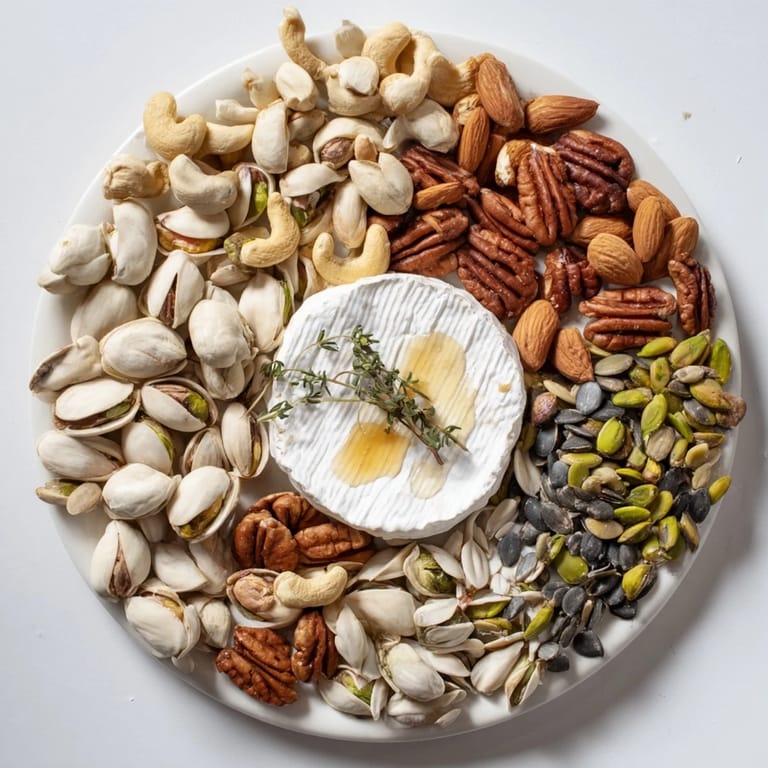 Save
Save At a wedding rehearsal dinner, I made this and watched three generations of the same family huddle around the board, each person choosing a different path through the maze. Grandma took the scenic route along the pecans; the kids went straight for the cashews. Nobody finished eating for an hour. That's when I knew the labyrinth was more than decoration—it was permission for people to slow down together.
The Alchemy of Arrangement
The real secret here isn't in the ingredients; it's in how you think about color and contrast. Dark seeds next to light ones, round hazelnuts next to flat seeds, soft cheese surrounded by everything crunchy—you're creating visual rhythm that makes people want to eat not because they're hungry, but because the board is beautiful. When I finally stopped overthinking and started thinking about what looks good next to what, everything clicked into place.
Building It Ahead of Time
You can absolutely arrange this an hour or two before guests arrive; just cover it loosely with plastic wrap so dust doesn't settle on it. The cheese might warm up slightly, which is actually perfect—it'll be exactly the right consistency for eating. I've done this for parties where I had nowhere else to focus my nervous energy, and having the board ready actually made me feel calmer.
Why This Works as Theater
There's something about a path that invites exploration, especially when that path leads to something delicious. The labyrinth isn't just an appetizer presentation; it's a tiny game, a story told in nuts and seeds, a reason for people to move around the table instead of standing still. Once I understood that this was about engagement, not just aesthetics, I started making one for nearly every gathering.
- Use odd numbers and asymmetry when you can—perfect grids feel sterile, but a labyrinth that loops unexpectedly feels alive.
- If someone asks if they're allowed to eat the maze, tell them absolutely—that's exactly the point.
- Pair this with sparkling wine or a crisp white, and suddenly it feels like you're hosting something fancy instead of just snacking together.
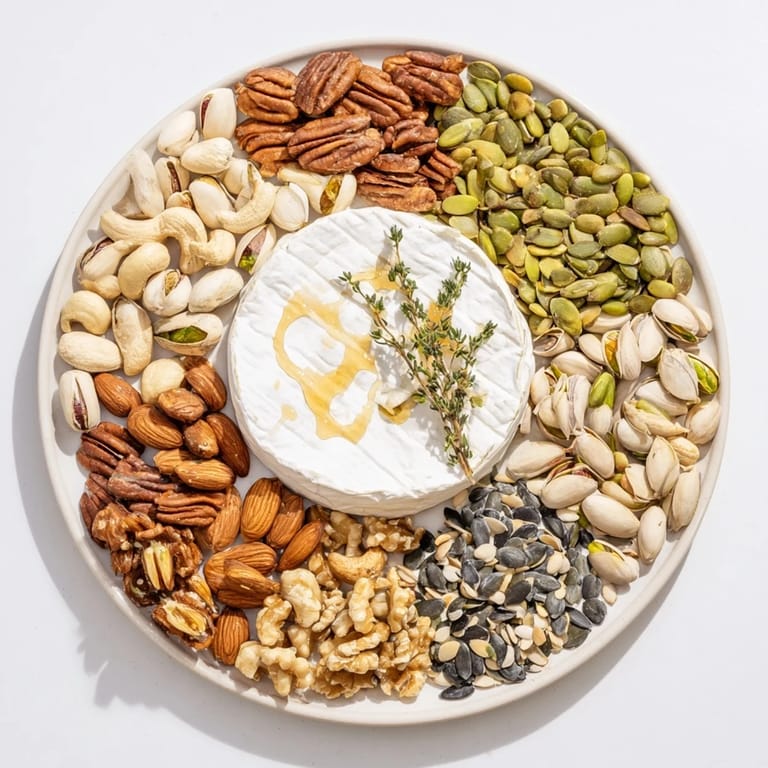 Save
Save This labyrinth has become my favorite thing to make when I want to offer people something that feels both generous and playful. It's the kind of dish that reminds us why we gather around tables in the first place.
Recipe Questions
- → How do I arrange the nuts and seeds for the labyrinth?
Carefully place the nuts and seeds in single-file lines following a winding path on a large platter, alternating types to create color and texture contrasts.
- → Can I use different types of cheese for the center?
Yes, soft-ripened cheeses like Brie or Camembert work well, and plant-based cheeses can be used for vegan options.
- → What are good garnish options for the cheese center?
Fresh herbs like thyme or rosemary and a light drizzle of honey or agave complement the cheese beautifully.
- → Is it necessary to sketch the labyrinth before arranging?
Sketching with a pencil on the platter is optional but helps create a precise, visually appealing maze design.
- → Can I substitute or omit certain nuts or seeds?
Absolutely, swap nuts and seeds to accommodate allergies or taste preferences without affecting the overall concept.
- → What beverages pair well with this platter?
Light white wines like Sauvignon Blanc or sparkling cider complement the flavors and textures nicely.