 Save
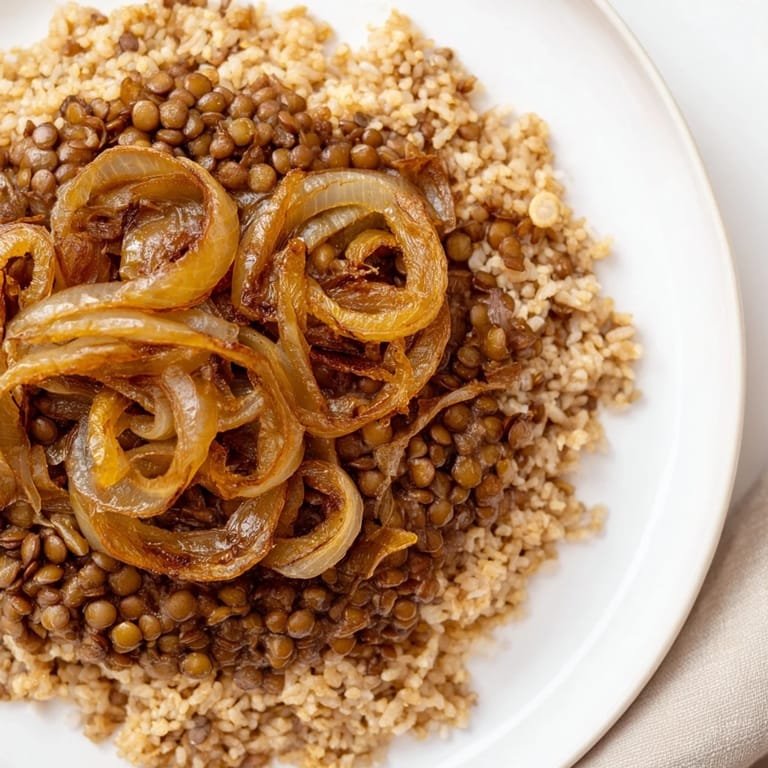
Save My grandmother used to make mjadra on quiet afternoons when the kitchen would fill with the smell of caramelizing onions, and somehow that aroma alone made everything feel like home. There's something almost magical about how simple ingredients—lentils, rice, onions, and a handful of spices—transform into something so deeply comforting and alive. The first time I made it myself, I was struck by how the warm spices whispered rather than shouted, creating this gentle backdrop for the star of the show: those golden, sweet onions piled high on top. It's the kind of dish that doesn't ask for much but gives you everything in return.
I remember bringing this to a potluck once and watching people go silent when they took their first bite—not in judgment, but in that peaceful way you get when food just hits right. Someone asked for the recipe before the bowl was even empty, and I realized mjadra has this quiet power. It doesn't announce itself with fancy techniques or rare ingredients, yet it stays with you long after the meal ends, asking you to come back for more.
Ingredients
- Brown or green lentils, 1 cup rinsed: These hold their shape beautifully while cooking, staying tender without turning to mush—rinsing them removes dust and helps them cook more evenly.
- Long-grain rice (basmati), ¾ cup rinsed: Rinsing is the secret to keeping grains separate and fluffy instead of sticky and clumped.
- Water or vegetable broth, 4 cups: Broth adds whispers of flavor, but water works just fine if that's what you have on hand.
- Olive oil, 2 tablespoons (for base) plus 3 tablespoons (for onions): Good olive oil matters here, especially for the onions where it becomes part of the flavor story.
- Ground cumin, 1 teaspoon: Warm and earthy, it's the spice that makes people ask what that lovely flavor is.
- Ground allspice, ½ teaspoon: A pinch of complexity that ties everything together without dominating.
- Ground cinnamon, ½ teaspoon: The secret ingredient that adds subtle sweetness and depth—don't skip it.
- Bay leaf, 1: It quietly infuses the whole pot and must be removed before serving.
- Salt and freshly ground black pepper: Start conservative with salt since you'll taste and adjust at the end.
- Yellow onions, 3 large thinly sliced: Slicing them thin ensures they caramelize evenly and become almost jammy in texture.
Tired of Takeout? 🥡
Get 10 meals you can make faster than delivery arrives. Seriously.
One email. No spam. Unsubscribe anytime.
Instructions
- Toast the lentils with spice:
- Heat your oil until it shimmers slightly, then add the lentils and bay leaf. Stir for a minute or two—you're just waking up the lentils and letting the oil coat them, which helps build flavor from the start.
- Build your base:
- Pour in your water or broth and let it come to a rolling boil, then dial the heat down and let it simmer uncovered for 15 minutes. This gives the lentils a head start before the rice joins the party.
- Caramelize the onions slowly:
- In a separate skillet, heat your olive oil over medium-low heat—this is not a race. Add those thin-sliced onions with just a pinch of salt and let them cook, stirring often, for 25 to 30 minutes until they're deeply golden with caramelized edges.
- Bring it together:
- When the lentils have had their 15 minutes, stir in the rinsed rice along with the cumin, allspice, cinnamon, salt, and pepper. Give it a good stir to distribute the spices evenly throughout.
- Finish gently:
- Cover the pot, lower the heat, and let everything simmer for 20 to 25 minutes until the rice and lentils are tender and all the liquid has been absorbed. If things seem too dry before they're fully cooked, add a splash of water.
- Fluff and taste:
- Remove the bay leaf and use a fork to gently fluff the mixture—this breaks up any clumps and adds air. Taste it now and adjust salt and pepper to your preference.
- Serve with the crown of gold:
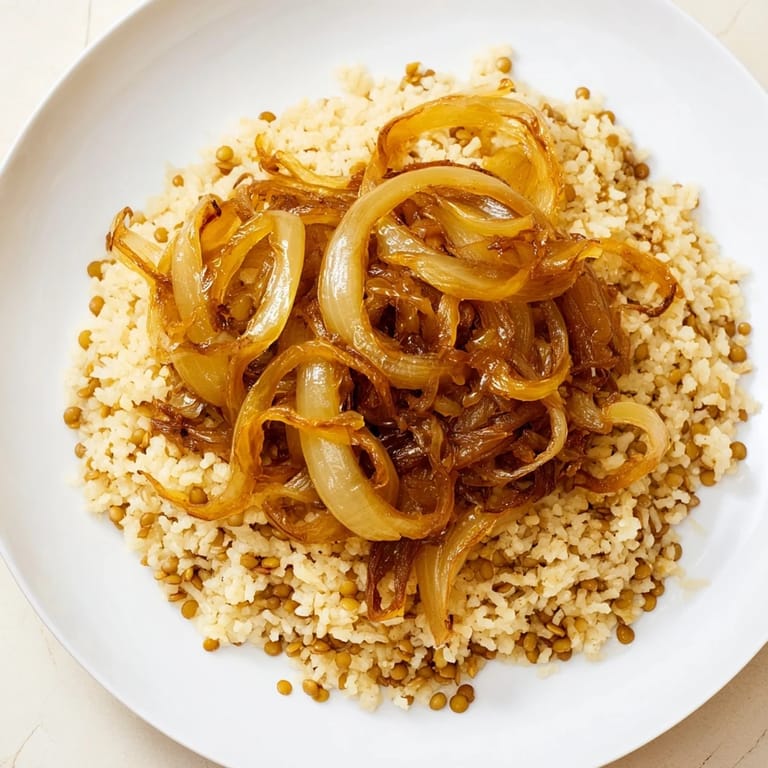
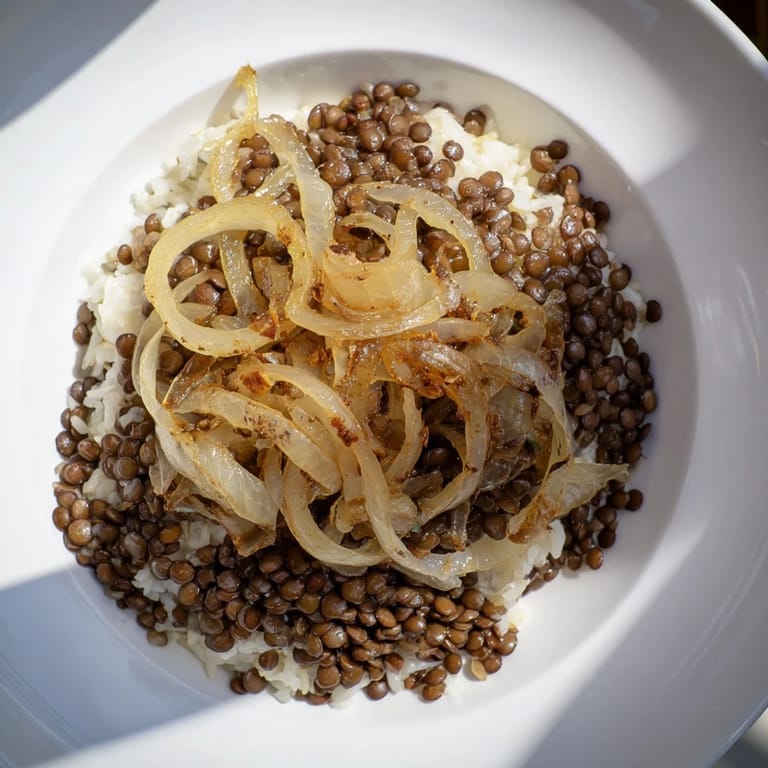
- Transfer to bowls and pile those caramelized onions generously on top while everything is still warm, letting their sweetness and slight crispness be the final note.
 Save
Save There was a winter evening when my neighbor stopped by and stayed longer than expected, drawn in by the smell alone. We ended up sitting in the kitchen, sharing a bowl, and talking about how the best meals are the ones that make you slow down. That's mjadra for me—it insists on your presence.
The Magic of Caramelized Onions
Those onions on top aren't just a garnish—they're the heart of this dish. I've learned that the low, slow method transforms onions into something almost unrecognizable: sweet, tender, and with a subtle crispy edge that adds texture. The oil they cook in becomes golden itself, carrying all their concentrated flavor. Once you master caramelizing onions, you'll find yourself doing it for everything, from soups to roasted vegetables to simple bread.
Warm Spices and Why They Matter
The spice blend here—cumin, allspice, and cinnamon—might look modest on paper, but together they create a warmth that feels almost like a hug in a bowl. They're not meant to be noticed individually; instead, they layer together to create something greater than their parts. I discovered this the hard way by once making mjadra without the cinnamon, and the whole thing felt flat until that touch of sweetness brought it back to life.
Serving and Storing Your Mjadra
One of the best things about mjadra is its flexibility—serve it hot right after cooking, or let it cool to room temperature for a different kind of comfort. Leftovers are a gift; they keep well in the fridge for up to four days and actually taste even better the next day as the spices settle deeper into the grains. I like to store the caramelized onions separately and add them fresh when reheating, so they keep their crispness and golden shine.
- A dollop of plain yogurt and a scatter of fresh parsley turn it into something special without overwhelming the delicate spice balance.
- A side of fresh tomato and cucumber salad or crispy pickles adds brightness and cuts through the richness perfectly.
- Leftovers reheat gently on the stovetop with a splash of water, bringing the whole dish back to life.
 Save
Save Mjadra taught me that sometimes the most satisfying meals are built on simplicity and patience, not complexity. Make this dish when you want to feel nourished and remember why cooking, at its heart, is an act of care.
Recipe Questions
- → What type of lentils work best for Mjadra?
Brown or green lentils are ideal as they hold their shape well and provide a hearty texture.
- → How do I achieve perfectly caramelized onions?
Cook thinly sliced onions over low-medium heat with olive oil, stirring often for 25-30 minutes until they turn deep golden and sweet.
- → Can I use broth instead of water for cooking the lentils and rice?
Yes, low-sodium vegetable broth adds extra flavor without overpowering the spices.
- → What spices are essential in this dish?
Cumin, allspice, and cinnamon provide the warm, aromatic base that is characteristic of this Middle Eastern preparation.
- → Is this dish suitable for special diets?
Absolutely, it's naturally vegan and gluten-free, making it inclusive for many dietary preferences.