 Save
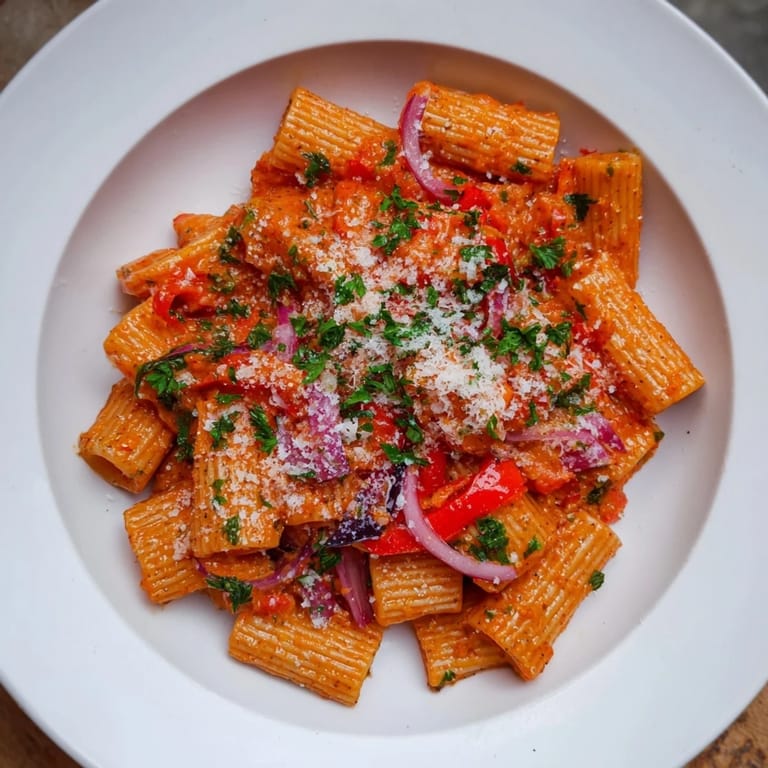
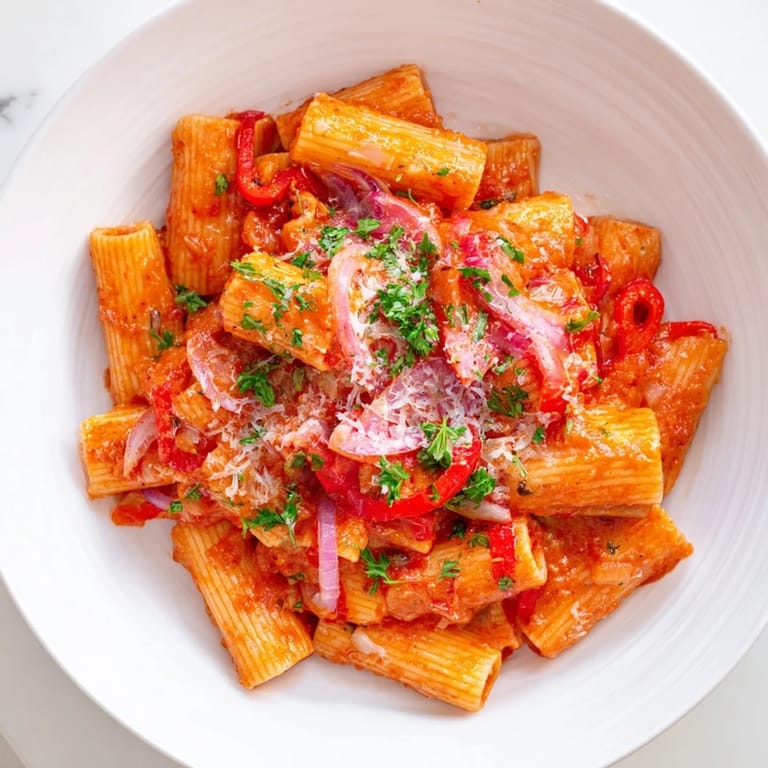
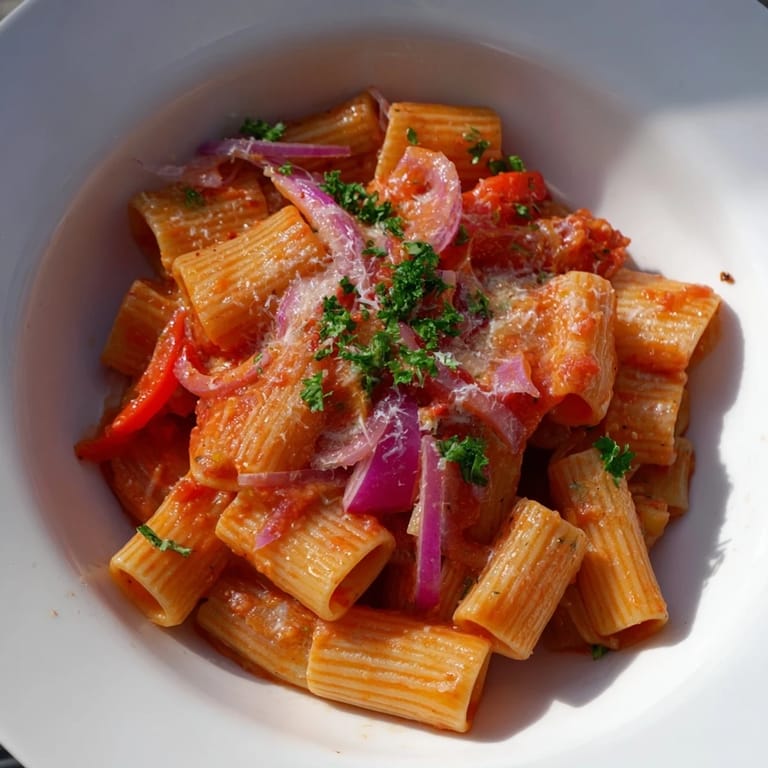
Save I was halfway through a long work week when I realized I had no energy left for elaborate cooking. The pantry was reasonably stocked, but the idea of juggling multiple pots felt unbearable. That's when I grabbed a deep skillet and threw everything in at once, tomatoes, pasta, red pepper flakes, and let it simmer into something fiery and comforting. The kitchen filled with garlic and smoky paprika, and by the time I stirred in the Parmesan, I knew I'd stumbled onto something worth keeping.
The first time I made this for friends, someone asked if I'd ordered takeout from the Italian place down the street. I laughed and pointed at the single skillet still on the stove. They couldn't believe something that rich and layered came from such a simple method, and I've been making it for casual dinners ever since.
Ingredients
- Penne or rigatoni: The ridges and tubes catch the spicy tomato sauce beautifully, and they hold up well during the one pot simmer without turning mushy.
- Red onion: It adds a slight sweetness that balances the heat, and I've learned that chopping it finely helps it melt into the sauce rather than clumping.
- Garlic cloves: Fresh garlic is nonnegotiable here, the fragrance it releases when it hits the oil sets the tone for everything that follows.
- Red bell pepper: Thin slices soften into sweet ribbons that contrast beautifully with the fiery pepper flakes.
- Canned diced tomatoes: Use the ones with juices included, they create the saucy base that the pasta absorbs as it cooks.
- Olive oil: A good quality oil makes a difference in the first few minutes, it carries the garlic and onion flavors through the entire dish.
- Italian seasoning: This blend brings oregano, basil, and thyme into the mix without opening multiple jars.
- Crushed red pepper flakes: Start with the suggested amount and adjust up or down depending on how much heat you crave.
- Smoked paprika: It adds a subtle depth and a hint of smokiness that makes the dish feel more complex than it is.
- Parmesan cheese: Stirred in at the end, it melts into the sauce and adds a salty, nutty finish that ties everything together.
- Fresh parsley or basil: A handful of chopped herbs brightens the whole plate and adds a pop of color right before serving.
- Lemon zest: Optional, but a little zest cuts through the richness and makes the flavors feel even more alive.
Tired of Takeout? 🥡
Get 10 meals you can make faster than delivery arrives. Seriously.
One email. No spam. Unsubscribe anytime.
Instructions
- Start with the aromatics:
- Heat the olive oil over medium heat until it shimmers, then add the chopped onion and let it soften for a few minutes until it turns translucent and sweet. This gentle start builds a flavorful foundation for everything else.
- Add garlic and pepper:
- Toss in the minced garlic and sliced red bell pepper, stirring frequently so the garlic doesn't burn. You'll know it's ready when the kitchen smells warm and inviting, usually around two minutes.
- Combine pasta and liquids:
- Pour in the diced tomatoes with their juices, add the uncooked pasta, water or broth, and all the seasonings. Stir everything together so the pasta is mostly submerged, it looks crowded at first but trust the process.
- Simmer until tender:
- Bring the mixture to a boil, then lower the heat and let it simmer uncovered, stirring every few minutes to prevent sticking. The pasta will absorb the liquid and become tender in about twelve to fourteen minutes.
- Finish with cheese and zest:
- Remove the skillet from the heat and fold in the grated Parmesan and lemon zest if you're using it. Taste and adjust the salt or pepper as needed, then let it rest for a minute before serving.
- Serve and garnish:
- Spoon the pasta into bowls and top with fresh parsley or basil and extra Parmesan. The herbs add brightness and the cheese adds richness, making each bite feel complete.
 Save
Save One evening I made this after a frustrating day, and the act of stirring the pot, watching the pasta soften, smelling the garlic and pepper, pulled me back to center. By the time I sat down with a bowl and a glass of wine, the day's stress had faded into the background.
Making It Your Own
If you want more protein, sliced cooked chicken sausage or sautéed shrimp stirred in at the end turns this into a heartier meal. I've also swapped the Parmesan for nutritional yeast when cooking for vegan friends, and the dish still delivers that savory, cheesy note. The beauty of this recipe is that it bends easily to whatever you have on hand or whoever you're feeding.
Pairing and Serving Ideas
I usually serve this with a simple green salad dressed in lemon and olive oil, something light to balance the richness. A crisp Italian white wine like Pinot Grigio complements the heat and acidity perfectly, though sparkling water with a squeeze of lemon works just as well. If you have crusty bread around, it's perfect for soaking up any sauce left in the bowl.
Storage and Reheating
Leftovers keep well in the fridge for up to three days, and the flavors actually deepen overnight as the pasta continues to soak up the sauce. Reheat gently on the stovetop with a splash of water or broth to loosen it up, or microwave in short intervals, stirring in between. I've never had any left by day four, but if you do, it freezes reasonably well for up to a month.
- Store in an airtight container to keep the pasta from drying out.
- Add a drizzle of olive oil before reheating to refresh the texture.
- Garnish with fresh herbs again after reheating, it brings back that just cooked brightness.
 Save
Save This dish has become my answer to busy nights when I still want something that feels special. It's fast, forgiving, and every time I make it, I'm reminded that good food doesn't have to be complicated.
Recipe Questions
- → What pasta types work best for this dish?
Penne or rigatoni are ideal as they hold sauce well and cook evenly in one pot.
- → How can I adjust the spice level?
Reduce or increase crushed red pepper flakes according to your heat preference.
- → Can this dish be made vegan?
Yes, by substituting Parmesan with nutritional yeast or a vegan cheese alternative.
- → Is there a recommended broth for cooking?
Low-sodium vegetable broth adds depth, but water works fine for a lighter taste.
- → What herbs complement the flavors best?
Italian seasoning blends and fresh parsley or basil enhance the dish's aromatic profile.