 Save
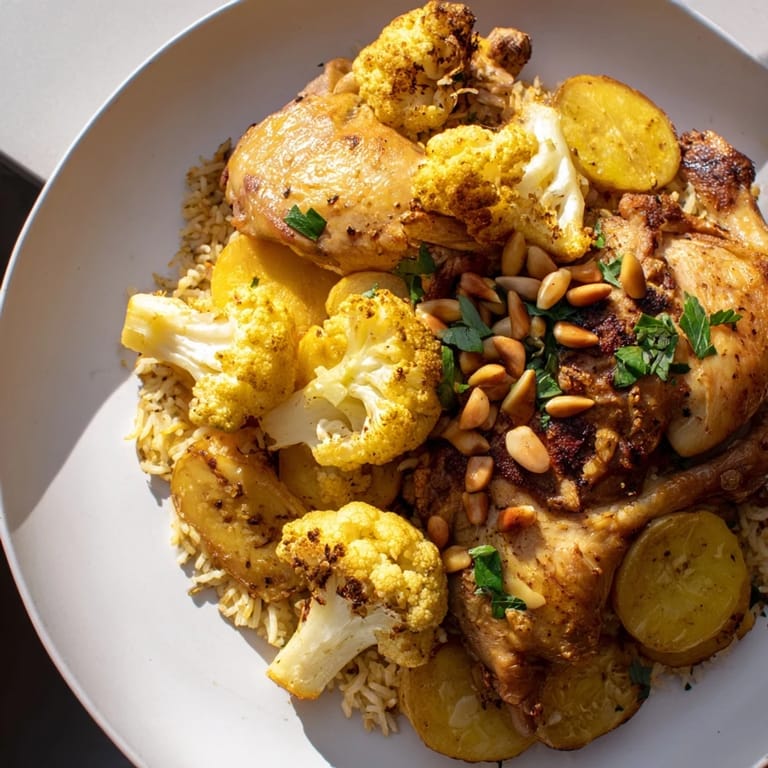
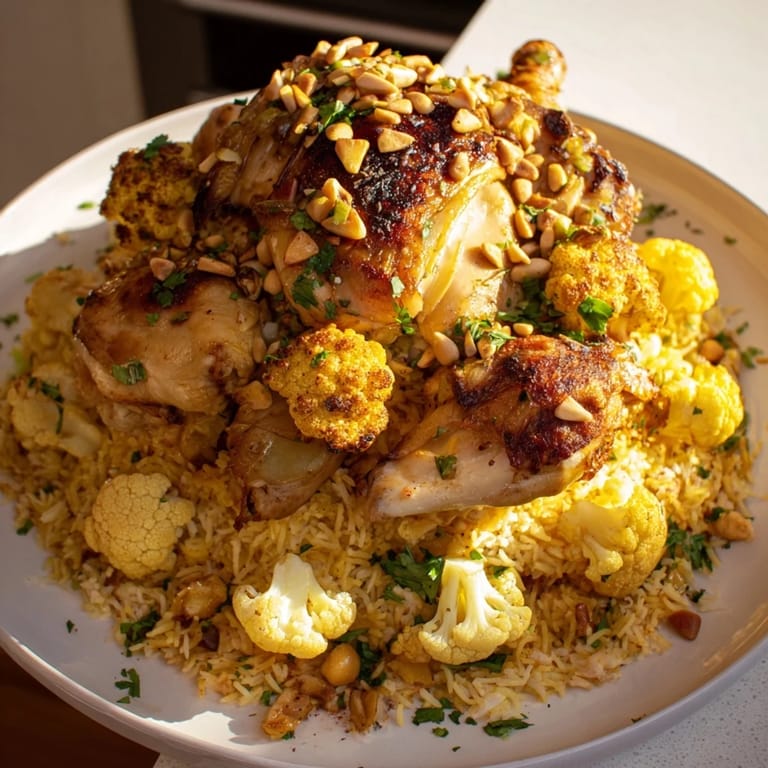
Save The first time I watched maklouba being made, I was mesmerized by the drama of it all. My neighbor had invited me over on a Friday afternoon, and as soon as I stepped into her kitchen, the air was thick with the smell of cinnamon, cardamom, and chicken simmering in spiced broth. She moved with such certainty, layering potatoes, chicken, cauliflower, and rice into a heavy pot like she was building something sacred. Then came the moment I'll never forget: she placed a large platter over the pot, took a breath, and flipped the whole thing over in one confident motion. When she lifted the pot away, there it was—a golden, steaming dome of perfectly cooked maklouba, each layer visible and intact.
I made maklouba for a dinner party last spring, and I was nervous about that final flip. My hands were shaking a little as I positioned the platter over the pot, but when I turned it over and heard that soft settling sound of the rice shifting into place, something clicked. My friends gathered around as I lifted the pot to reveal this magnificent, aromatic tower of golden rice studded with vegetables and tender meat. One person actually gasped. That moment taught me that cooking doesn't have to be complicated to feel magical.
Ingredients
- Bone-in chicken pieces (1.2 kg): The bones add incredible flavor to the broth and keep the meat juicy during the long cooking time; legs and thighs are forgiving and stay tender.
- Basmati rice (2 cups): Soaking it beforehand keeps the grains separate and fluffy instead of turning to mush; this is the difference between beautiful and mushy maklouba.
- Cauliflower florets: Frying them until golden gives them a crispy exterior that contrasts beautifully with the soft, spiced rice.
- Potatoes (2 medium, sliced thin): They form the bottom layer and act like a barrier, preventing the rice from sticking to the pot; slice them consistently so they cook evenly.
- Large onion, sliced: This becomes the aromatic base that carries all the spices through the broth.
- Spice blend (cumin, coriander, cinnamon, turmeric, allspice, cardamom): Each spice has a purpose—the warm ones ground the dish while the bright ones lift it, creating that unforgettable Palestinian flavor.
- Chicken stock or water (5 cups): The liquid that transforms individual ingredients into something unified and deeply flavorful.
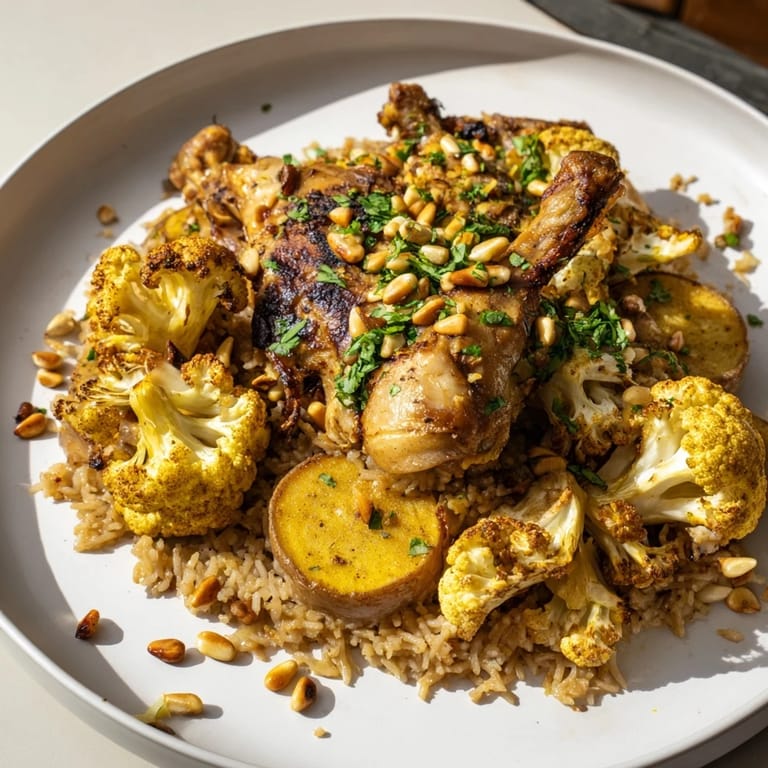
- Pine nuts or slivered almonds for garnish: The toasted nuttiness adds texture and a touch of elegance to the final presentation.
Tired of Takeout? 🥡
Get 10 meals you can make faster than delivery arrives. Seriously.
One email. No spam. Unsubscribe anytime.
Instructions
- Prepare the rice with intention:
- Rinse the basmati rice under cold running water until the water runs mostly clear, then soak it in salted water for 30 minutes. This step feels simple, but it's what keeps each grain distinct instead of clumping together.
- Brown the chicken to build flavor:
- Heat olive oil in your pot and season the chicken generously with salt and pepper, then let it sit undisturbed for a few minutes on each side until it's golden. You're not cooking it through—just giving it color and depth.
- Bloom the spices in warm oil:
- After sautéing the onions until soft, add all your spices and let them toast for about a minute. The kitchen will smell incredible, and you'll know it's working when the aroma becomes almost visible.
- Simmer the chicken in aromatic broth:
- Return the chicken to the pot with the spiced onions, pour in your stock, and let everything bubble gently for about 20 minutes. The chicken doesn't need to be fully cooked yet—the rice will finish the job.
- Fry vegetables until golden:
- While the broth simmers, heat oil in a separate pan and fry the cauliflower and potatoes in batches until they're deeply golden and crispy. Don't overcrowd the pan, or they'll steam instead of fry.
- Layer with care and precision:
- In your heavy pot, create a foundation with potato slices, then layer the cooked chicken, fried cauliflower, and finally the drained rice on top. Press down gently—you want the layers to hold together but not to crush anything.
- Add broth and seal the deal:
- Pour enough of the reserved broth to just barely cover the rice. The exact amount matters; too little and you'll have dry spots, too much and the bottom will get soggy.
- Cook low and slow without peeking:
- Once the liquid starts bubbling at the edges, lower the heat and cover the pot tightly. Don't lift that lid—not even once—for the next 35 to 40 minutes. The steam does all the work.
- Rest and then perform the flip:
- Turn off the heat and let the pot sit for 10 to 15 minutes. This resting period helps everything settle and hold together, making the inversion less likely to fall apart.
- Invert with confidence:
- Place a large, sturdy platter over the pot, take a deep breath, and flip it over in one smooth motion. Lift the pot away slowly and carefully, and you'll reveal a golden dome of rice with all the layers intact.
 Save
Save The smell that fills your kitchen during maklouba's final moments is something I've come to associate with generosity and abundance. Every time I make it, I'm reminded that this dish exists because people wanted to share something spectacular with the people they love, and they figured out how to do it all in one pot.
The Art of the Perfect Flip
That moment when you turn the pot over is where maklouba earns its name—which literally means "upside down." The first time you do it, your heart will race a little. The second time, you'll feel more confident. By the third time, you'll understand why this technique became such a beloved part of Palestinian cooking: it's theatrical without being pretentious, and it transforms a one-pot meal into an event. The key is committing fully to the motion—hesitation is your enemy.
Why the Spices Matter
Palestinian maklouba isn't about a single spice dominating the plate; it's about a conversation between cinnamon's warmth, cumin's earthiness, coriander's subtle brightness, and cardamom's floral notes. When I first tasted a properly spiced version, I was struck by how complex yet balanced it felt. None of the spices shouted over the others. Instead, they created this layered, evolving flavor that made every bite interesting. If you're tempted to skip or reduce any of them, resist that urge—they're all there for a reason.
Customizing Your Maklouba
Once you master the basic version, maklouba becomes a canvas for your own kitchen experiments. I've added thin slices of eggplant between the potatoes and chicken, and it created pockets of silky richness. A friend of mine layers in thin carrots for sweetness and color. For a vegetarian version, skip the chicken entirely and use vegetable broth—the spices and vegetables carry enough flavor to stand on their own.
- Try adding a pinch of saffron to the broth for an extra layer of luxury.
- Eggplant or carrots can slot in anywhere in the layers without disrupting the chemistry.
- A vegetarian version works beautifully if you double down on the spices and use quality vegetable broth.
 Save
Save Maklouba is the kind of dish that makes people feel welcomed and cared for. Every time you make it, you're continuing a tradition of turning simple ingredients and generous hands into something that brings people together.
Recipe Questions
- → What is the best rice to use?
Basmati rice is preferred for its aroma and long grains, which hold texture well in the layering process.
- → How do you prevent the dish from sticking?
Using a heavy-bottomed pot and layering fried potatoes at the base helps prevent sticking and forms a crispy crust.
- → Can I make a vegetarian version?
Yes, omit the chicken and use vegetable broth, with additional layers like eggplant or carrots for flavor and texture.
- → What spices are essential for authentic flavor?
Cumin, coriander, cinnamon, turmeric, allspice, cardamom, and bay leaves blend to create the dish’s distinctive warm and fragrant profile.
- → How long should the dish rest before unmolding?
Allow the cooked layers to rest 10–15 minutes off the heat to set and ensure easy inversion without breaking.
- → What garnish complements this dish?
Toasted pine nuts or slivered almonds and fresh parsley provide a nutty crunch and fresh herbal notes.