 Save
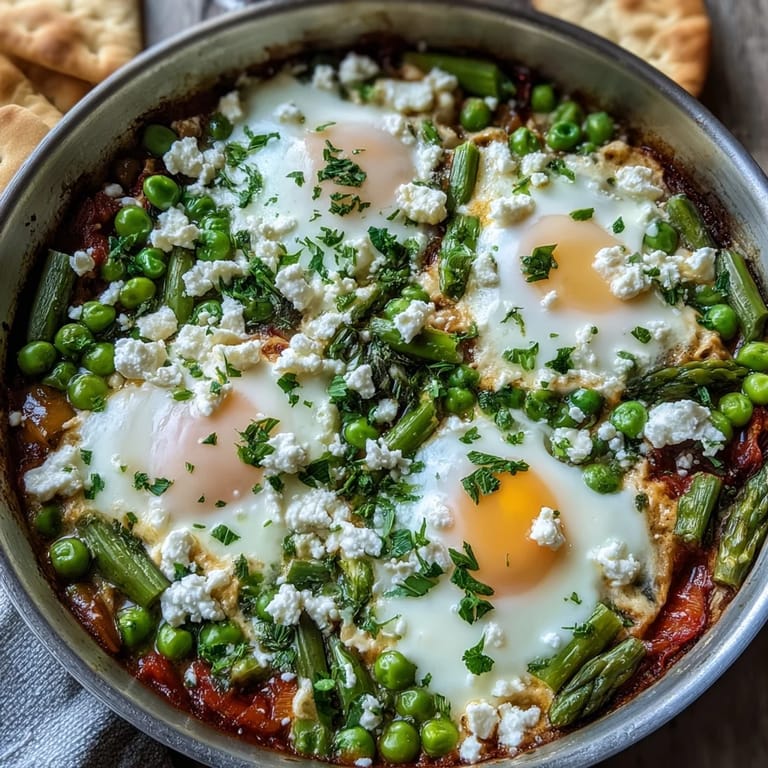
Save Last spring, I was rifling through my freezer at odd hours, hunting for something that felt both comforting and alive. Green peas and broad beans stared back at me, and suddenly I remembered a shakshuka I'd eaten years ago in a crowded Tel Aviv market. Why not blend them together? That night, the smell of cumin hitting hot oil filled my tiny kitchen, and something clicked. This dish became my answer to wanting vegetables that taste like they matter, cradled in warm spiced tomato, with eggs that cook gently alongside them.
I made this for my neighbor one Tuesday evening when she mentioned craving something that wasn't tired. She arrived expecting soup, then watched me crack the eggs into wells I'd made in the vegetables. The moment her spoon broke into that golden yolk and it pooled into the tomato, she looked up and laughed. That's the reaction this dish gets every single time.
Ingredients
- Fresh or frozen peas (1 cup): Use frozen if fresh aren't in season; they're picked at peak ripeness and honestly better than mealy fresh ones in winter.
- Fresh or frozen broad beans (1 cup): If fresh, pop them from their pods then slip off the papery skin. Frozen ones save this step entirely, and I lean on them without guilt.
- Asparagus (1 bunch, about 200g): Snap off the woody ends where they naturally want to break, then cut into two-inch pieces so they cook evenly with the other vegetables.
- Onion and red bell pepper: Chop the onion fine so it melts into the sauce; the pepper can be rougher since it softens quickly anyway.
- Garlic (2 cloves): Mince it small so it distributes evenly and doesn't burn when the spices hit the oil.
- Canned chopped tomatoes (400g): San Marzano varieties taste noticeably sweeter and less tinny; spend the extra coin if you can.
- Tomato paste (2 tablespoons): This deepens the flavor and helps the sauce thicken without needing more cooking time.
- Ground cumin (1 teaspoon): Toast it in the oil before adding wet ingredients so it wakes up and becomes aromatic instead of dusty.
- Smoked paprika (1 teaspoon): The smoke matters here; it gives you warmth without heat.
- Ground coriander (1/2 teaspoon): This is the secret ingredient that nobody notices but everybody tastes.
- Chili flakes (1/4 teaspoon, optional): Leave them out if you're cooking for people who prefer gentle spice, add double if you like heat that builds slowly.
- Large eggs (4): Room temperature eggs cook more gently and evenly than cold ones pulled from the fridge.
- Crumbled feta (3 tablespoons): Get it from a block if possible; pre-crumbled versions often taste chalky and stale.
- Fresh parsley or mint (2 tablespoons): Mint feels more special here, but parsley works beautifully if that's what you have.
- Extra virgin olive oil: Use it generously for sautéing and again as a final drizzle; it's not excessive, it's essential.
Tired of Takeout? 🥡
Get 10 meals you can make faster than delivery arrives. Seriously.
One email. No spam. Unsubscribe anytime.
Instructions
- Blanch the spring vegetables:
- Bring salted water to a rolling boil and drop in the peas and broad beans for exactly two minutes, then scoop them out into ice water. This stops them from cooking further and keeps them bright green instead of turning that dull army shade.
- Build your base:
- Heat olive oil in your largest deep skillet over medium heat, then add the chopped onion and diced pepper. Let them soften for about five minutes, stirring occasionally, until they smell sweet and look translucent at the edges.
- Toast the spices:
- Stir in the minced garlic, cumin, smoked paprika, coriander, and chili flakes. Cook for about one minute until the whole kitchen smells like a market you want to live in; this blooming is what prevents the spices from tasting raw.
- Add tomato depth:
- Stir in the tomato paste first, let it warm through for about thirty seconds, then pour in the chopped tomatoes. This small extra step prevents the paste from clumping and helps it meld seamlessly into the sauce.
- Simmer the sauce:
- Let everything bubble gently for about ten minutes, stirring now and then, until the sauce thickens slightly and loses its raw edge. You want it to taste like tomato and spice have become friends, not like they just met.
- Add the vegetables:
- Scatter in the blanched peas, broad beans, and asparagus pieces, then season with salt and pepper. Simmer for five to seven minutes until the asparagus is tender when you poke it with a fork but still has a whisper of resistance.
- Create wells for eggs:
- Use the back of a wooden spoon to create four small wells or indentations in the vegetable mixture, spacing them evenly. These become cradles for your eggs.
- Add the eggs:
- Crack each egg gently into a well, then cover the skillet and reduce the heat to low. Cook for seven to ten minutes, peeking after seven, until the whites are set but the yolks still jiggle slightly when you nudge the pan.
- Finish and serve:
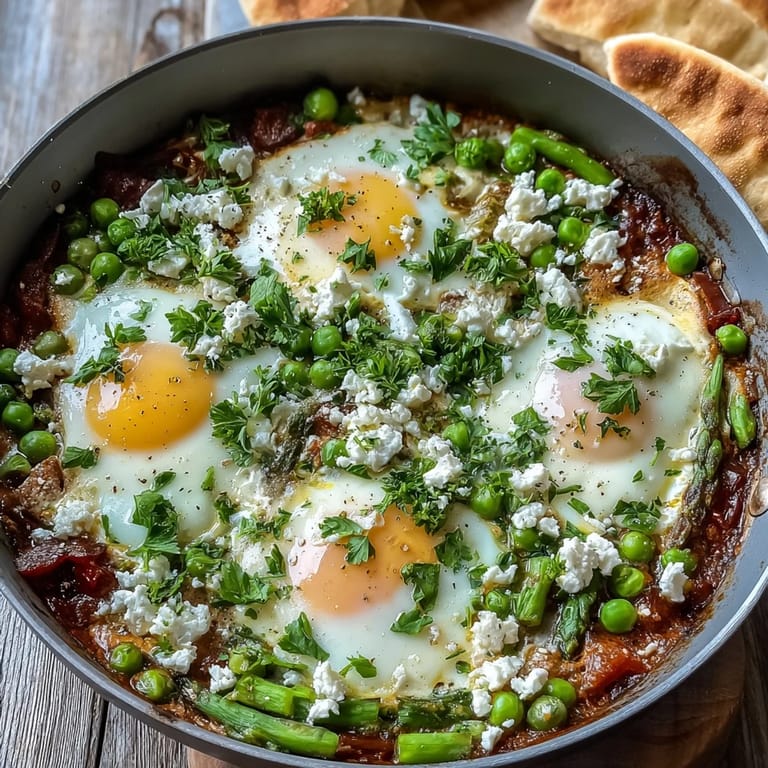
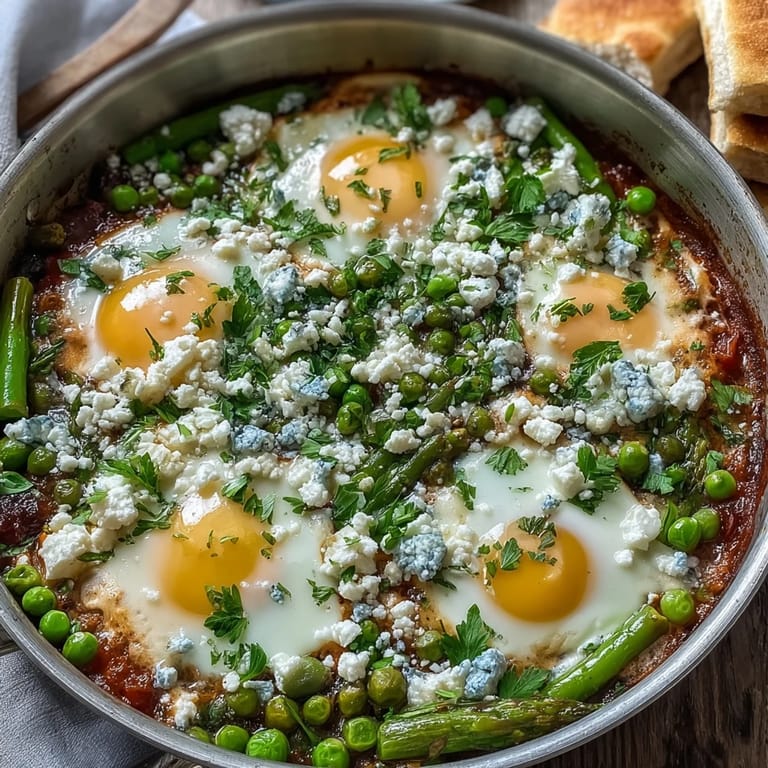
- Remove from heat, scatter feta and fresh herbs across the top, then drizzle with olive oil. Serve straight from the pan so everyone gets warm vegetables, runny yolk, and crispy bread for dunking.
 Save
Save My mother visited one April and saw me setting this on the table still sizzling. She grew up on Middle Eastern food but had never seen it made this way, with spring vegetables leading the charge. She broke her egg into the sauce with the concentration of someone learning something essential, then looked at me and said it was the first shakshuka that ever felt like it came from a garden. That's what changed for me too.
Why Eggs Matter Here
Shakshuka lives or dies on the egg. When that yolk breaks and bleeds into the tomato sauce, it becomes your sauce, warm and luxurious and absolutely necessary. Cold or hard-boiled eggs would miss the entire point. The gentle low heat and the lid above mean the yolks stay silky while the whites firm up just enough to hold together. This is not an accident; it's the whole reason we're cooking this way instead of making tomato stew and adding eggs on the side.
The Vegetable Combination
The mix of peas, broad beans, and asparagus isn't random nostalgia. Peas bring sweetness, broad beans add earthiness and substance, and asparagus cuts through with brightness. Together in a warm tomato sauce spiced gently with cumin and paprika, they taste like spring decided to become dinner. You can swap them for whatever's in season or in your freezer, but this trio changed the way I think about what vegetables can do in a single dish.
Serving and Pairing
Crusty bread is not optional. When your spoon breaks that yolk, you need something to catch the runny gold and soak it up. Flatbreads work beautifully too, and I've been known to use them to make little edible scoops for the vegetables and sauce. A crisp white wine pairs silently in the background, or sparkling water with fresh lemon if you want clarity.
- Serve straight from the pan so the food stays warm and everyone feels invited to the same table.
- If you're cooking for four and want leftovers, double the sauce and vegetables but keep the egg count at four per batch, cooking a second round if needed.
- This dish waits for no one, so assemble everyone first, then crack the eggs into the pan.
 Save
Save This became the dish I make when I want to feel like myself, or when I want someone else to understand why I love cooking at all. It asks so little but gives so much.
Recipe Questions
- → Can I make this dish ahead of time?
The vegetable base can be prepared up to a day in advance and stored in the refrigerator. When ready to serve, reheat gently and add the eggs for the final cooking stage.
- → What's the best bread to serve with this?
Crusty sourdough, warm flatbreads, or pita all work beautifully for dipping into the runny yolks and spiced sauce. Choose something substantial enough to hold up when soaked.
- → How do I know when the eggs are done?
The whites should be completely set and opaque, while the yolks remain jiggly and runny. This usually takes 7-10 minutes over low heat with the pan covered.
- → Can I use frozen vegetables instead of fresh?
Yes, frozen peas and broad beans work well. Thaw them first and skip the blanching step since they're already partially cooked during processing.
- → Is this suitable for meal prep?
The vegetable portion reheats beautifully, but eggs are best cooked fresh. Store the base separately and add eggs when reheating for optimal texture.