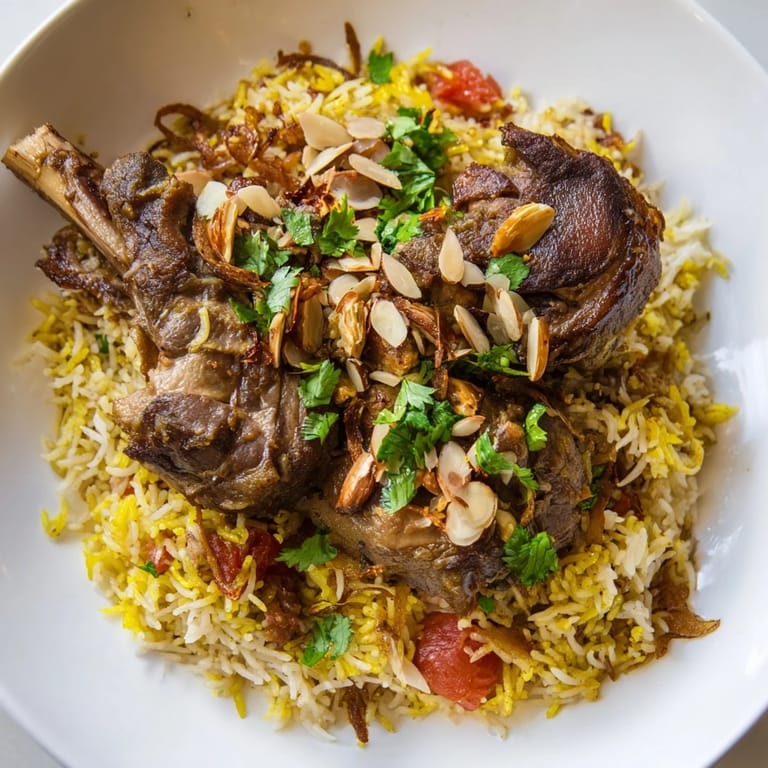
 Save
Save The first time I truly understood what Majboos was supposed to taste like, I was sitting in a Doha kitchen on a warm afternoon, watching my friend's mother move through the steps with such ease that it seemed like muscle memory. She didn't measure the spices with precision—just knew when the cinnamon and cardamom had perfumed the ghee enough. What struck me most wasn't the complexity of the flavors, but how they all seemed to belong together, like they'd been waiting centuries for this moment. I went home determined to recreate that feeling, and after a few attempts (and one batch where I burned the onions), I finally got it.
I made this for my family on a quiet Sunday, and my dad—who usually eats on his own schedule—suddenly appeared in the kitchen asking when dinner would be ready. The saffron-scented steam rising from the pot seemed to have summoned him. By the time we sat down, even my teenage nephew put his phone away. That's when I knew the recipe had worked.
Ingredients
- Lamb, bone-in, cut into large pieces: The bones add depth and richness you can't replicate with boneless cuts—they're where the soul of the dish lives.
- Basmati rice, rinsed and soaked: The soaking step isn't just tradition; it helps each grain cook separately and stay tender instead of mushy.
- Onions, thinly sliced: Golden onions are the foundation—don't rush this step or you'll lose the sweet, deep flavor they develop.
- Garlic and green chilies: Added after the onions to keep them bright and fresh, not bitter from overcooking.
- Tomatoes, chopped: They add acidity that balances the richness of the ghee and meat.
- Ground coriander, cumin, turmeric, cinnamon, cardamom, cloves: This blend is what separates Majboos from any other rice dish—each spice has a purpose, and together they create something that tastes like Arabia.
- Black limes (loomi), pierced: These dried limes are the secret ingredient that gives Majboos its distinctive tangy, earthy note—they're worth seeking out, but you can skip them in a pinch.
- Bay leaves: A quiet flavor that ties everything together without demanding attention.
- Saffron threads, soaked: The golden color and subtle floral note mark this as a celebration dish, not everyday cooking.
- Ghee or vegetable oil: Ghee adds a richness that makes the spices bloom; use it if you can.
- Water or chicken stock: Stock adds depth, but water works fine if that's what you have.
- Toasted slivered almonds and fresh cilantro: The garnish is the final flourish—almonds add crunch and cilantro brings freshness to cut through the richness.
Tired of Takeout? 🥡
Get 10 meals you can make faster than delivery arrives. Seriously.
One email. No spam. Unsubscribe anytime.
Instructions
- Season your meat:
- Pat the lamb pieces dry and season them generously with salt and pepper. This simple step helps them brown beautifully in the next step.
- Build the flavor base with onions:
- Heat ghee in your largest, heaviest pot over medium heat and add the sliced onions. Let them cook undisturbed for a few minutes, then stir occasionally until they're deep golden brown—this takes about 10 minutes but is absolutely worth the patience. You're not just cooking onions; you're creating the sweet, caramelized foundation of the entire dish.
- Wake up the aromatics:
- Stir in the minced garlic and slit green chilies, cooking just until fragrant—about 1 minute. If you cook them longer, they'll turn bitter and regret will follow.
- Brown the meat:
- Add the lamb pieces to the pot and let them sit undisturbed for a minute or two before stirring. You want that golden crust that seals in the juices. Keep stirring and turning them until all sides are bronzed, about 8 minutes total.
- Add the tomatoes:
- Stir in the chopped tomatoes and let them soften and break down slightly, about 5 minutes. They'll add brightness and help create a sauce that coats the meat.
- Bloom the spices:
- Add all the ground spices, the pierced black limes, and bay leaves, stirring constantly for about 30 seconds. You'll smell the spices come alive—that moment when everything shifts from separate ingredients to a cohesive whole.
- Simmer the meat until tender:
- Pour in your water or stock, bring everything to a boil, then reduce the heat and cover. Simmer gently for 45 to 50 minutes, until the lamb is so tender it nearly falls apart when you test it with a fork. This is a good time to step away and let the oven's warmth and time do their work.
- Build the rice layer:
- Remove the cooked lamb with a slotted spoon and set it aside. Add the rinsed and drained soaked rice directly to the fragrant broth, stirring it gently to distribute it evenly. The rice will drink in all those flavors you've built.
- Create the final structure:
- Arrange the lamb pieces back on top of the rice, and drizzle the saffron-soaked water over everything. You'll see golden streaks appear—this is where the magic deepens.
- Cook the rice gently:
- Cover the pot tightly—this seal is important—and reduce the heat to low. Cook for 25 to 30 minutes, until the rice is fluffy and has absorbed all the liquid. Listen for a very faint crackling sound at the bottom; that's the rice kissing the pot, creating a delicate crust.
- Let it rest:
- Turn off the heat and let the pot sit, covered, for 10 minutes. This resting time lets the rice relax and the flavors settle into every grain.
- Finish with grace:
- Gently fluff the rice with a fork, being careful not to break the tender lamb. Transfer everything to a serving platter and scatter the toasted almonds and fresh cilantro on top—this is the moment when your kitchen's hard work becomes something beautiful.
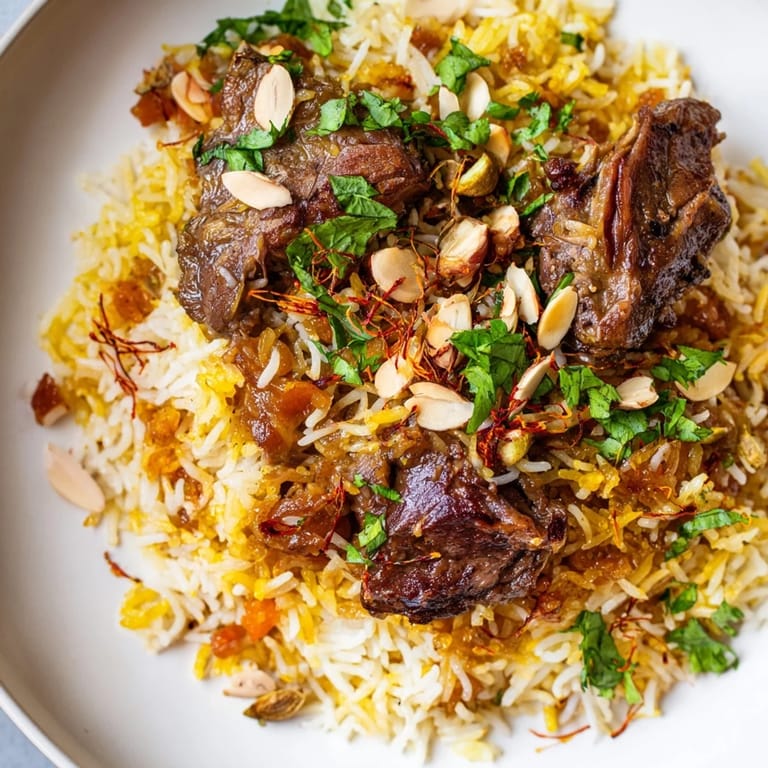 Save
Save I served this to someone who grew up in Qatar, and they took one bite, closed their eyes, and didn't speak for a moment. When they did, they just said, 'You got it right.' That's when I understood that some dishes carry memory in their flavors, and when you nail them, you're not just feeding people—you're honoring where they come from.
The Magic of the Black Lime
The first time I used a black lime, I wasn't sure what I was looking for. It's hard, shriveled, and frankly looks a bit mummified. But when you pierce it and let it steep in the simmering broth, it releases something that no fresh lime can replicate—a deep, almost fermented earthiness that bridges spices and meat. It's become one of those ingredients I now keep on hand even for other dishes, because once you understand what it does, you can't unsee it.
Why Ghee Changes Everything
Vegetable oil will work, and I won't judge you for using it. But ghee—clarified butter with all the milk solids removed—carries the spices differently. It seems to coax out layers of flavor that oil leaves sleeping. The nutty aroma it releases when the onions hit the pot is part of why people emerge from other rooms asking what you're cooking. If you've never made ghee at home, it's worth learning; if you have it on hand, use it without hesitation.
Variations and Serving Suggestions
This recipe is sturdy enough to adapt without falling apart. Some families use chicken instead of lamb—it cooks faster and works beautifully. Others add a handful of raisins or dried apricots for sweetness, or extra chilies if heat is what your table demands. I've even seen versions with potatoes buried in the rice for texture. Serve it with a cool yogurt raita, a crisp salad with fresh vegetables, or a spicy tomato sauce on the side.
- Make it your own by adjusting the spices to your heat preference and the garnishes to what your pantry holds.
- Leftover Majboos reheats beautifully and often tastes better the next day when the flavors have had time to settle.
- If you're cooking for a crowd, this recipe doubles easily, though you'll want a truly large pot and will need to extend the cooking times slightly.
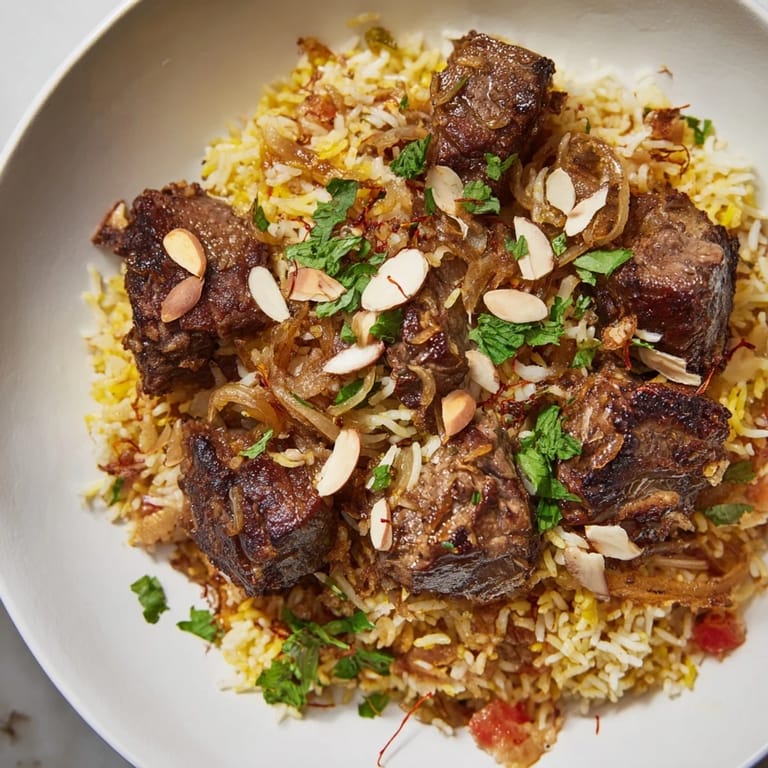 Save
Save Majboos isn't a quick dinner, but it's the kind of meal that justifies the time. Once you've made it, you'll understand why it's still made in families across the Gulf—it's cooking that tells a story with every flavor.
Recipe Questions
- → What type of meat works best for this dish?
Bone-in lamb is preferred for its flavor and tenderness, but chicken can be used as a substitute.
- → How do black limes (loomi) affect the flavor?
Black limes add a tangy, slightly smoky note that enhances the depth of the spice blend.
- → Can I prepare the rice before cooking?
Yes, rinsing and soaking basmati rice for 30 minutes helps achieve a fluffy and separate texture.
- → What is the purpose of saffron in this preparation?
Saffron imparts a delicate aroma and subtle golden color to the rice, enhancing its overall appeal.
- → How long should the dish rest after cooking?
Allow the dish to rest covered for about 10 minutes to let flavors meld and the rice to finish absorbing moisture.