 Save
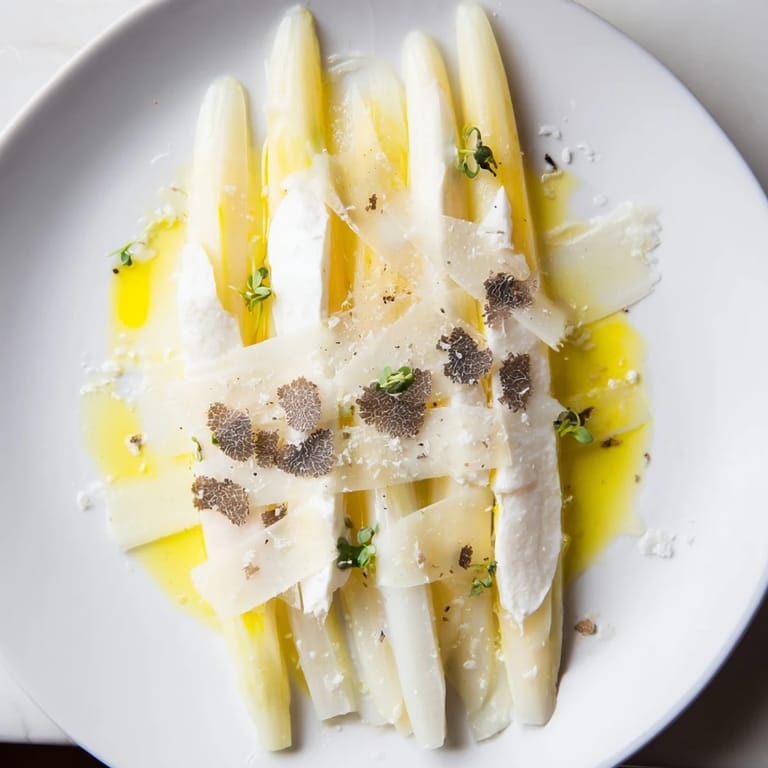
Save I discovered white asparagus on a cool April morning at a farmer's market in Lyon, where an older vendor arranged the pale spears like porcelain in a wooden crate. She explained that white asparagus never sees sunlight, which keeps it tender and delicate—a detail that felt like a cooking secret handed down. That same week, I found myself with a wedge of burrata, some aged Comté, and a small truffle, and something clicked: these refined ingredients deserved each other's company. The Silver Birch was born from that moment, a dish that feels more like a conversation between textures and flavors than a recipe.
I made this for a dinner party last spring, and my friend Sarah walked into the kitchen just as I was shaving the truffle. She stopped mid-sentence—the aroma alone changed the whole mood of the evening. We ended up standing there for a moment in comfortable silence before she said, 'This is going to be something special,' and she was right. That dish became the centerpiece of a conversation that lasted well past dessert.
Ingredients
- 500 g white asparagus, trimmed and peeled: The star of the plate—seek out the thickest, palest spears you can find, as they're more forgiving and have a subtle sweetness that green asparagus simply doesn't offer.
- 75 g burrata or buffalo mozzarella, drained: This creamy, cloud-like cheese needs to be as fresh as possible; I drain mine for a few minutes before using so it holds its shape elegantly on the plate.
- 75 g aged Comté cheese, thinly shaved: The nuttiness here bridges the delicate asparagus and the earthiness of truffle—use a vegetable peeler if you don't have a cheese slicer, and let the knife do the work.
- 50 g Parmigiano-Reggiano, finely grated: A whisper of this is all you need; it adds a savory depth without overwhelming the plate's quiet elegance.
- 15 g fresh black truffle or 1–2 tbsp truffle paste: Fresh is transformative if you can find it, but don't skip this dish if you can't—paste gives you 80 percent of the magic at a fraction of the price.
- 2 tbsp extra-virgin olive oil: This is not the place to compromise; the oil carries the dressing's entire personality.
- 1 tbsp fresh lemon juice: Squeeze it just before using—the brightness cuts through the richness like opening a window.
- 1/2 tsp flaky sea salt and freshly ground white pepper: White pepper is softer than black, which keeps the visual simplicity intact while seasoning generously.
- Microgreens or chervil (optional): A final whisper of green that brings the plate alive without stealing focus.
Tired of Takeout? 🥡
Get 10 meals you can make faster than delivery arrives. Seriously.
One email. No spam. Unsubscribe anytime.
Instructions
- Prepare the asparagus:
- Bring a large pot of salted water to a simmer and gently lower in the white asparagus—listen for the gentle roll of the water, not a rolling boil, which will turn these delicate spears mushy. After 8–10 minutes, they should bend slightly without breaking, and you'll know they're done when a fork meets almost no resistance near the base.
- Shock and dry:
- Transfer them immediately to an ice bath to stop the cooking, then pat them dry on clean kitchen towels with real care—any lingering moisture will dilute your dressing and make the plate look careless. Give them at least a minute to rest this way; patience here pays off.
- Arrange with intention:
- Slice each spear lengthwise and lay them on chilled plates like you're setting a beautiful table for someone you want to impress. Chill the plates for at least five minutes before serving—this keeps everything tasting fresher longer.
- Layer the cheeses:
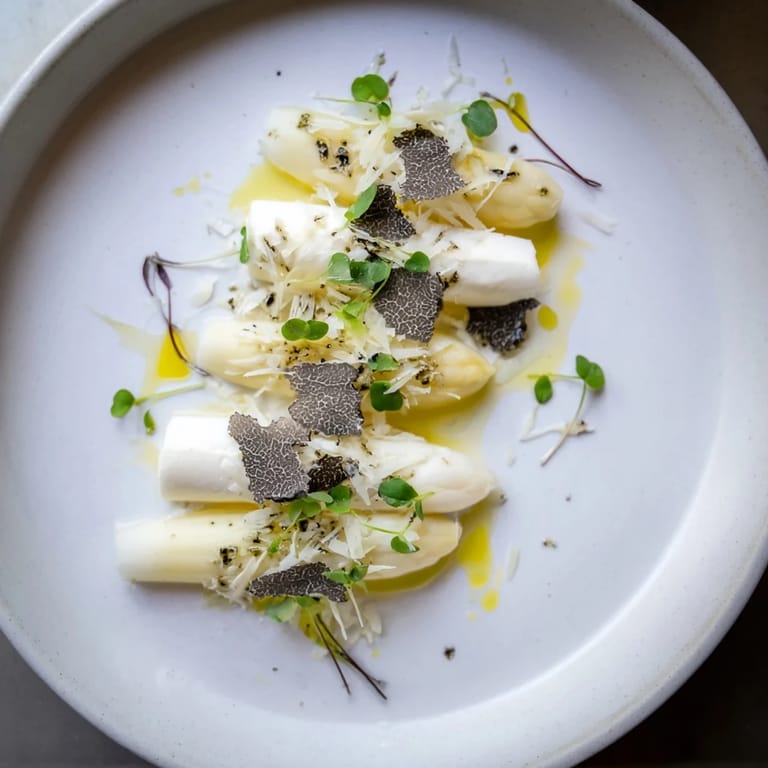
- Tear the burrata into irregular, generous pieces and scatter them across the asparagus, then add thin shavings of Comté and a fine snow of Parmigiano-Reggiano. Each cheese has its own texture, so give them their own space rather than mixing them together.
- Add the truffle:
- If using fresh truffle, use a truffle slicer or a sharp vegetable peeler to create paper-thin stripes that catch the light—this is where you slow down and enjoy the ritual. If using paste, a tiny spoon or squeeze bottle lets you create delicate lines across the dish without overworking it.
- Dress and finish:
- Whisk the olive oil, lemon juice, sea salt, and white pepper together in a small bowl, then drizzle it gently across the plate in a thin stream. Finish with a few leaves of microgreens or chervil if you have them, and serve immediately while the plate is still cold and each element is distinct.
 Save
Save There's something about serving a plate that looks this refined that changes how people eat. They slow down, they taste more deliberately, and somehow the meal becomes an event rather than just dinner. That's the real magic of The Silver Birch—it's not the truffle or the Comté, it's the permission it gives everyone at the table to pause and notice what's in front of them.
Finding the Right Asparagus
White asparagus appears in markets for only a short window in spring, usually April through early May in most of Europe, and it's worth hunting for. The pale color comes from being grown under mounded soil or darkness, which keeps chlorophyll from developing—this isn't a bleaching or trick, it's an ancient cultivation method that yields something genuinely different. If you can't find fresh white asparagus, green asparagus works perfectly well, though the cooking time shortens to 5–7 minutes and the dish takes on a different, equally beautiful character.
Truffle: Fresh Versus Paste
The first time I used fresh black truffle in this dish, I understood why people wax poetic about it—the aroma is complex and almost sweet, with earthy undertones that feel almost floral. Fresh truffle is an investment, so I reserve it for moments that matter. That said, truffle paste or even truffle oil can deliver 70–80 percent of that magic for a quarter of the cost, and honestly, most people can't tell the difference if you're generous with your hand. The rule I follow: use what you can afford and what brings you joy, because hesitation shows on the plate.
Cheese Pairing and Substitutions
The three cheeses in this dish each have a job: burrata brings creamy luxury, Comté adds subtle nuttiness, and Parmigiano-Reggiano provides a dry, savory anchor. If Comté is hard to find, Gruyère works beautifully, or even a mild goat cheese if you want to shift the flavor profile toward something tangier and more floral. The key is choosing cheeses that aren't so aggressive they overpower the asparagus—think of them as companions, not the main event.
- Always taste your cheese at room temperature before deciding if you need salt.
- Shave cheeses as close to serving time as possible so they don't oxidize or lose texture.
- If your cheese is too cold to shave, hold it in your hand for a moment or run it briefly under warm water.
 Save
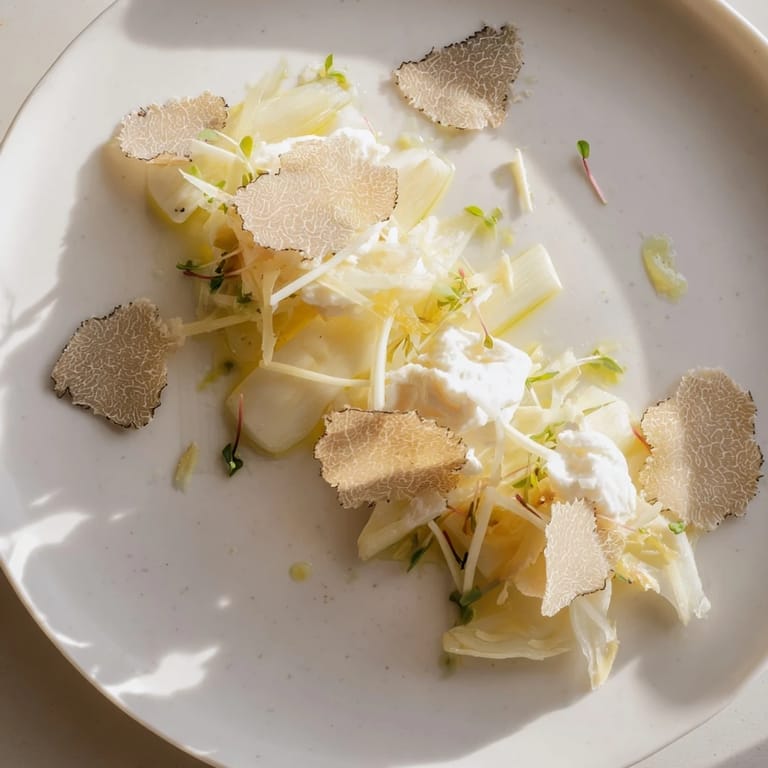
Save The Silver Birch is the kind of dish that proves simplicity and refinement aren't opposites—they're the same conversation. Serve it when you want people to taste what you've chosen rather than how hard you've worked.