 Save
Save The first time I tasted muhammara was at a crowded mezze table in Damascus, passed around on a shared platter while someone's grandmother explained how the charred peppers were the secret to everything. Years later, I tried making it at home and burned the peppers so badly I nearly gave up, but something about that smoky, almost burnt flavor stayed with me. Now I understand she wasn't exaggerating—that charring is where the magic lives, where sweetness and smoke collide with the bright tang of pomegranate molasses.
I made this for a dinner party once where everyone was standing in the kitchen waiting for something to happen, and I set out a bowl of muhammara with some pita. Nobody moved to the table for twenty minutes—they just kept going back to the dip, trading stories about traveling through Syria and Lebanon, how this one dish somehow held all those memories. That's when I realized muhammara isn't just food; it's permission to slow down and gather around something real.
Ingredients
- Red bell peppers (3 large): The stars of the show—you want them roasted until the skin blisters and blackens, which sounds scary but is exactly right.
- Walnuts (1 cup, lightly toasted): Toasting them first gives you a deeper, almost chocolate-like richness that raw walnuts can't touch.
- Garlic (2 cloves): Roasting tames the sharpness, so it becomes a whisper instead of a shout.
- Breadcrumbs (2 tbsp): This tiny amount acts like an anchor, holding everything together and adding subtle body without tasting bread-like.
- Ground cumin (1 tsp): Warm, earthy, and absolutely essential—it's the backbone of the flavor profile.
- Smoked paprika (1/2 tsp): Adds that depth of roasted flavor even if your peppers aren't charred enough.
- Aleppo pepper (1/2 tsp): Milder and fruitier than regular chili flakes, with a subtle sweetness underneath the heat.
- Salt and black pepper: Taste as you go—these two will be your final judges.
- Pomegranate molasses (2 tbsp): This is the secret weapon, bringing a sweet-tart brightness that makes people ask what the mysterious ingredient is.
- Extra virgin olive oil (2 tbsp, plus more for drizzling): Good quality matters here because it's not cooked down; it's tasted straight.
- Lemon juice (1–2 tbsp): Adjust this last, letting your palate decide between the molasses and citrus.
- Toasted sesame seeds (1 tbsp, optional): A handful scattered on top catches light and adds a final nod to authenticity.
Tired of Takeout? 🥡
Get 10 meals you can make faster than delivery arrives. Seriously.
One email. No spam. Unsubscribe anytime.
Instructions
- Get the peppers ready for roasting:
- Preheat your oven to 220°C (425°F) and arrange the red bell peppers on a baking tray, making sure they're not crowded. This step is about giving them space to breathe and char evenly.
- Roast until the skins blacken:
- Let them go for 20–25 minutes, turning them halfway through, until the skin is blistered and charred in patches. Don't aim for perfection here—the blackened bits are where the flavor deepens.
- Steam them to loosen the skins:
- Transfer the hot peppers to a bowl and cover it tightly with plastic wrap or a plate, letting them sit for 10 minutes. The steam does the work of loosening the skin so it peels away almost naturally.
- Peel and clean:
- Once they're cool enough to handle, the charred skin should slip off easily under your fingers. Remove the seeds and stems, but don't stress about getting every last bit of blackened skin—a few dark pieces add character.
- Build the base in the food processor:
- Add the peeled peppers, toasted walnuts, garlic, breadcrumbs, cumin, smoked paprika, Aleppo pepper, salt, and black pepper. Pulse until the mixture is coarse and textured, not a smooth paste.
- Add the brightness:
- Pour in the pomegranate molasses, olive oil, and lemon juice, then process until you reach that sweet spot between smooth and chunky. Taste it now—this is your moment to adjust the balance of tangy, smoky, and salty before it's final.
- Finish and serve:
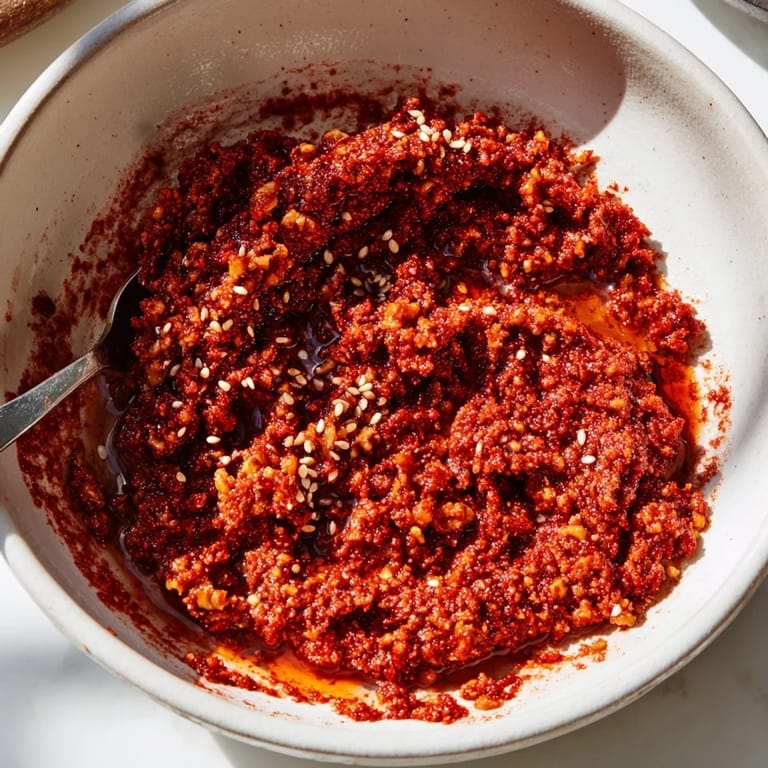
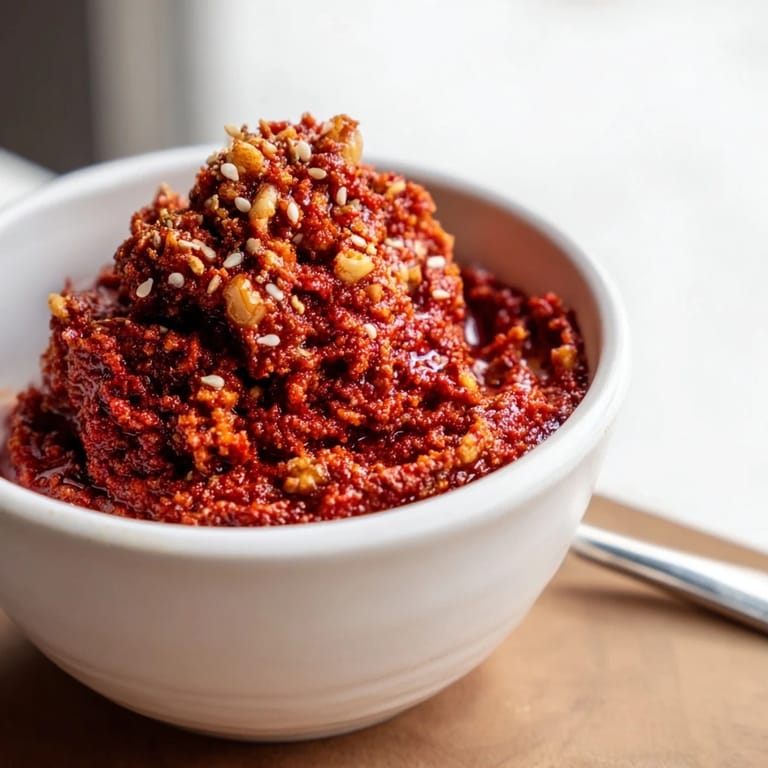
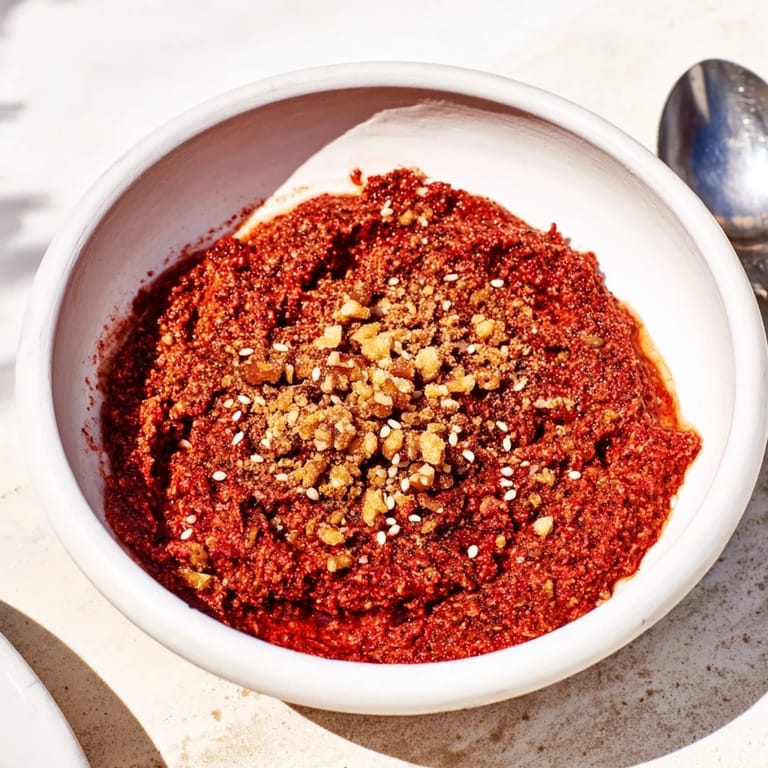
- Transfer the muhammara to a shallow serving bowl, drizzle generously with olive oil so it glistens, and scatter sesame seeds across the top if you have them. Serve with warm pita, crackers, or fresh vegetables for dipping.
 Save
Save I once forgot to let the peppers steam after roasting and tried to peel them while they were still hot, getting frustrated and nearly burning my fingers. The next time I actually waited, and the difference was night and day—the skins practically fell away. It was a small lesson, but it changed how I approach cooking: sometimes the waiting is the work.
The Magic of Charred Peppers
Roasting peppers until their skin blackens might look like you're ruining them, but that char is where the sweetness concentrates and deepens into something smoky and complex. When you peel away the burned outer layer, you're left with tender, almost silky flesh underneath that tastes nothing like a raw pepper. This transformation is what makes muhammara feel both rustic and refined at the same time.
Balancing Flavor in a Bowl
Muhammara is all about tension—smoky against tangy, nutty against bright, rich against sharp. The pomegranate molasses brings a sweetness that feels almost delicate, while the lemon juice cuts through with clean acidity. Getting them to dance together instead of fighting is the difference between a good muhammara and one that makes people close their eyes when they taste it.
Serving and Storage Wisdom
Serve this while it's still at room temperature, when all the flavors are most vibrant and the texture feels most alive. It keeps beautifully in the refrigerator for up to five days, so it's perfect for making ahead, but it tastes best brought to room temperature before serving.
- Make it part of a mezze platter with hummus, baba ghanoush, fresh olives, and pickled vegetables for a complete story.
- Leftovers transform into a sandwich spread or a topping for grilled fish and vegetables, so it's never wasted.
- If you can find Aleppo pepper at a Middle Eastern market, grab it—the fruitiness it adds is worth the small hunt.
 Save
Save This dip is a reminder that some of the best food comes from simple ingredients treated with respect and patience. Serve it when you want people to remember not just the flavors, but the moment they tasted it.
Recipe Questions
- → How should the red peppers be prepared?
Roast the red peppers in the oven at 220°C (425°F) until their skins are charred and blistered, about 20-25 minutes, then steam and peel them for a smooth, smoky flavor.
- → Can I adjust the heat level in this dip?
Yes, you can increase or decrease the amount of Aleppo pepper or red chili flakes to suit your preferred spice level.
- → Is it possible to make it gluten-free?
Absolutely, use gluten-free breadcrumbs to keep the texture while ensuring it's safe for gluten-sensitive diets.
- → What is the best way to serve this spread?
Serve it drizzled with olive oil and sprinkled with toasted sesame seeds alongside pita bread, crackers, or fresh vegetable sticks.
- → How long can the spread be stored?
Keep it refrigerated in an airtight container for up to five days, allowing flavors to deepen over time.