 Save
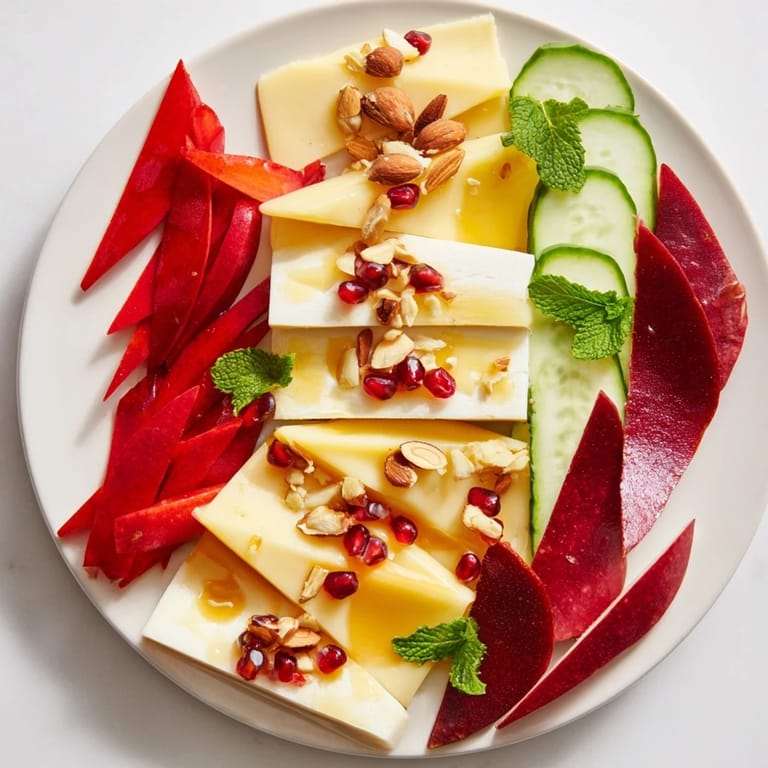
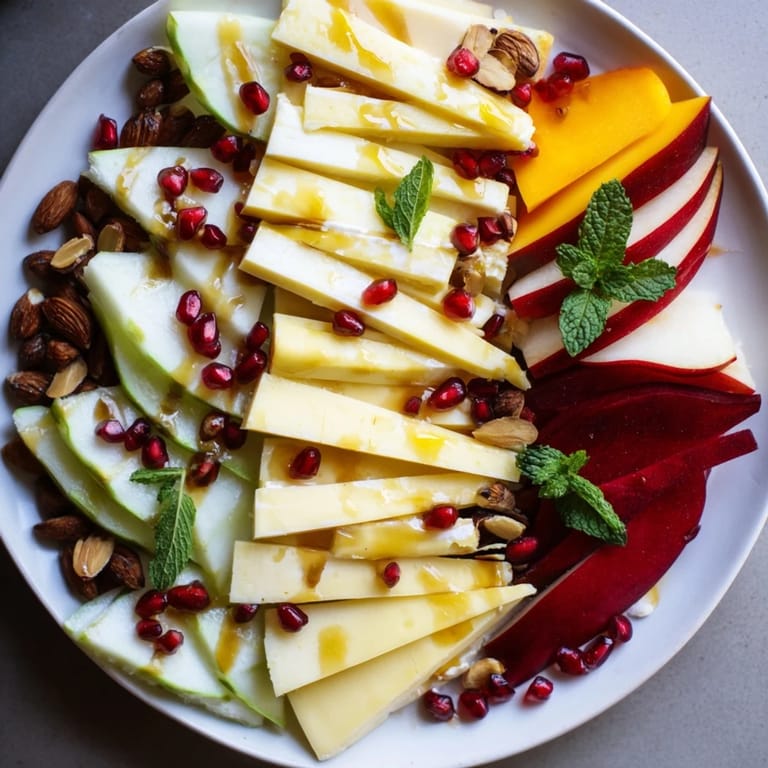
Save I discovered the magic of geometric entertaining one autumn evening when I was hosting friends for wine and conversation. Instead of the usual scattered board, I found myself methodically cutting everything into perfect triangles—almost meditative, really. As I arranged them like puzzle pieces, something clicked: this wasn't just food anymore, it was art. Everyone who walked in stopped in their tracks. That moment taught me that presentation isn't shallow; it's a love language in the kitchen.
I'll never forget my neighbor peeking over the fence as I was arranging this board for a dinner party. She watched for ten minutes straight, then asked if she could take a photo. That's when I realized this dish does something special—it makes people want to pause and appreciate it before eating. It became our signature potluck item after that.
Ingredients
- Aged cheddar, 100 g sliced into triangles: The sharpness cuts through richness and keeps your palate awake between bites. I learned to slice cheese when it's cool but not cold—too cold and it shatters, too warm and it tears.
- Manchego, 100 g sliced into triangles: This Spanish beauty adds a slightly salty, nutty character that surprises people. It's one of those cheeses that feels fancy but works beautifully on a casual board.
- Goat cheese, 100 g chilled and cut into triangles: The creamy center of your flavor story. Keep it very cold before cutting, and consider freezing it for just 15 minutes—it makes clean triangles possible.
- Cucumber, 1 medium peeled and sliced into thin triangles: This is your fresh reset button. The water content keeps everything bright and prevents the board from feeling heavy.
- Red bell pepper, 1 large seeded and cut into triangles: Think of this as your color anchor and natural sweetness. The bright red grounds the whole design visually.
- Beet, 1 small cooked and sliced into very thin triangles: Cut these paper-thin—they're earthy and dramatic, like jewels. A mandoline becomes your best friend here.
- Pear, 1 large cored and sliced into thin triangles: Choose one that's just barely ripe. This adds a subtle sweetness and those moments of unexpected juice that make people lean in closer.
- Seedless watermelon, 1/2 cup cut into small triangles: Summer in every bite. The juiciness matters—it's a palate cleanser and visual pop of pink.
- Whole grain crackers, 100 g cut if needed into triangles: These add texture and give people something to lean on if they want heartier bites. Some crackers are already triangular—use those and save yourself a step.
- Roasted almonds, 1/4 cup: The crunch factor. These fill tiny gaps and add protein that makes the board feel more substantial.
- Pomegranate seeds, 1/4 cup for color and garnish: These are your confetti. They catch light and make everything look celebratory.
- Honey, 2 tbsp for drizzling (optional): A whisper of sweetness across the goat cheese. Use it sparingly—it's about suggestion, not drowning.
- Fresh herbs like thyme or mint: The final flourish. Thyme feels sophisticated; mint feels bright. Choose based on your mood.
Tired of Takeout? 🥡
Get 10 meals you can make faster than delivery arrives. Seriously.
One email. No spam. Unsubscribe anytime.
Instructions
- Choose your stage:
- Find a large wooden board or platter that feels substantial. This is your canvas. Warm it gently if you'd like, or work on cool marble for a restaurant feel. I use a wooden board I inherited from my grandmother—it makes the whole experience feel meaningful.
- Cut everything into similar-sized triangles:
- This is where patience becomes your secret weapon. Use a sharp chef's knife for cheese and vegetables, a mandoline for anything that needs to be paper-thin like beets. Work deliberately. Each triangle should feel intentional. If pieces vary wildly in size, the pattern will fight you rather than flow.
- Start from one corner and begin your tessellation:
- Don't overthink it. Choose a corner—maybe the one closest to where people will gather—and place your first triangle. Then place another beside it. Alternate colors and textures as you go. Think about negative space the way a painter does. You're not filling every inch randomly; you're creating a rhythm.
- Continue building your interlocking pattern:
- As you move across and down, keep each piece touching its neighbors snugly. There will be moments of doubt—this triangle doesn't seem to fit, this color cluster looks wrong. Keep going. The magic happens when you trust the process and let imperfections become part of the charm.
- Fill the remaining gaps:
- Once the larger pieces form your foundation, pomegranate seeds and almonds become your problem-solvers. Sprinkle them into the crevices. They add both color and that element of surprise when someone discovers a burst of pomegranate juice or the crunch of a nut.
- Add your final touches:
- If using honey, drizzle it lightly across the goat cheese triangles with intention—not a haphazard stream, but deliberate lines. Scatter your fresh herbs. Step back. This is the moment you see what you've created.
- Serve immediately:
- Bring it to the table while it's fresh and perfect. Watch people's reactions. That pause before they eat—that's what you made happen.
 Save
Save The thing that moved me most was when my mother tried this and called it 'too beautiful to eat.' Then she ate three pieces anyway, closed her eyes, and told me I'd learned something important about combining flavors and beauty. That moment reminded me why I cook—it's never just about hunger.
The Art of the Tessellation
Tessellation sounds technical, but it's really just a conversation between shapes. The triangles speak to each other because they're all the same angle, all trying to fit together without gaps. This board teaches patience in a way that feels playful rather than tedious. You'll find yourself getting lost in the arrangement, which is exactly the point. The act of creating it is almost as rewarding as eating it.
Flavor Combinations That Work
What surprised me most was discovering which combinations created magic. Goat cheese and watermelon together is like a secret handshake. Cheddar and pear is comfort meeting adventure. The beet adds earthiness that makes the sweet fruits feel sophisticated rather than simple. These pairings aren't accidental—they evolved from tasting and trusting my instincts. On your board, trust yours too.
Making It Your Own
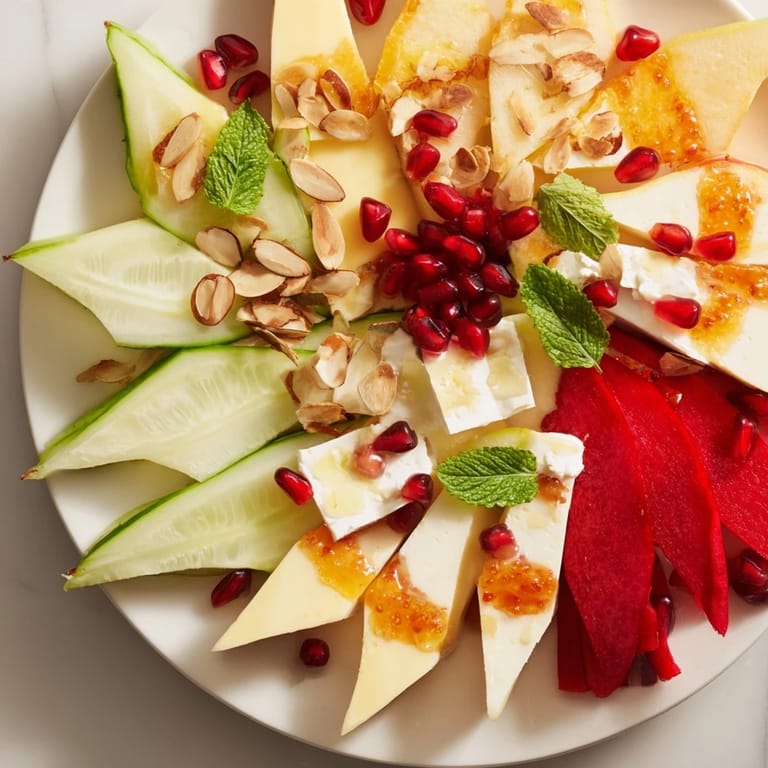
This board is a template, not a prison. I've made versions with stone fruits, with different cheeses, with the addition of prosciutto for non-vegetarians. The structure stays the same; the ingredients adapt to what you love and what's in season. The real skill is understanding that the geometric arrangement matters more than the exact contents.
- For a vegan version, use plant-based cheeses and skip the honey or use maple syrup instead
- If you want to add cured meats like prosciutto, cut them into triangles too and work them into the pattern for visual cohesion
- Seasonal fruit changes everything—berries in summer, grapes and figs in fall, persimmons in winter
 Save
Save This board is about slowing down and showing up for the people you feed. It's not complicated, but it asks you to be present. That presence, that care in every triangle you cut and place, is what makes it unforgettable.
Recipe Questions
- → What is the best way to cut uniform triangles?
Using a sharp chef's knife or mandoline slicer ensures consistent triangle shapes for easy tessellation on the board.
- → Can this board be adapted for vegan diets?
Yes, substitute plant-based cheeses to maintain the triangle shapes and textures for a vegan-friendly version.
- → How should the ingredients be arranged?
Alternate colors and textures, fitting the triangle pieces tightly together to form a seamless interlocking pattern.
- → What accompaniments best complement this board?
Roasted almonds and pomegranate seeds fill gaps and add crunch and sweetness, enhancing both look and flavor.
- → Are there suggested beverage pairings?
A crisp Sauvignon Blanc or sparkling water with citrus pairs wonderfully with the bold and fresh flavors presented.