 Save
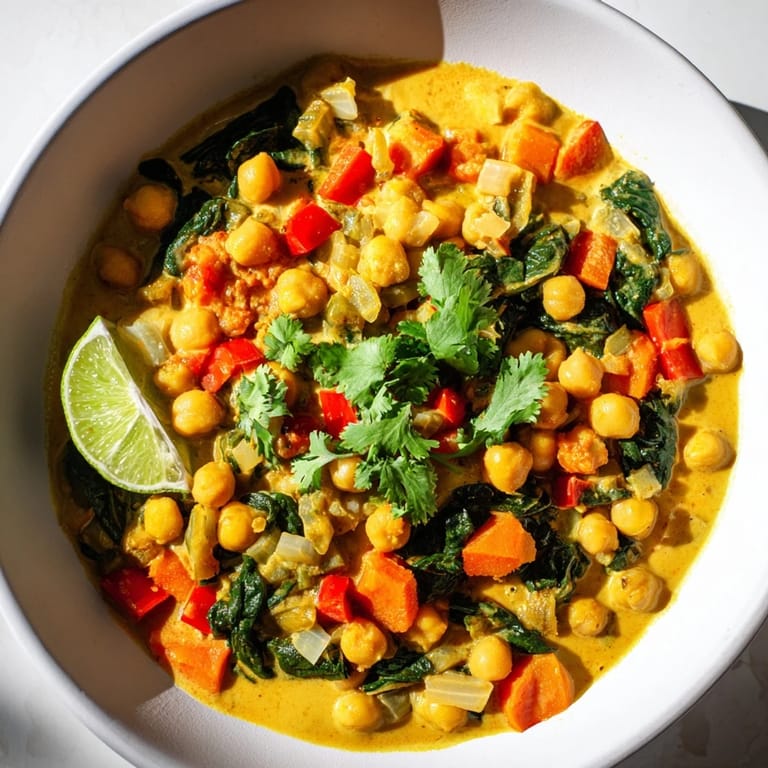
Save There's something about the sound of onions hitting hot coconut oil that signals the start of something good. I discovered this curry on a quiet Tuesday evening when I had nothing but pantry staples and a craving for something warm. One pot, minimal cleanup, and twenty-five minutes later, my kitchen smelled like a spice market, and I realized I'd accidentally created my new favorite weeknight dinner. The kind of dish that doesn't require advance planning or special ingredients, just an openness to what comes together naturally.
I made this for friends who'd been skeptical about plant-based cooking, and something shifted when they tasted it. Nobody asked what was missing; they asked for seconds and the recipe. That's when I knew this wasn't just convenient—it was genuinely delicious in a way that surprised everyone, including me.
Ingredients
- Yellow onion: Diced onions are your base—they soften and sweeten as they cook, creating a foundation that makes the spices taste fuller and more balanced.
- Garlic and ginger: Minced fresh versions matter here; jarred loses something vital in the heat, and these two together are what makes the dish smell like home.
- Red bell pepper: Adds brightness and a subtle sweetness that keeps the curry from feeling one-note.
- Baby spinach or kale: Stir it in at the end so it stays tender and doesn't disappear into the sauce.
- Carrot: Optional but recommended—it adds gentle sweetness and texture if you want the curry slightly less brothy.
- Chickpeas: Two cans, drained and rinsed, are your protein and the whole reason this becomes a complete meal.
- Coconut milk: Full-fat if you want it luxurious; light if you prefer something less rich—both work beautifully.
- Vegetable broth: Use something you'd actually drink; avoid the salty stuff that makes everything taste like sadness.
- Diced tomatoes: Canned is fine and actually preferable—they're already broken down and add natural acidity.
- Curry powder, cumin, turmeric, smoked paprika: Toast them together for one minute so they wake up and stop being flat—this is the secret most people miss.
- Chili flakes: Only if you like heat; this curry is warm and comforting without them.
- Coconut oil or olive oil: Either works; use what you have on hand.
- Salt and pepper: Taste at the end and adjust—coconut milk mutes seasoning slightly.
- Fresh cilantro and lime: These aren't optional; they're how the dish finds its brightness at the table.
Tired of Takeout? 🥡
Get 10 meals you can make faster than delivery arrives. Seriously.
One email. No spam. Unsubscribe anytime.
Instructions
- Build Your base with onions:
- Heat oil in your pot over medium, add diced onion, and let it cook for three to four minutes until it turns translucent and the raw sharpness mellows. You'll know it's ready when you can smell the sweetness starting to emerge.
- Layer in aromatics:
- Add garlic, ginger, and bell pepper, stirring for two minutes until the kitchen smells incredible and the ginger has softened slightly. Don't let anything brown—you want fragrant, not burnt.
- Toast your spices:
- This single minute of toasting curry powder, cumin, turmeric, paprika, chili flakes, salt, and pepper transforms them from dusty powders into something vibrant. Stir constantly so the spices coat everything and release their oils.
- Add the wet ingredients:
- Pour in tomatoes, coconut milk, vegetable broth, chickpeas, and carrot if using. Stir until everything is distributed evenly, then bring the whole pot to a gentle simmer.
- Let it simmer low and slow:
- Cover, reduce heat to low, and let it cook for fifteen minutes, stirring occasionally so nothing sticks to the bottom. The flavors deepen during this quiet time.
- Wilt in the greens:
- Uncover, add your chopped spinach or kale, and stir gently for two to three minutes until it's dark and tender and the curry thickens slightly. This is when it stops being ingredients and becomes a dish.
- Taste and finish:
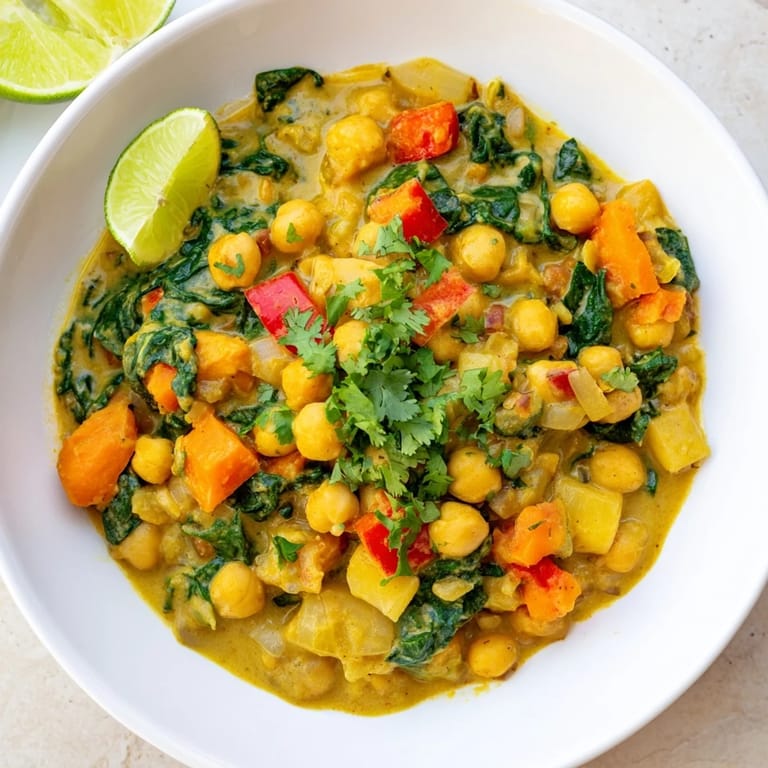
- Adjust salt and pepper if needed, then serve hot with cilantro, lime wedges, and rice or naan if you want something to soak up the sauce.
 Save
Save I served this curry to someone who'd been going through a rough patch, and watching them eat without thinking about anything else felt like a small kindness. Food that takes thirty-five minutes but tastes like you spent hours has a way of doing that.
Variations and Swaps
This curry is forgiving in the best way. If you don't have red bell pepper, use yellow or orange—they taste slightly different but work just as well. Kale is sturdier than spinach and stands up to the heat longer if you want something more robust. Add cubed firm tofu or tempeh if you want extra protein, stirring them in with the tomatoes so they absorb the spices. Even the broth is flexible; I've used water in a pinch, adjusting the salt upward, and it still tastes good.
Serving and Storage
This curry tastes best fresh but genuinely improves overnight as the spices settle deeper into everything. Reheat gently on the stovetop so the coconut milk doesn't separate, or a few minutes in the microwave works fine. Store it in a glass container in the refrigerator for up to four days, and if you find yourself with leftovers, they transform into something almost better than the original meal.
Why This Works as a One-Pot Meal
The magic of one-pot cooking isn't just convenience—it's that everything cooked together means the flavors meld into something cohesive rather than a collection of separate ingredients. The chickpeas soften and absorb the spice, the vegetables release their sweetness into the sauce, and the coconut milk acts as a gentle binder that brings everything home. This is comfort food that happens to be plant-based, vegan, and completely gluten-free without feeling like you're missing anything.
- If the curry seems too thin at the end, simmer uncovered for another minute or two until it reaches your preferred consistency.
- Leftovers are excellent over rice for lunch the next day, or stuffed into flatbread with extra cilantro for something unexpected.
- Make this recipe your own by adjusting the spice level or adding vegetables you actually have in your kitchen.
 Save
Save This is the kind of curry that becomes part of your regular rotation, the one you make when you want something nourishing but don't want to think too hard about it. That, honestly, is when the best meals happen.
Recipe Questions
- → What spices give this dish its flavor?
The blend includes curry powder, cumin, turmeric, smoked paprika, and optional chili flakes, creating warm, layered flavors.
- → Can I substitute the greens used in this dish?
Yes, baby spinach can be swapped with kale or Swiss chard depending on your preference.
- → Is coconut milk essential for this dish?
Coconut milk contributes a creamy texture and subtle sweetness that balances the spices, but plant-based milks could be experimented with.
- → How can I adjust the spice level?
Modify or omit the chili flakes to make it milder or spicier to suit your taste.
- → What are ideal accompaniments for serving?
This dish pairs well with jasmine or basmati rice, naan, and fresh lime wedges for brightness.
- → Can I add protein variations to this dish?
Adding cubed tofu or tempeh boosts protein while maintaining the plant-based profile.