 Save
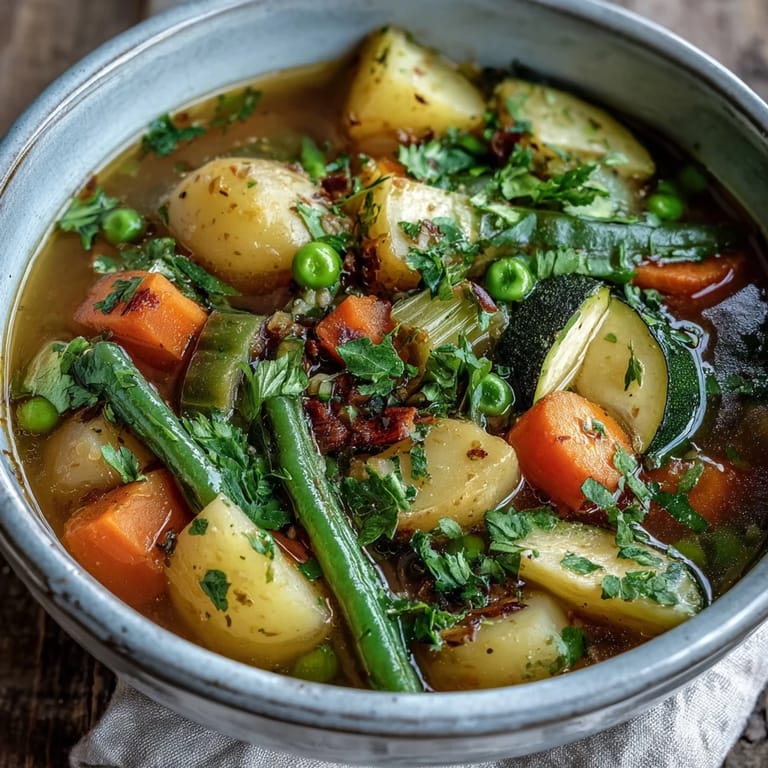
Save My neighbor knocked on my door one gray afternoon with a bag of vegetables from her garden, insisting I do something with them before they went soft. I opened my pantry, found some potatoes and stock, and within an hour had a pot of soup simmering that filled the entire house with warmth. There's something honest about vegetable soup—no fuss, no pretense, just vegetables and broth becoming something that tastes far better than the sum of its parts.
I made this soup on a Tuesday when my sister was recovering from the flu, and she told me later it was the first thing that actually tasted like food to her again. That's when I realized this recipe isn't complicated—it's just reliable in the way comfort should be. The vegetables soften into the broth, each spoonful warming you from the inside out without asking for anything fancy in return.
Ingredients
- Potatoes (3 medium, peeled and diced): They're the backbone here, breaking down slightly to thicken the broth naturally while staying tender enough to eat with just a spoon.
- Carrots (2 medium, peeled and sliced): Their sweetness rounds out the soup and they hold their shape beautifully through the cooking time.
- Celery (2 stalks, diced): This is your quiet flavor builder, adding depth without announcing itself.
- Onion (1 medium, chopped): Start here and sauté it until golden—this is where the soul of the soup begins.
- Zucchini (1, diced): It melts into the broth by the end, adding body and a subtle vegetable richness.
- Green beans (1 cup, cut into 1-inch pieces): They stay slightly firm and give you something to bite into, a little textural relief.
- Garlic (2 cloves, minced): One minute in hot oil and it transforms from raw to mellow and fragrant—don't skip this step.
- Vegetable stock (6 cups): Use good quality if you can; it's literally the foundation of this entire pot.
- Bay leaf, dried thyme, dried parsley: These three work as a gentle flavor trio, nothing overwhelming, just supportive.
- Black pepper and salt: Taste as you go—the stock's saltiness varies, so you'll likely adjust.
- Olive oil (2 tablespoons): It carries the sauté and adds a whisper of richness.
- Frozen peas (1 cup): They go in at the very end so they stay bright and don't lose their color to the cooking time.
- Fresh parsley (optional, for garnish): A small handful chopped over the top reminds you this is a living, breathing dish.
Tired of Takeout? 🥡
Get 10 meals you can make faster than delivery arrives. Seriously.
One email. No spam. Unsubscribe anytime.
Instructions
- Sauté the base vegetables:
- Heat your olive oil in a large pot over medium heat and add the onion, carrots, and celery together. Let them soften for about 5 minutes, stirring occasionally—you'll know it's working when the onion starts turning translucent and the kitchen smells alive.
- Build the flavor:
- Stir in your minced garlic and let it cook for just 1 minute, long enough for the raw edge to disappear and the fragrance to become almost heady. This moment matters more than you'd think.
- Add the heartier vegetables:
- Toss in your diced potatoes, green beans, and zucchini and stir them around for about 2 minutes so they're coated in the oil and mingling with the aromatics. You're building layers here, not rushing.
- Bring in the broth:
- Pour in your vegetable stock and add the bay leaf, thyme, parsley, salt, and pepper all at once. Stir everything together so the seasonings distribute evenly and nothing settles on the bottom.
- Let it simmer:
- Bring the pot to a boil, then lower the heat, cover it, and let it bubble gently for 20 to 25 minutes until the potatoes and other vegetables are tender when you press them with a spoon. The lid keeps the steam in and helps everything cook evenly.
- Finish with brightness:
- Stir in your frozen peas and give them 2 to 3 minutes to warm through and lose their icy edge. Fish out the bay leaf before ladling—it's done its job.
- Serve with intention:
- Ladle the soup into bowls while it's still steaming and scatter a bit of fresh parsley over the top if you have it. The heat of the soup will freshen the parsley's flavor, and it gives your bowl a finished look.
 Save
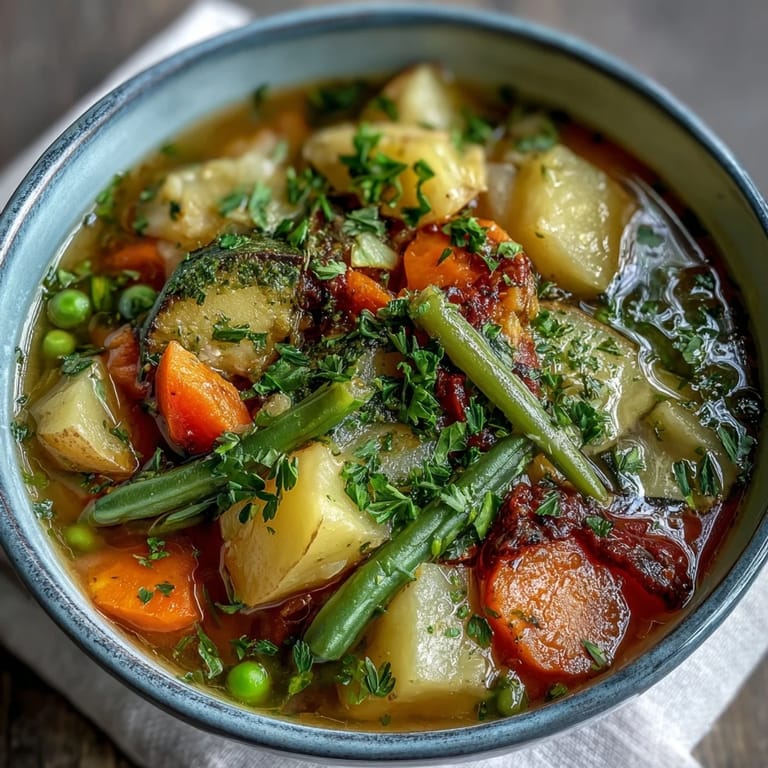
Save I once made this soup and forgot about it on the back burner, only to have it simmer for nearly 45 minutes instead of 25. The vegetables had almost dissolved into the broth, making it thicker and more velvety than expected, and honestly, my partner preferred it that way. This soup is forgiving enough to handle your mistakes and sometimes even improve because of them.
Customize with Seasonal Vegetables
The beauty of this recipe is that it doesn't demand specific vegetables—it invites them. In summer, I've swapped the green beans and zucchini for corn and tomatoes, and in fall, I've added diced butternut squash and kale. The framework stays the same, but you're cooking with what's actually fresh and what your kitchen has on hand. This is the kind of soup that teaches you to trust your instincts instead of following rules too rigidly.
Making It Richer
If you want the soup to feel more substantial, there are gentle ways to deepen it without turning it into something entirely different. A splash of cream stirred in just before serving softens everything and adds a whisper of richness, or a handful of grated cheese—Parmesan or even cheddar—melts into the hot broth and makes it feel almost luxurious. I've also added a splash of white wine once and it brought out flavors I didn't know the vegetables had.
Serving Suggestions and Storage
This soup is best served hot, right from the pot into a bowl, but it also reheats beautifully the next day or even days later. It stores in the fridge for up to four days, and freezes well if you want to make a double batch and stash half away for a desperate weeknight. I always serve it alongside crusty bread for soaking up the broth, or a simple green salad to add a little brightness and contrast.
- Pair with warm bread and let people soak up every drop of broth.
- For a vegan version, verify your stock is plant-based and skip any cream or cheese.
- Taste and adjust salt right before serving since it concentrates as the soup sits.
 Save
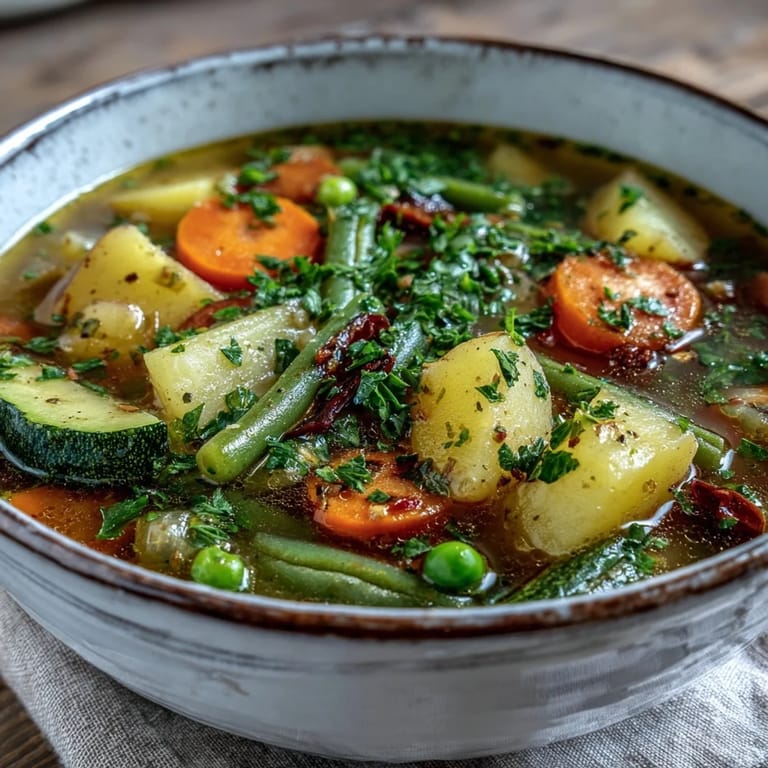
Save This soup is proof that some of the best meals come from nothing more than caring about the people you're feeding and the ingredients you have on hand. There's nothing intimidating about it, nothing that requires special knowledge—just honest food that nourishes.
Recipe Questions
- → Can I make this soup ahead of time?
Yes, this soup actually tastes better the next day as flavors have time to meld. Store in an airtight container in the refrigerator for up to 4 days. Reheat gently on the stovetet, adding a splash of water or stock if needed.
- → What vegetables work best in this soup?
Potatoes, carrots, celery, onions, zucchini, and green beans form the classic base. You can easily add seasonal vegetables like corn, spinach, kale, bell peppers, or tomatoes. Root vegetables like parsnips or turnips also work wonderfully.
- → How can I make this soup more filling?
Stir in a cup of cooked beans like cannellini or chickpeas during the last 5 minutes. Adding a splash of cream or coconut milk creates richness. A handful of pasta or rice transforms it into a complete one-pot meal.
- → Can I freeze this soup?
Yes, freeze in portions for up to 3 months. Cool completely before transferring to freezer-safe containers. Thaw overnight in the refrigerator and reheat gently. Note that potatoes may become slightly softer after freezing.
- → What herbs enhance the flavor?
Fresh herbs like rosemary, basil, or dill add brightness. Dried herbs such as oregano, marjoram, or herbes de Provence work beautifully. Add delicate fresh herbs like parsley or chives just before serving.
- → How do I get the best texture?
Cut vegetables into uniform pieces so they cook evenly. Simmer gently rather than boiling vigorously to maintain texture. If you prefer thicker soup, mash some potatoes against the side of the pot or puree a portion.