 Save
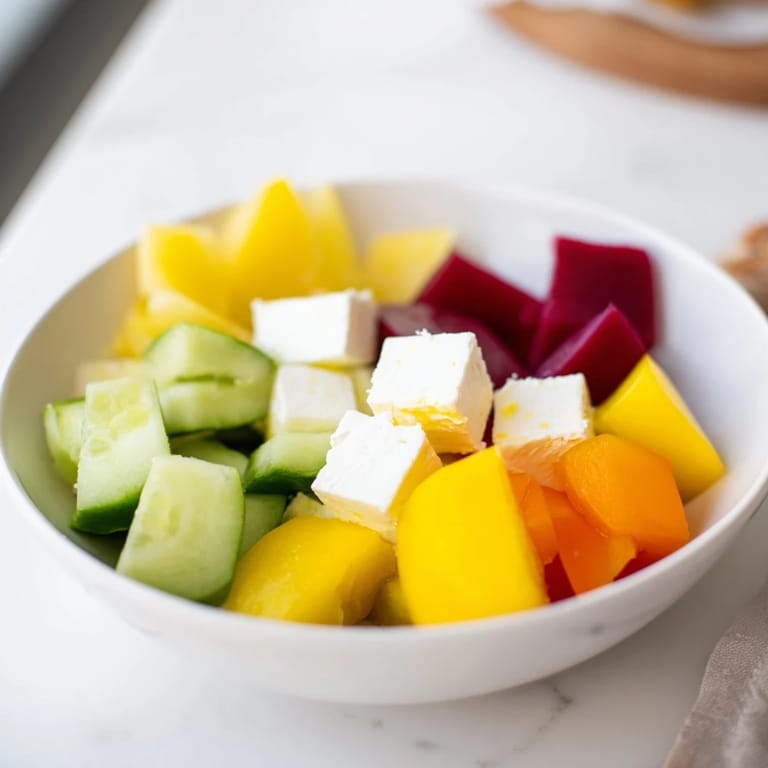
Save I'll never forget the afternoon I spent in a sunlit kitchen, watching a friend arrange vegetables with the precision of an architect. It was the first time I realized that salad could be art. The Cube Geometry Study was born from that moment—a dish that transforms simple, humble ingredients into something that makes people pause before they eat, struck by its beauty. Every perfectly cut cube became a meditation on intention and care in cooking.
I made this for a dinner party when my friend was going through a phase of rejecting anything overly complicated. She walked into the kitchen and stopped dead, staring at the grid of colored cubes laid out like jewels on a board. The way her face lit up taught me that sometimes the most beautiful food is the simplest—and the most memorable.
Ingredients
- 1 small cucumber, peeled and cut into 1 cm cubes: The fresh, crisp backbone of this salad. Peel it to keep the colors clean and vibrant, and cut it with intention—those cubes become tiny flavor anchors
- 1 ripe mango, peeled and cut into 1 cm cubes: Choose one that yields slightly to pressure, with a fragrant aroma. This brings sweetness and tropical brightness to the grid
- 1 ripe avocado, peeled and cut into 1 cm cubes: The secret to creamy texture against all those crisp vegetables. Cut it last, right before serving, and handle it gently so the cubes stay intact
- 1 small red beet, cooked, peeled, and cut into 1 cm cubes: Cook it ahead of time—roasting brings out an earthy sweetness. Its deep crimson color is what makes the geometry truly pop on the plate
- 1 small yellow bell pepper, seeded and cut into 1 cm cubes: Remove every seed and white membrane first. The bright yellow becomes a visual anchor point in your arrangement
- 1 small watermelon wedge, rind removed, cut into 1 cm cubes: This surprised me the first time—it adds unexpected sweetness and a refreshing quality that ties everything together
- 120 g feta cheese, cut into 1 cm cubes: Use good quality feta that's not too crumbly. The salty, tangy cubes are essential for balancing all that natural sweetness from the fruits
- 2 tbsp extra-virgin olive oil: This is where you splurge. A good olive oil carries the whole dressing
- 1 tbsp lemon juice: Fresh squeezed, always. It awakens everything and prevents the avocado from browning too quickly
- 1/2 tsp sea salt: Taste as you go—sea salt dissolves more elegantly than table salt
- 1/4 tsp freshly ground black pepper: Grind it yourself, moments before mixing the dressing
- 1/2 tsp honey (optional): A whisper of honey softens the acidity and brings harmony to the flavors
Tired of Takeout? 🥡
Get 10 meals you can make faster than delivery arrives. Seriously.
One email. No spam. Unsubscribe anytime.
Instructions
- Gather your ingredients like you're preparing for a ritual:
- Lay everything out on your cutting board. Take a moment to notice the colors—this is what you're building toward. It matters.
- Cut with purpose and precision:
- This is where the magic happens. Use a sharp knife and aim for uniform 1 cm cubes. You can use a ruler if you want to be exact—there's no shame in it. The consistency is what creates the visual impact. As you cut each ingredient, arrange the cubes in small, separate piles. This isn't just preparation; it's meditation.
- Make the dressing in a small bowl:
- Whisk together the olive oil, lemon juice, salt, pepper, and honey if you're using it. Taste it on your finger. Adjust the salt or lemon until it sings. This dressing should taste bright and alive.
- Arrange your grid on a large, flat platter:
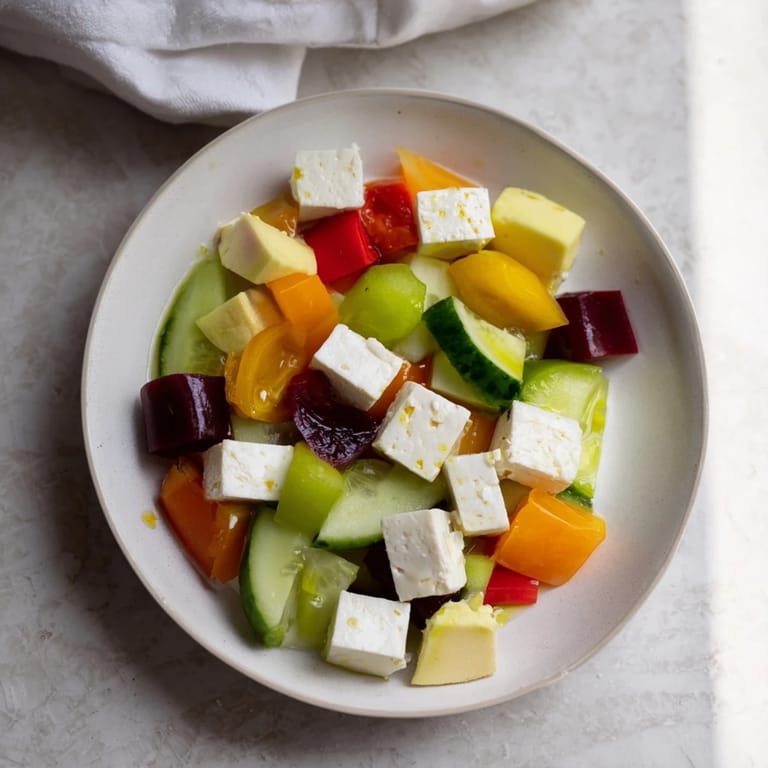
- This is the moment where cooking becomes art. Start with one color—perhaps the red beet—and create a row. Then alternate with another color, then another. Build it like a chessboard or a Mondrian painting. There's no single right way; it's about what pleases your eye. The arrangement is personal.
- Drizzle the dressing just before serving:
- Pour it lightly over the cubes, letting it pool slightly. Don't drown it. You want the dressing to enhance, not overwhelm. This timing is crucial—serve immediately so every cube stays crisp and holds its shape.
 Save
Save The moment that made me truly understand this recipe was when I served it to my father, who rarely pays attention to how things look on a plate. He actually set down his fork, studied the grid for a moment, and said, 'This is beautiful.' Food had become more than sustenance—it became a small act of love made visible.
The Art of Precision Cutting
This salad taught me that precision in the kitchen isn't about perfectionism—it's about respect. When you take time to cut each cube to the same size, you're saying that this meal matters. Every ingredient gets equal visual weight, which creates a kind of democracy on the plate. There's something deeply satisfying about that uniformity, both visually and when you eat it. Each bite delivers the same balance of flavors and textures because the proportions are consistent.
Building Your Color Palette
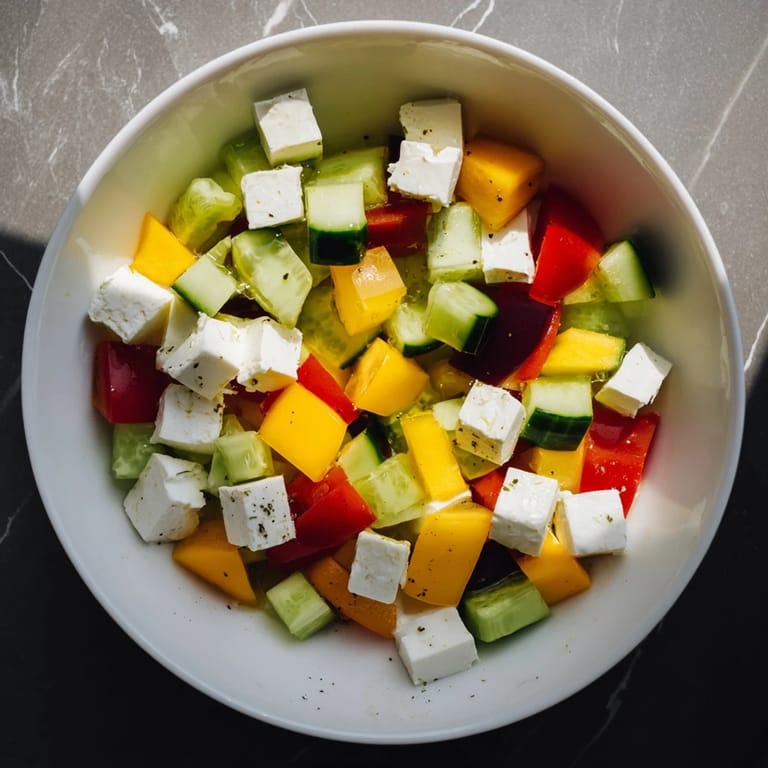
Think of this dish like you're painting. The deep red of the beet, the golden yellow of the pepper, the soft green of cucumber and avocado, the pale pink of watermelon, and the white crumbles of feta—together they create a composition that's almost too beautiful to disturb. Before you've even tasted anything, your eyes are telling your brain this is something special. I've learned that we eat with our eyes first, and this salad honors that truth completely.
Variations and Personal Touches
Once you've mastered the basic formula, you can play. Swap the mango for papaya or pineapple if you want a different tropical note. For a vegan version, firm tofu cubes work beautifully instead of feta—they take on the flavors of the dressing while adding that creamy counterpoint. A scattering of microgreens or edible flowers across the top transforms it from dinner to celebration. These little changes let you make the dish your own, which is where the real joy comes in.
- Trust your instincts with substitutions—this salad is forgiving and invites experimentation
- Keep the cubes uniform even when you're improvising, because the consistency is what makes this recipe sing
- Remember that the dressing is just as important as the ingredients, so never skip on quality olive oil and fresh lemon
 Save
Save This salad reminds me that sometimes the most memorable meals come not from complexity, but from care. It's a dish that asks you to slow down, be present, and let beauty matter.
Recipe Questions
- → What vegetables are used in this salad?
Cucumber, red beet, yellow bell pepper, and watermelon are cut into uniform cubes to create the fresh vegetable base.
- → How is the dressing prepared?
The dressing combines extra-virgin olive oil, lemon juice, sea salt, black pepper, and optionally honey, whisked until smooth.
- → Can the cheese be substituted for a vegan option?
Yes, firm tofu cubes can replace feta to accommodate vegan preferences while maintaining texture.
- → What tools ensure the precise cubes?
A sharp chef's knife and ruler help cut the ingredients into consistent 1 cm cubes for visual harmony.
- → How should the cubes be arranged for serving?
Cubes should be laid out in a neat grid, alternating colors and textures for an attractive geometric display.
- → What are some suggested ingredient swaps?
Mango can be replaced with papaya or pineapple for a different flavor profile, and garnishes like microgreens or edible flowers add flair.