 Save
Save There's something about the smell of lemon zest hitting a hot pan that makes you feel like you've got your life together, even if you're cooking at 6 PM on a Wednesday with barely a plan. I discovered this dish by accident when I had a chicken breast thawing, a handful of spinach going soft in the crisper drawer, and a lemon from who-knows-when rolling around in my fruit bowl. The result was so bright and comforting that it became my go-to dinner when I need something that tastes thoughtful but doesn't demand much of me. It's the kind of meal that somehow feels fancy enough to share but easy enough to make on a regular Tuesday.
I made this for my sister last spring when she was going through one of those phases where she couldn't eat much, and she actually asked for seconds. We ate it sitting on my kitchen counter with the window open, and the combination of something substantial but not too heavy seemed to hit exactly what she needed that day. That's when I realized this wasn't just a recipe—it was the kind of food that could show up at different moments in your life and feel exactly right.
Ingredients
- Boneless, skinless chicken breasts or thighs (500 g): Thighs stay juicier if you overcook them slightly, but breasts work beautifully if you don't walk away from the pan—bite-sized pieces cook quickly and get that golden, slightly crispy edge.
- Orzo pasta (250 g): This rice-shaped pasta absorbs the broth like a dream and creates a naturally creamy texture without extra cream, which is the whole magic of this dish.
- Fresh baby spinach (100 g): It wilts almost instantly, so add it at the very end or it'll turn dark and lose some of its brightness.
- Yellow onion and garlic (1 medium onion, 2 cloves): The onion should be almost translucent before the garlic goes in, or you'll get a raw bite that doesn't belong here.
- Low-sodium chicken broth (900 ml): Use good broth if you can—it's doing the heavy lifting of flavor here, so weak broth means a weaker dish overall.
- Whole milk or half-and-half (120 ml): This arrives at the very end to create creaminess without making everything heavy or sauce-like.
- Lemon zest and juice: Zest before you juice, and don't be shy with either—the lemon is what keeps this from tasting like regular chicken pasta.
- Grated Parmesan cheese (50 g): Fresh Parm makes a real difference here; pre-grated can sometimes feel powdery and won't melt as smoothly into the dish.
- Olive oil (2 tbsp total): Use good oil you'd actually want to taste, since it's a supporting player in the flavor profile.
- Salt, black pepper, and chili flakes: The chili flakes are optional, but a pinch adds a subtle heat that makes everything taste more intentional.
Tired of Takeout? 🥡
Get 10 meals you can make faster than delivery arrives. Seriously.
One email. No spam. Unsubscribe anytime.
Instructions
- Get the chicken golden:
- Heat a tablespoon of olive oil in your skillet over medium-high heat until it shimmers, then add the chicken pieces and season them right away with salt and pepper. Cook for about 5 to 7 minutes, letting them sit undisturbed for a minute or two so they develop that golden crust, then stir and finish cooking through until there's no pink inside.
- Build the aromatics:
- Add the remaining tablespoon of oil to the same skillet, then sauté the diced onion for 2 to 3 minutes until it becomes translucent and softens. Add the minced garlic and cook for just 30 seconds—you want it fragrant but not brown.
- Toast the orzo:
- Stir in the orzo and let it sit and toast for about a minute, stirring frequently so it picks up a subtle nutty color and smell. This tiny step changes everything, adding depth that raw pasta just doesn't have.
- Simmer in the broth:
- Pour in the chicken broth and bring it to a gentle boil, then reduce the heat to medium-low and let it simmer for 8 to 10 minutes, stirring occasionally, until the orzo is tender and most of the liquid has been absorbed. The orzo should still have a slight al dente bite, not mushy.
- Bring everything back together:
- Return the cooked chicken to the skillet and stir in the fresh spinach, which will wilt almost immediately into the warm pasta. Give it about 2 minutes, just until the spinach is completely wilted and distributed throughout.
- Finish with brightness and creaminess:
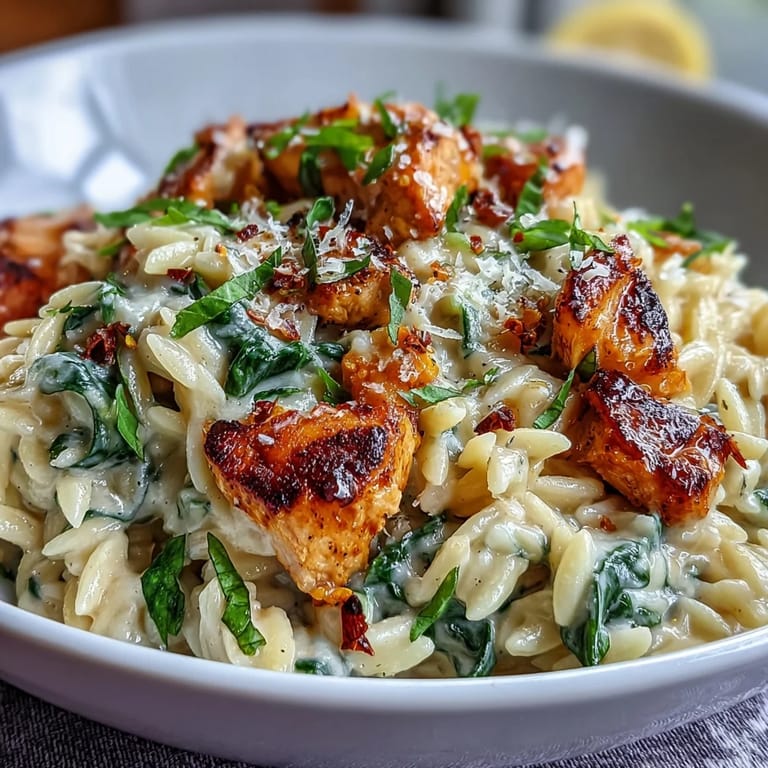
- Stir in the lemon zest, lemon juice, milk, and Parmesan cheese, mixing well until everything is creamy and heated through, about 2 to 3 minutes. Taste it and adjust the salt and pepper—you might need a touch more than you think.
- Serve while it's warm:
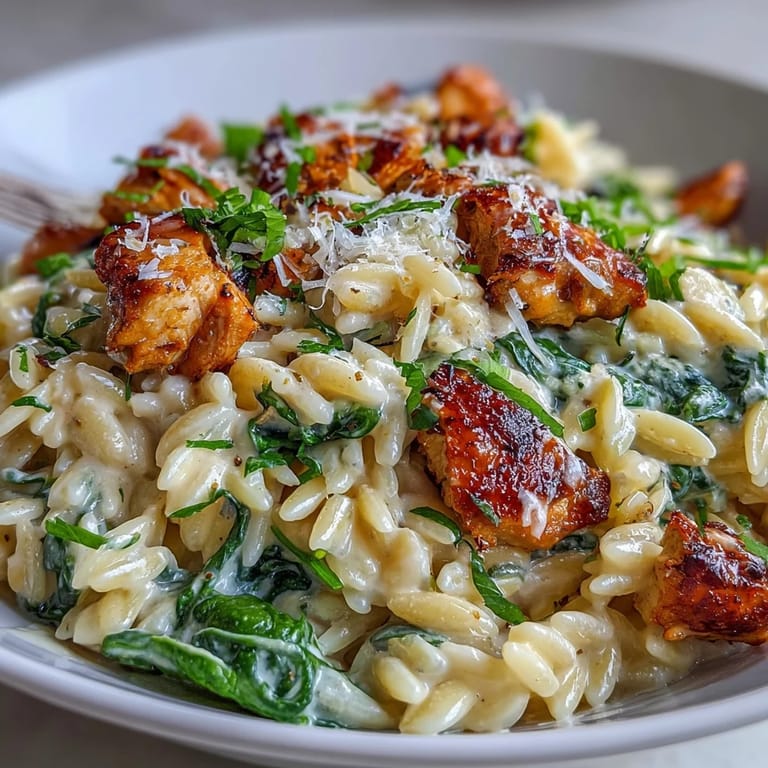
- Plate it up immediately and finish with a handful of chopped fresh parsley and maybe a little extra Parmesan if you're feeling generous. The dish is best eaten right away while the warmth and texture are at their peak.
 Save
Save My neighbor came over unexpectedly one evening when I was making this, and the smell of lemon and garlic practically pulled her into the kitchen before she even sat down. By the time we'd finished eating and talking, she'd already made a note to try it herself, and now she makes it almost every week and texts me pictures. That's when I knew this wasn't just a good recipe—it was the kind of thing that gets passed around because it genuinely makes people happy.
Why the Lemon Matters So Much
The lemon is what keeps this from being just another creamy pasta dish. Without it, everything would feel a little flat and heavy, but the zest and juice wake up every single ingredient and make the whole thing taste fresher and lighter than it actually is. I learned this the hard way when I made it once without fresh lemon (I used bottled juice from a plastic container) and it just sat there—still good, but missing something that made you want another bite.
Timing and Temperature Control
The whole dish is a lesson in not rushing. The chicken needs enough heat to get that golden edge, but the orzo needs gentle simmering so it absorbs the broth without turning to mush. If you crank the heat too high at the end, you'll cook off too much liquid and end up with dry pasta instead of creamy sauce. Medium and medium-low heat throughout might feel slow, but they're what give you control and the texture you're actually after.
Easy Variations and Substitutions
The beauty of this recipe is that it's flexible enough to bend without breaking. You can marinate the chicken in a little lemon juice and garlic for 15 minutes before cooking if you want extra flavor, or swap the orzo for risoni or even small shells if that's what you have on hand. If dairy isn't your thing, skip the milk and Parmesan entirely or use plant-based versions—the lemon juice and broth still carry plenty of flavor on their own.
- Wine pairing tip: A crisp Sauvignon Blanc or Pinot Grigio cuts through the creaminess perfectly and makes the whole meal feel a little more intentional.
- Make it ahead: You can prep all your ingredients the morning of and have dinner on the table in 30 minutes when you get home.
- Leftovers note: This keeps well in the fridge for 2 to 3 days, though it might need a splash of broth or water when you reheat it since the pasta continues absorbing liquid.
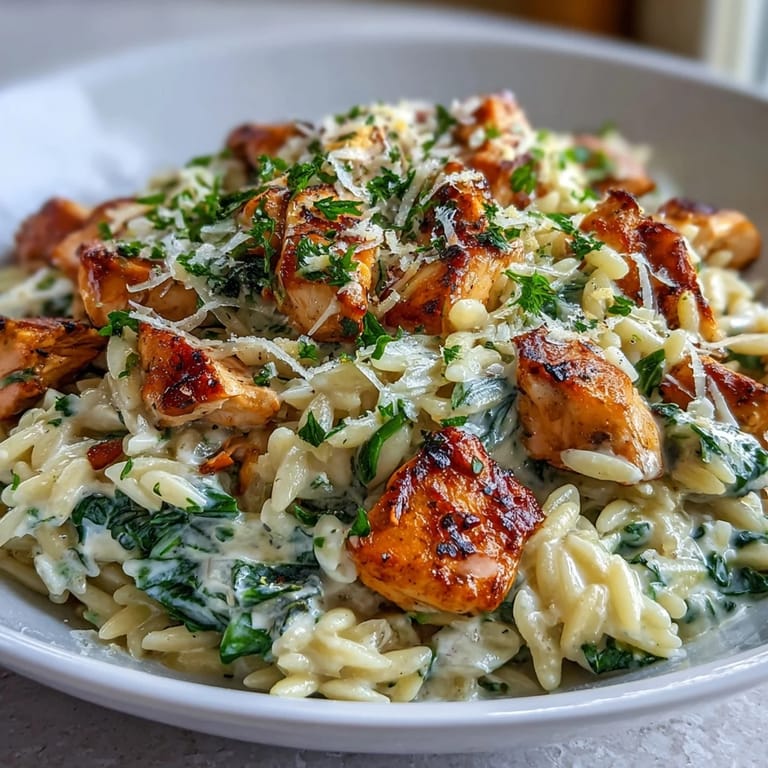 Save
Save This is the kind of recipe that feels like it's been in your kitchen forever once you make it a few times. It shows up exactly when you need something nourishing but not complicated, and somehow it always tastes a little better than you expected it to.
Recipe Questions
- → Can I use chicken thighs instead of breasts?
Yes, boneless skinless chicken thighs can be used for a juicier, more flavorful result without changing cooking times significantly.
- → What can I substitute for orzo pasta?
Small pasta shapes like risoni or acini di pepe work well as substitutes, providing a similar texture and cooking time.
- → How do I make this dish dairy-free?
Omit the Parmesan and milk or replace them with plant-based alternatives such as nutritional yeast and unsweetened plant milk.
- → Is it better to marinate the chicken beforehand?
Marinating in lemon juice and garlic before cooking enhances the chicken’s flavor and tenderness but is optional if short on time.
- → What wine pairs best with this dish?
A crisp Sauvignon Blanc or Pinot Grigio complements the lemon and chicken, balancing the creamy orzo nicely.
- → How can I prevent the orzo from sticking?
Stir frequently while cooking and use the recommended amount of broth, which helps prevent clumping and ensures even cooking.